 Save
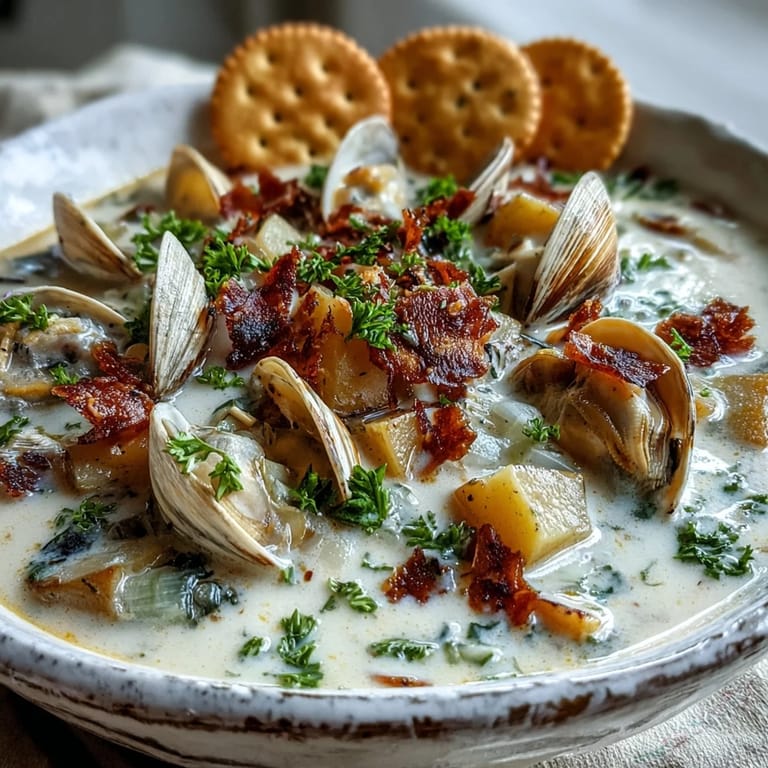
Save There's something about the smell of salt pork crisping in a pot that instantly transports me to a foggy Boston harbor, even though I'm standing in my own kitchen miles away from the coast. My grandmother taught me that real New England clam chowder isn't fancy or complicated—it's honest food that tastes like it was made by someone who actually knows the ocean. The first time she let me handle the clams myself, I was terrified of overcooking them, but she just smiled and said the soup would tell me when it was ready. Now, whenever I make this, that creamy, briny bowl becomes a quiet moment between me and everyone I'm feeding.
I made this for my partner on a random Tuesday when neither of us had the energy to go out, and by the time we sat down to eat, the kitchen smelled so good that it didn't matter we were just in sweatpants at the dining table. That bowl of chowder somehow turned an ordinary evening into something we still talk about. It's the kind of meal that makes people feel cared for without you having to say a word.
Ingredients
- Fresh clams or canned chopped clams with juice: Fresh littlenecks give you that briny, ocean-forward flavor and the joy of watching them open, but canned clams work just fine and actually make this easier—I use them on busy nights without any guilt.
- Salt pork or bacon: This is where the savory backbone comes from, so don't skip it or try to replace it with regular pork—the salt pork has a specific cure that tastes nothing like bacon, but bacon is a perfectly fine substitute if that's what you have.
- Yukon Gold potatoes: They hold their shape better than russets and have a naturally buttery quality that makes the whole pot taste more luxurious.
- Butter and cream: This is a New England chowder, so we're not apologizing for dairy—use whole milk and real cream for that authentic velvety texture.
- Clam juice: Bottled clam juice is your shortcut to depth, but if you steam fresh clams, save every drop of that liquid because it's liquid gold.
- Bay leaf and thyme: These aren't just background notes—they anchor the whole thing and keep it from tasting one-dimensional.
- All-purpose flour: Just two tablespoons create a roux that thickens everything without making it gloppy, and you'll feel like a real cook when you whisk it in perfectly.
Tired of Takeout? 🥡
Get 10 meals you can make faster than delivery arrives. Seriously.
One email. No spam. Unsubscribe anytime.
Instructions
- Get your clams ready:
- If you're using fresh clams, scrub them under cold running water and listen for that little click that means they're clean. Steam them with water in a covered pot until their shells pop open like tiny doors, then let them cool just enough to handle before chopping the meat and straining that precious liquid into a bowl.
- Render the salt pork:
- Cut it into small dice and let it slowly cook in your big pot over medium heat—you're not rushing this, you're coaxing out all that savory fat. When it's crispy and golden, fish it out with a slotted spoon and set it aside, but leave that rendered fat in the pot because that's your flavor foundation.
- Build your aromatics:
- Melt butter into that warm fat, then add your diced onion and celery, stirring gently until they soften and lose their sharp edges—this should take about five minutes, and you'll know it's right when the kitchen smells sweet and buttery. Add minced garlic and let it wake up for just a minute until your whole kitchen smells like a seaside restaurant.
- Make your roux:
- Sprinkle flour over the vegetables and stir it constantly for two minutes—this is the moment where flour goes from raw and pasty to golden and nutty, and that transformation is what will make your chowder silky instead of thin.
- Add your liquids slowly:
- Pour in your clam juice and reserved clam liquid while whisking steadily, then add the milk and cream in a gentle stream—work slowly here so you avoid lumps and actually get to see the soup come together before your eyes. The color should shift from white to this beautiful pale gold.
- Simmer the potatoes:
- Add your diced potatoes along with the bay leaf and thyme, then let everything bubble gently, uncovered, for about 12 to 15 minutes while you stir occasionally. You'll know they're ready when you can break a piece with the side of your spoon—overcooked potatoes fall apart and make the chowder mushy, so stay close and check.
- Bring in the clams:
- Stir in your chopped clam meat and the crispy salt pork, then let everything warm through gently for just a few minutes—this is where you need to resist the urge to boil, because heat will make the clams rubbery and tight. Taste it now, season with salt and pepper, knowing that clams are already salty so go easy at first.
- Finish with freshness:
- Remove the bay leaf, scatter fresh parsley over the top, and take a moment to admire what you've made before ladling it into bowls.
 Save
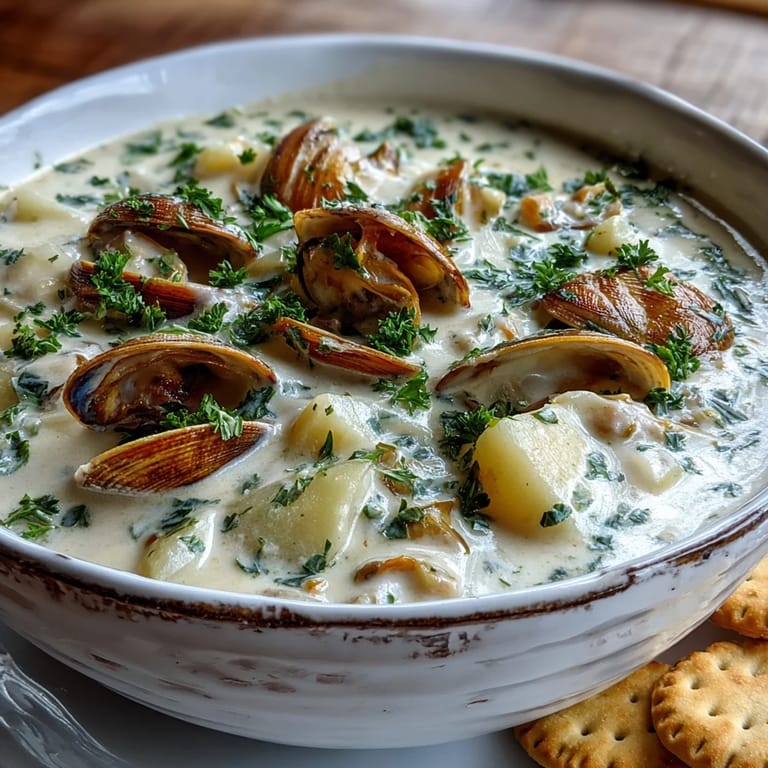
Save The best version of this soup happened on a Sunday afternoon when a friend's flight got canceled and they showed up at my door needing comfort food and company. We made the chowder together, laughing at my clumsy chopping, and by the time we sat down, it wasn't just about the food anymore—it was about the time we carved out together when life got messy.
The Salt Pork Question
Salt pork is this wonderful ingredient that a lot of people skip because they can't find it or it sounds intimidating, but it's actually just pork belly that's been cured in salt and it tastes nothing like bacon. If you hunt for it at a good butcher or specialty store, you'll taste why New England cooks swear by it—it has this deep, savory character that bacon can't quite match. That said, bacon is absolutely a legitimate substitute and will still make this chowder delicious, so don't let the ingredient list intimidate you into ordering takeout instead.
Fresh Versus Canned Clams
Fresh clams are a sensory experience—the ocean smell, the sound of them opening, the tiny moment where you realize you're eating something that was alive this morning. But canned clams have their own magic because they're already shucked and chopped, and sometimes that ease is exactly what you need on a Wednesday night when you want comfort food but not complexity. The chowder tastes different depending on which you use, but it tastes good either way, and I make this both versions depending on my mood and what my market has that day.
Serving and Storage
This chowder is best served hot in a bowl with oyster crackers on the side, and something about the crunch of those little crackers hitting the creamy soup makes it feel special even on a normal Tuesday. It keeps beautifully in the refrigerator for three days, and reheats gently on the stovetop—just warm it slowly and never let it boil, because clams hate that as much as I do.
- Crisp white wine like Sauvignon Blanc is the perfect partner, so pour yourself a glass while you cook.
- Leftover chowder makes an excellent base for clam chowder pie if you're feeling adventurous, or just eat it straight from the pot like I do when no one's looking.
- This recipe doubles easily if you're feeding a crowd, so don't hesitate to make a huge pot and let people come back for seconds.
 Save
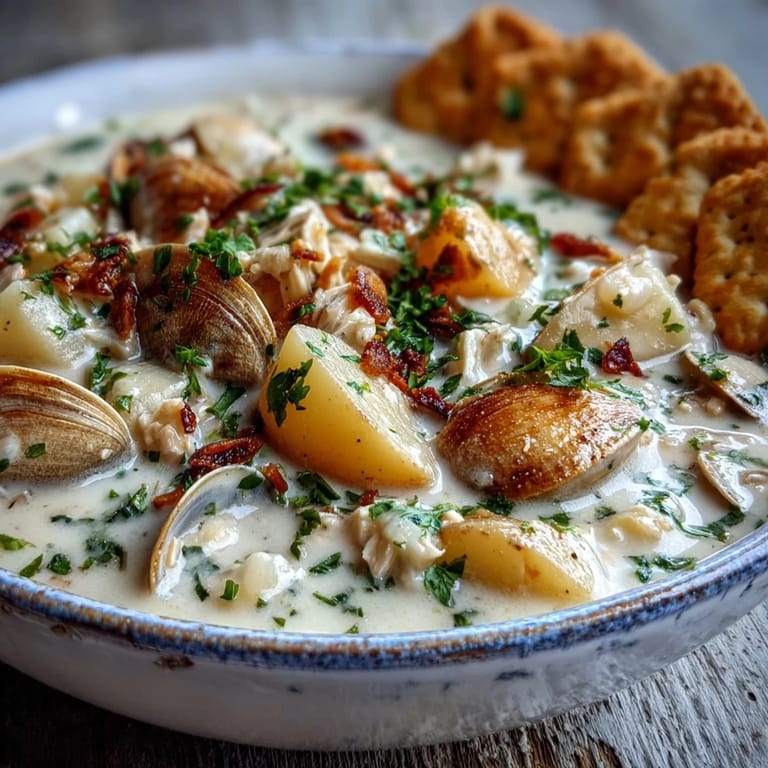
Save This soup is one of those dishes that makes you feel like you've accomplished something real in the kitchen, even though it's not actually complicated. Make it for someone you care about, or just make it for yourself on a day when you need to feel held by something warm and good.
Kitchen Help
- → What makes New England clam chowder different from Manhattan version?
New England chowder features a rich, creamy milk-based broth while Manhattan version uses tomatoes. The white cream base creates the signature velvety texture that makes this regional specialty so beloved across the Northeast.
- → Can I use canned clams instead of fresh?
Absolutely. Canned chopped clams work beautifully and actually save significant preparation time. Just be sure to reserve the juice from the cans as it adds essential briny flavor to the broth.
- → How do I prevent the dairy from curdling?
Avoid boiling after adding the cream and milk. Keep the heat at a gentle simmer and stir frequently. Adding the dairy slowly while whisking also helps maintain a smooth, consistent texture throughout.
- → What's the purpose of the salt pork or bacon?
Salt pork provides traditional authenticity and renders fat that serves as the cooking base for vegetables. The diced meat adds smoky, savory depth and crispy texture that complements the sweet clams perfectly.
- → How long will leftovers keep in the refrigerator?
Properly stored in an airtight container, this chowder keeps well for 2-3 days. Reheat gently over low heat, adding a splash of milk or cream if needed to restore the original consistency.
- → Can I freeze this chowder?
Freezing is possible but may cause slight separation of the dairy. For best results, cool completely before freezing and thaw overnight in the refrigerator. Reheat slowly while stirring to recombine.