 Save
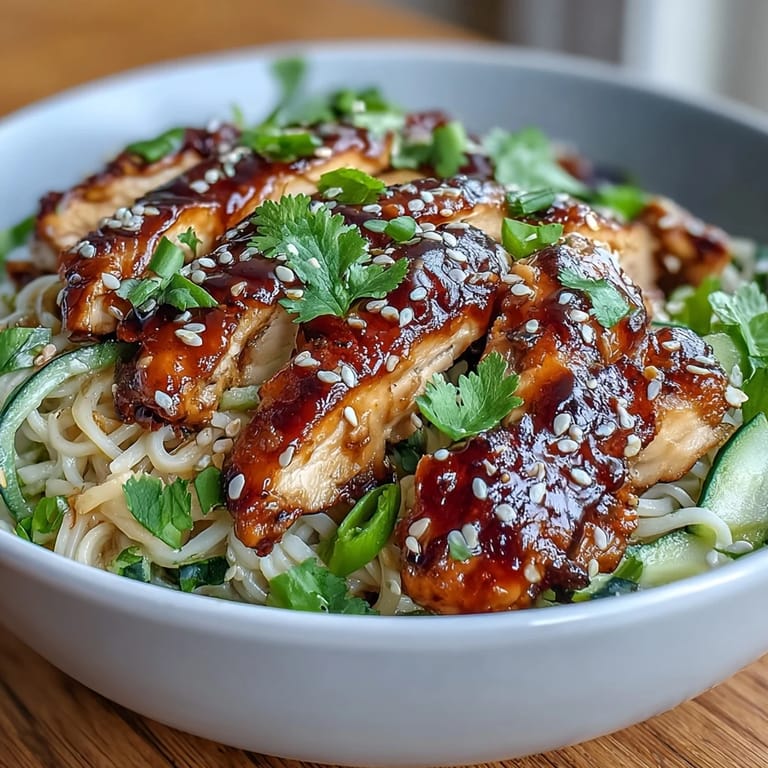
Save My kitchen smelled like toasted sesame and garlic on a Tuesday night when I realized I had been overthinking dinner for years. I tossed sliced chicken into a hot pan, watched it sizzle, and wondered why I ever thought a vibrant noodle bowl needed to be complicated. The carrot ribbons curled under my peeler, the lime sat ready on the counter, and suddenly everything felt easy. This dish doesn't demand precision or fancy technique, just fresh ingredients and a little heat.
I made this for a friend who swore she hated cooking chicken because it always turned out dry. She watched me slice it thin, let it sit in the marinade while we chopped vegetables, and then sear it fast over high heat. When she took her first bite, she looked up and said it tasted like the noodle bowls we used to get at that place downtown. I didn't tell her it was easier than anything on their menu.
Ingredients
- Boneless, skinless chicken breast or thighs, thinly sliced: Thighs stay juicier, but breasts work beautifully if you slice them thin and don't overcook them.
- Tamari or low sodium soy sauce: Tamari has a smoother, less sharp flavor, and it keeps the dish gluten free if you need it to be.
- Fish sauce: This is the secret ingredient that adds depth, a salty richness you can't quite name but definitely notice.
- Rice vinegar: Brightens everything up and balances the sweetness of the honey without tasting sour.
- Honey: Just enough to round out the sauce and give the chicken a subtle caramelized edge when it hits the pan.
- Toasted sesame oil: A little goes a long way, it smells nutty and warm and makes the whole kitchen feel inviting.
- Neutral oil: Canola or sunflower works perfectly for cooking the chicken without competing with the other flavors.
- Garlic, minced: Fresh garlic is non negotiable here, the jarred stuff just doesn't have the same punch.
- Freshly grated ginger: Optional, but it adds a bright, spicy note that makes the sauce feel more complex.
- Chili flakes or Sriracha: For those nights when you want a little heat to wake up your taste buds.
- Dried rice noodles: They cook fast, stay tender, and soak up the sauce better than anything else.
- Carrot, julienned: Adds sweetness and crunch, plus it looks beautiful piled on top.
- Cucumber, thinly sliced: Cool and crisp, it balances the warm chicken and noodles.
- Bell pepper, thinly sliced: Any color works, but red and yellow are the sweetest.
- Spring onions, sliced: They add a sharp, fresh bite that cuts through the richness of the sauce.
- Bean sprouts: Light and crunchy, they make every forkful feel fresh.
- Fresh cilantro, chopped: Love it or hate it, but if you love it, don't skip it.
- Toasted sesame seeds: They add a nutty crunch and make the bowl look finished.
- Lime wedges: A squeeze of lime at the end brightens everything and ties all the flavors together.
Tired of Takeout? 🥡
Get 10 meals you can make faster than delivery arrives. Seriously.
One email. No spam. Unsubscribe anytime.
Instructions
- Mix the marinade and sauce:
- Whisk tamari, fish sauce, rice vinegar, honey, sesame oil, neutral oil, garlic, and ginger in a bowl until the honey dissolves. Pour half into a separate dish and set it aside, this is your finishing sauce.
- Marinate the chicken:
- Toss the sliced chicken into the remaining marinade and let it sit for 15 minutes while you prep the vegetables. The chicken will soak up all that garlicky, sweet flavor and cook faster because it's thin.
- Cook the noodles:
- Boil the rice noodles according to the package directions, usually just a few minutes. Drain them, rinse under cold water to stop the cooking, and set aside so they don't clump.
- Sear the chicken:
- Heat a large skillet or wok over medium high heat until it's really hot. Add the marinated chicken in a single layer and let it sear without moving it for a minute, then stir and cook for another 5 to 6 minutes until golden and cooked through.
- Assemble the bowls:
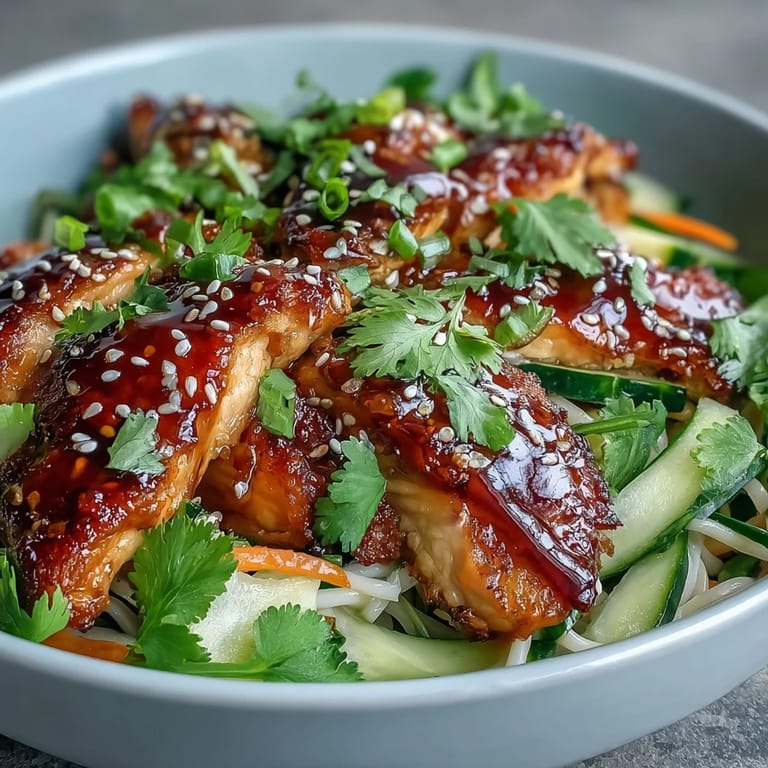
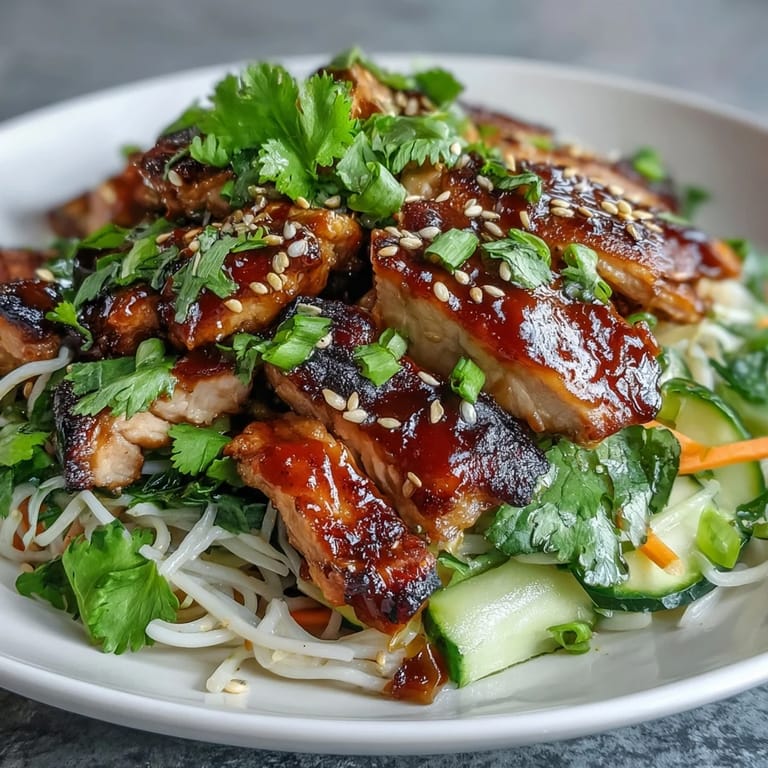
- Divide the noodles among four bowls, then arrange the chicken, carrot, cucumber, bell pepper, bean sprouts, and spring onions on top. Drizzle the reserved sauce over everything, then scatter cilantro and sesame seeds across each bowl and add a lime wedge on the side.
 Save
Save One night I doubled the vegetables because I had extra, and my partner said it was the best version I had ever made. It wasn't about the recipe changing, it was about how satisfying it felt to use what we had and still end up with bowls that looked like they belonged in a restaurant. We ate on the couch with chopsticks, the lime juice dripping down our hands, and it felt like the kind of meal that made the week feel manageable.
How to Prep Ahead
You can slice the chicken and vegetables the night before and store them in separate containers in the fridge. The sauce keeps for up to five days, so I often make a double batch and use it for quick stir fries or grain bowls throughout the week. Cook the noodles fresh if you can, but if you need to prep them ahead, toss them with a tiny bit of sesame oil so they don't stick, then reheat by running them under hot water before assembling.
Substitutions That Work
If you don't eat chicken, firm tofu works beautifully, just press it well and cut it into cubes before marinating. Shrimp cooks even faster than chicken and tastes incredible with this sauce. For a vegetarian version, swap fish sauce for more tamari or a splash of mushroom soy sauce. I've also used snap peas, shredded cabbage, and edamame when I didn't have the exact vegetables listed, and it always turned out great.
Storing and Reheating
Store the components separately if you can, noodles in one container, chicken in another, and vegetables in a third. The sauce can go in a small jar. When you're ready to eat, reheat the chicken and noodles gently, then assemble fresh bowls with cold or room temperature vegetables. The texture stays better this way, and you avoid soggy noodles.
- Leftovers keep in the fridge for up to three days.
- Don't freeze the assembled bowls, the noodles and vegetables don't hold up well.
- Add fresh lime and herbs when reheating to bring back the brightness.
 Save
Save This bowl has become my answer to nights when I want something nourishing without spending an hour in the kitchen. It's bright, satisfying, and always feels like I did something good for myself.
Kitchen Help
- → Can I make this ahead of time?
Yes, you can prepare the sauce and marinate the chicken up to 24 hours in advance. Cook the noodles and chop the vegetables beforehand, then assemble when ready to serve. The noodles are best when freshly cooked and rinsed to prevent sticking.
- → What other proteins work well?
Thinly sliced beef, shrimp, or firm tofu all pair beautifully with these flavors. Adjust cooking time accordingly—shrimp needs just 2-3 minutes, while tofu benefits from 5-6 minutes to develop a golden crust.
- → Is there a gluten-free option?
Absolutely. Use certified gluten-free rice noodles and replace tamari with coconut aminos if needed. Most other ingredients, including fish sauce and rice vinegar, are naturally gluten-free.
- → How spicy is this dish?
The base version is mild with just a hint of warmth from the garlic and ginger. Add chili flakes or Sriracha to your taste—start with ½ teaspoon and adjust from there. You can also serve hot sauce on the side for those who prefer extra heat.
- → Can I use different noodles?
Soba noodles, udon, or even spaghetti work as substitutes. Rice noodles offer the most authentic texture, but wheat-based noodles provide a pleasantly chewy alternative. Just adjust cooking time according to package instructions.
- → How do I store leftovers?
Store components separately in airtight containers for up to 3 days. Keep the sauce on the side to prevent the noodles from becoming soggy. Reheat the chicken gently in a skillet and toss everything together just before serving.