 Save
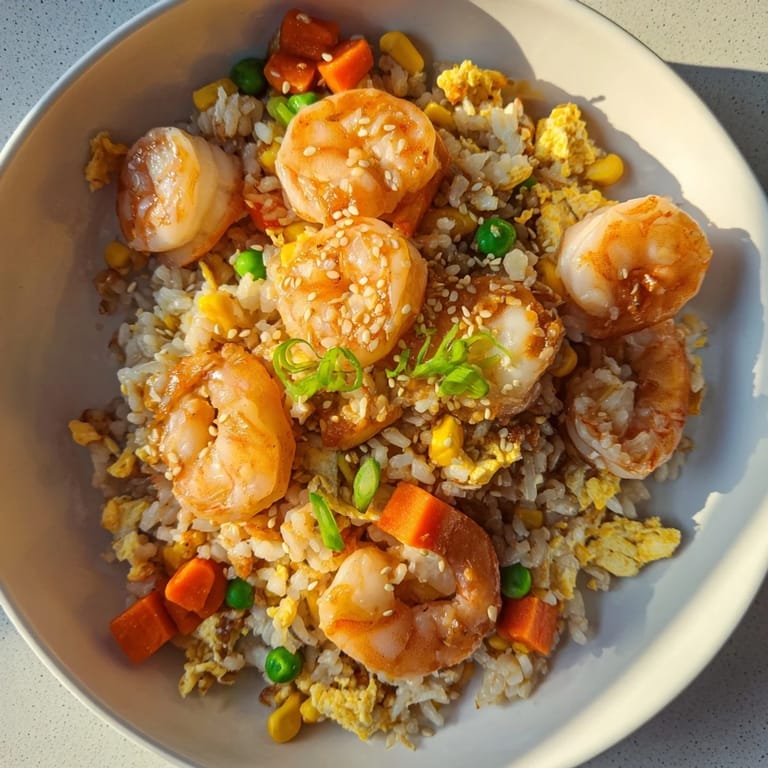
Save There's something about the sizzle of shrimp hitting hot oil that makes a weeknight feel less like a chore and more like a small victory. I discovered this fried rice hack during a particularly chaotic Tuesday when I had exactly twenty minutes to transform hunger into something that felt like actual cooking. The beauty of it isn't just the speed—it's how every element comes together with that satisfying, savory depth that makes people ask if you've been cooking professionally.
I made this for my neighbor who'd just mentioned craving fried rice but didn't have the energy to hunt down her favorite restaurant. Twenty minutes later, I was sliding a steaming plate across her fence while she stared in disbelief. She's asked me to make it at least four times since then, always on nights when she's too tired for anything elaborate.
Ingredients
- Medium shrimp, peeled and deveined (200 g): They cook faster than their larger cousins, and medium size gives you that satisfying bite without being chewy.
- Large eggs (2): These become your sauce binder and add richness; beaten before hitting the pan means they scramble into silky ribbons.
- Frozen mixed vegetables (100 g): Don't underestimate frozen—they're already blanched, retain their texture, and save you prep time without sacrificing quality.
- Scallions (2), sliced: The white parts go in for cooking, the greens for finishing; they're the understated flavor anchor most people forget about.
- Cooked jasmine rice, chilled (300 g), preferably day-old: Cold rice is non-negotiable—day-old breaks apart instead of clumping, which is the entire secret.
- Soy sauce (2 tbsp): This is your umami foundation; don't skimp on quality here because it carries the whole dish.
- Oyster sauce (1 tbsp, optional): It adds a subtle sweetness and depth that makes people wonder what your secret ingredient is.
- Sesame oil (1 tsp): A small amount goes a long way; use toasted sesame oil for an earthier note.
- Ground white pepper (1/2 tsp): Gentler than black pepper and less visually obtrusive, but it brings heat without overwhelming.
- Vegetable oil (1 tbsp): High heat is your friend here, so pick an oil with a high smoke point like canola or vegetable.
Tired of Takeout? 🥡
Get 10 meals you can make faster than delivery arrives. Seriously.
One email. No spam. Unsubscribe anytime.
Instructions
- Get everything ready:
- Line up your ingredients near the stove because once you start, the pace is brisk. This is where mise en place earns its reputation—scrambling to find the sesame oil mid-cook will throw off your timing.
- Sear the shrimp:
- Heat the oil until it shimmers, then add the shrimp. You'll smell the change when they're done—that sweet, cooked-seafood aroma instead of raw ocean. Don't crowd the pan; they need space to actually cook rather than steam.
- Scramble the eggs:
- Push the shrimp to the side and pour in the beaten eggs, stirring constantly. They'll go from liquid to set in under a minute if your heat is right. This isn't a recipe that forgives wandering attention.
- Warm the vegetables:
- Add the frozen mix straight in; the residual heat will thaw them without cooking them to mush. One minute is genuinely enough.
- Add the rice and break it free:
- This is where technique matters—use your spatula to crush and separate clumps as you toss. You want individual grains coated in oil, not a sticky mass.
- Return the shrimp and season:
- Bring everything back together, pour in the sauces, and toss constantly for about a minute. The pan should smell incredible at this point.
- Finish with scallions and a final toss:
- The green parts of the scallions go in last so they stay fresh and crisp. Taste and adjust the soy sauce if you prefer it saltier.
 Save
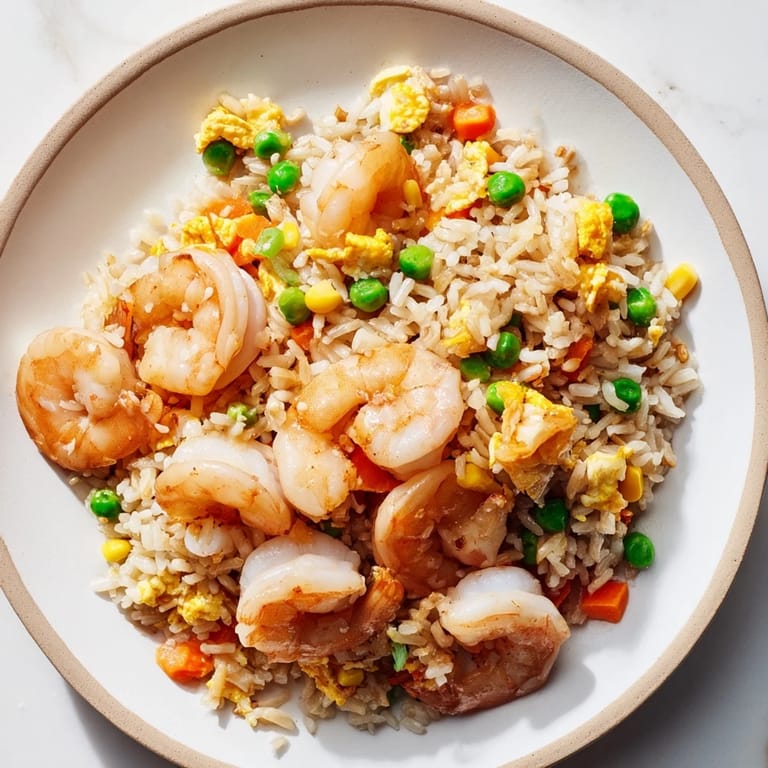
Save My partner tested this on a night when they'd worked through lunch and came home starving, and I watched their whole expression shift when they took the first bite. It became our standard Tuesday dinner, the kind of meal that somehow tastes like comfort despite being thrown together in moments.
The One-Pan Magic
What makes this recipe feel almost too easy is that everything happens in the same vessel—no washing multiple pans, no juggling cooking times. The shrimp releases enough flavor into the oil to season everything that follows, and each component cooks exactly as long as it needs before the next one joins. It's the opposite of those recipes that demand constant vigilance; this one rewards speed and momentum.
Why Day-Old Rice Changes Everything
The difference between fresh and day-old rice in fried rice comes down to moisture content. Fresh rice is full of steam and moisture, and when you stir-fry it, all that escapes unevenly, leaving you with clumps and soft spots. Day-old rice dries out just enough that every grain separates cleanly and soaks up the sauces evenly, giving you that restaurant texture that feels almost impossible at home.
Playing with Flavor and Texture
The beauty of this recipe is how forgiving it is to your mood and what's in your fridge. If you're feeling spicy, a drizzle of chili sauce or sriracha swirled in at the end transforms it entirely without adding cooking time. You can swap the shrimp for diced chicken, cubed tofu, or leave the protein out entirely without disrupting the flow of the recipe.
- A crack of extra sesame seeds over the top adds a nuttiness that feels indulgent for something so fast.
- If you have white miso, a teaspoon mixed with a tablespoon of water creates a richer sauce than soy alone.
- Leftover rice in the fridge is suddenly an asset instead of something taking up space.
 Save
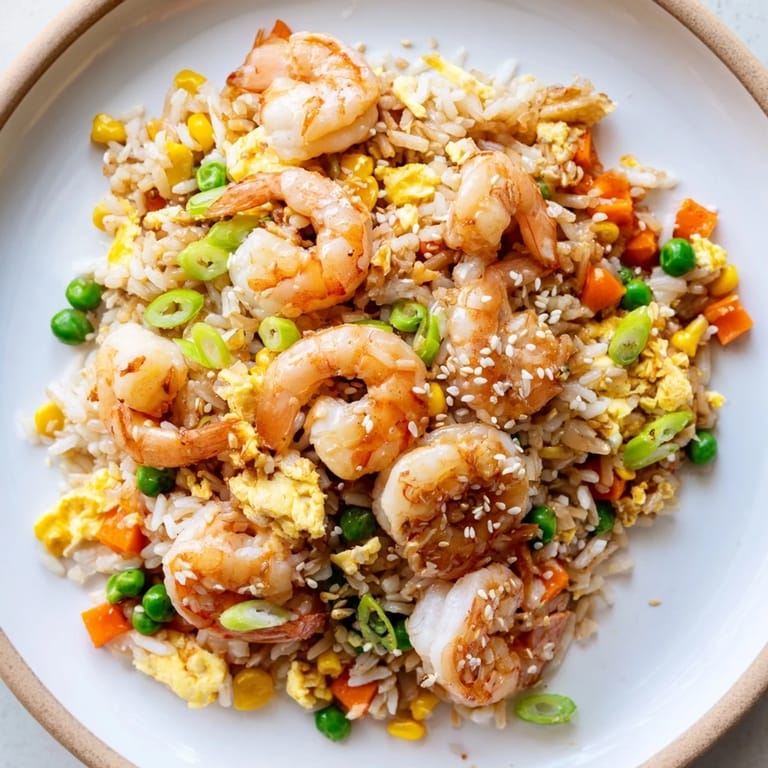
Save This recipe proved to me that weeknight cooking doesn't have to be a sacrifice of quality for speed. It's become my answer to the question I ask myself most nights: what can I make that tastes like I actually tried?
Kitchen Help
- → What type of rice works best?
Day-old chilled jasmine rice prevents clumping and ensures even stir-frying.
- → Can I substitute shrimp with other proteins?
Yes, chicken, tofu, or vegetables make excellent alternatives without sacrificing flavor.
- → How do I prevent the rice from sticking?
Using cold, day-old rice and a hot pan with sufficient oil helps keep grains separate.
- → What sauces enhance the dish?
Soy sauce and optional oyster sauce provide umami depth, while sesame oil adds toasted aroma.
- → How can I add a spicy kick?
Add a dash of chili sauce or fresh chili flakes during stir-frying to introduce heat.