 Save
Save There's something magical about the moment when roasted butternut squash transforms into silk under the blade of an immersion blender. I discovered this soup on a grey afternoon when I was craving something warm but felt uninspired by the usual suspects in my pantry. A jar of miso paste caught my eye, and I wondered what would happen if I borrowed its umami magic for something sweet and earthy. That first spoonful, with its creamy butternut sweetness meeting savory miso depth, became the reason I make this soup whenever the weather turns cool.
I made this for my sister last winter when she arrived exhausted from a long drive. She took one spoonful and literally closed her eyes in relief, and that's when I knew this recipe had something special. Now whenever she visits, she texts ahead asking if I'm planning to make it, which tells you everything about how comforting and crave-worthy this soup really is.
Ingredients
- 1 medium butternut squash (about 2 lbs), peeled, seeded, and cubed: Roasting brings out the natural sweetness and creates those caramelized edges that make the soup taste richer than it has any right to.
- 1 medium yellow onion, diced: This is your aromatic foundation, softening into sweet notes that balance the earthiness of the squash.
- 2 cloves garlic, minced: Don't skip this even though the amount seems small—it adds a gentle warmth that grounds the whole dish.
- 1-inch piece fresh ginger, peeled and grated: Fresh ginger gives the soup a subtle brightness and aids digestion, which feels intentional after such a rich, creamy bowl.
- 4 cups low-sodium vegetable broth: Use good broth if you can, because it's one of the few ingredients that truly shines through in a blended soup.
- 2 tablespoons white miso paste: This is where the magic happens—white miso is gentler and slightly sweeter than darker varieties, creating a harmonious savory note without overpowering the squash.
- 1 tablespoon olive oil: Split between roasting and sautéing to keep the soup dairy-free and light.
- 1/2 teaspoon salt and 1/4 teaspoon black pepper: Season generously with salt especially, as it amplifies all the subtle flavors hiding in the soup.
- Coconut cream or sour cream for garnish: A small dollop creates a beautiful contrast and adds richness where it matters most.
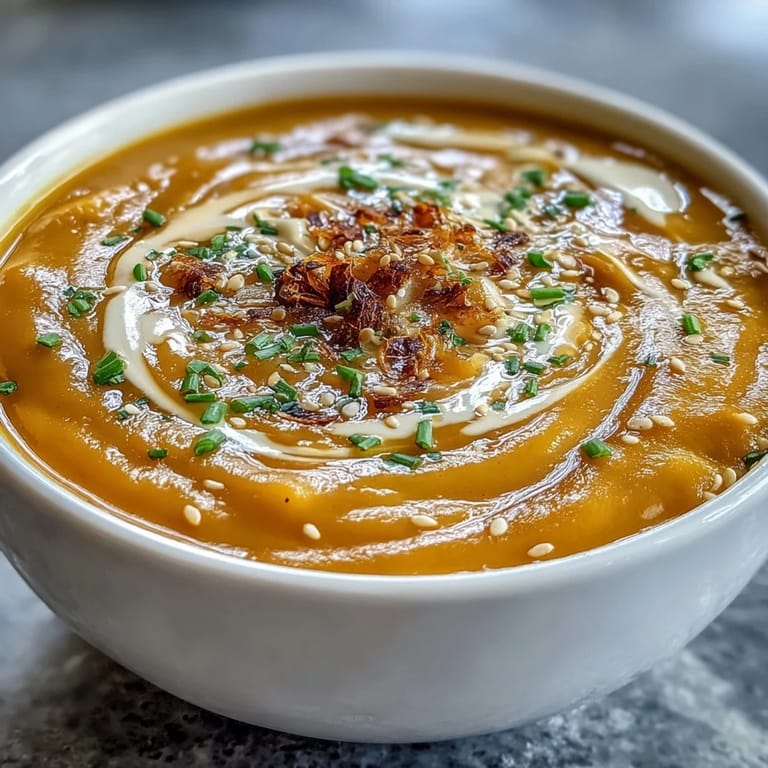
- Chopped chives and toasted sesame seeds: These finish the soup with texture and visual appeal, turning a simple bowl into something restaurant-worthy.
Tired of Takeout? 🥡
Get 10 meals you can make faster than delivery arrives. Seriously.
One email. No spam. Unsubscribe anytime.
Instructions
- Fire up the oven:
- Preheat to 400°F and line a baking sheet with parchment paper. This simple step prevents sticking and makes cleanup nearly effortless.
- Season and spread the squash:
- Toss your cubed butternut squash with half a tablespoon of olive oil, salt, and pepper, then spread it in a single layer on the baking sheet. Give each piece room to breathe so it caramelizes instead of steams.
- Let the oven do the work:
- Roast for 30 to 35 minutes, stirring halfway through, until the squash is fork-tender and the edges turn golden brown. Your kitchen will smell incredible, and that's how you know it's working.
- Build your aromatic base:
- In a large pot, warm the remaining olive oil over medium heat and add your diced onion, minced garlic, and grated ginger. Sauté for about 4 to 5 minutes until the onion softens and becomes translucent, releasing those fragrant oils into the pot.
- Combine and simmer:
- Add the roasted squash to the pot and pour in the vegetable broth, then bring everything to a gentle simmer. Let it cook for about 5 minutes so the flavors start getting to know each other.
- Blend until silky smooth:
- Remove from heat and use an immersion blender to puree the soup until it reaches that luxurious, creamy consistency. If you prefer using a countertop blender, work in batches and be careful with the hot liquid.
- Dissolve the miso carefully:
- In a small bowl, whisk the miso paste with a ladleful of hot soup until completely smooth, then stir this mixture back into the pot. Never boil miso directly in hot liquid, as high heat destroys its beneficial qualities and subtle flavor.
- Taste and adjust:
- Give the soup a try and season with extra salt or pepper if needed. Gently reheat if the soup has cooled, keeping the heat low and steady.
- Serve with grace:
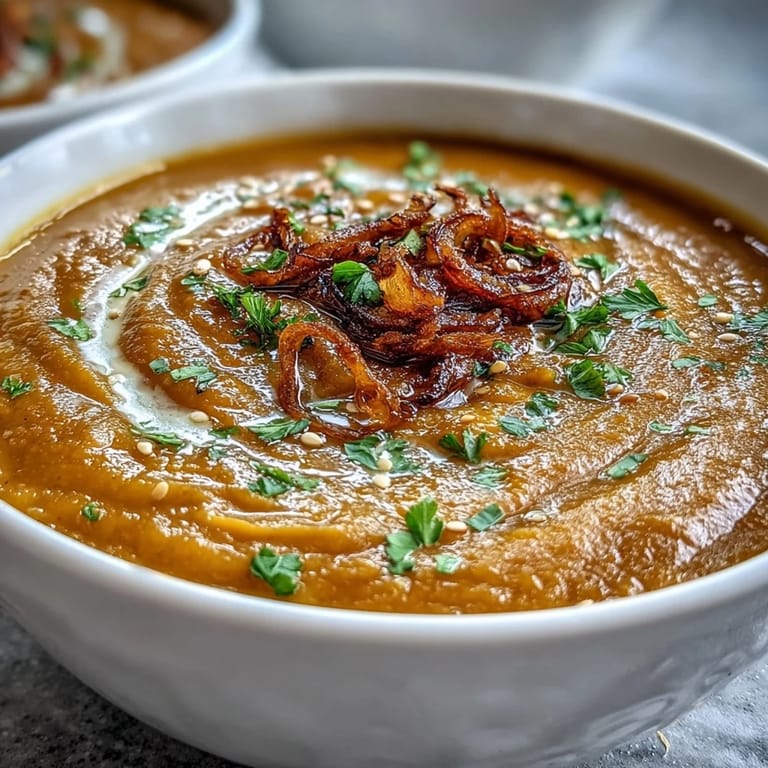
- Ladle into bowls and finish each one with a small drizzle of coconut cream, a scatter of fresh chives, and a few toasted sesame seeds for that final touch of elegance.
 Save
Save The best part about this soup is how it bridges different culinary worlds—Japanese umami meets autumn comfort in a single, unexpected spoonful. There's something deeply satisfying about serving something that looks restaurant-quality but came entirely from your own kitchen.
Why White Miso Works Here
I used to shy away from miso, thinking it only belonged in Asian broths, until I realized that white miso is fundamentally different from its darker cousins. It's younger, milder, and has a slightly sweet undertone that complements roasted squash in a way that feels almost inevitable. Once you taste how it rounds out the natural earthiness of butternut without making the soup taste overtly Japanese, you'll understand why this pairing feels so right.
The Secret to Creamy Texture
The creaminess in this soup comes entirely from the butternut squash itself, not from cream or butter, which is why roasting matters so much. When you roast the squash properly until it's caramelized and fully tender, it breaks down more completely during blending and releases all its natural starch. This creates that luxurious mouthfeel that makes people think you added heavy cream when really you just understood the vegetable better.
Make It Your Own
This recipe is forgiving and loves experimentation, so don't hesitate to adjust it based on what you have on hand and what your palate craves. I've swapped butternut for kabocha squash when it looked better at the market, added a splash of coconut milk for extra richness, and even stirred in a touch of maple syrup when the squash tasted more savory than sweet. The foundation is solid, but the soul of the soup comes from the small choices you make while cooking.
- Add a splash of coconut milk if you want the soup richer and more indulgent.
- If you can't find white miso, yellow miso works perfectly fine and tastes nearly identical.
- Serve this alongside crusty bread or over steamed rice for a more substantial meal.
 Save
Save This soup has become one of my cool-weather go-tos, the kind of recipe you reach for when you want to feel nourished and cared for. There's real magic in something this simple becoming something this satisfying.
Kitchen Help
- → What type of miso paste works best?
White or yellow miso paste is recommended for a subtle, sweet umami flavor that complements the butternut squash.
- → Can I substitute butternut squash with other vegetables?
Kabocha or pumpkin can be used as alternatives for a similar texture and sweetness.
- → How is the soup thickened to achieve its creamy texture?
The soup is pureed after roasting and cooking the vegetables, resulting in a smooth, velvety consistency.
- → What garnishes enhance this soup?
Optional toppings like coconut cream, chopped chives, and toasted sesame seeds bring richness and a touch of freshness.
- → Is this dish suitable for dietary restrictions?
It is vegetarian, gluten-free if certified miso and broth are used, and dairy-free, making it accessible to many diets.