 Save
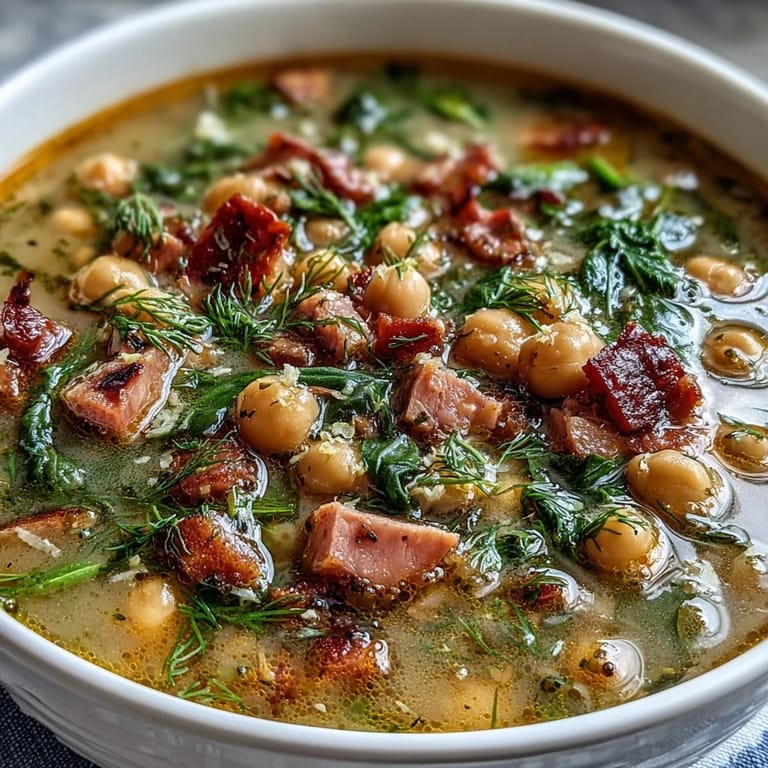
Save There's something about a bowl of soup that stops time. I discovered this ham and chickpea combination on a rainy Tuesday when I was cleaning out my pantry and found a can of chickpeas tucked behind some forgotten spices. My leftover ham from Sunday dinner was calling out for a purpose, and within an hour, my kitchen was filled with the kind of aroma that makes neighbors jealous. The lemon hit me first when I stirred it in—bright and unexpected, cutting through the richness like opening a window on a stuffy day.
I made this for my friend Sarah on a chilly evening when she'd just moved into her new apartment with almost no furniture. We sat cross-legged on her kitchen floor with two bowls of this soup and a sleeve of crackers, and somehow that became one of my favorite meals I've shared with her. She texted me the next day asking for the recipe, which is always the best compliment.
Ingredients
- Cooked ham, diced (250 g): This is your protein and your flavor base—the salty, smoky backbone that makes everything else taste better. Don't skip buying good ham; the pre-packaged lunch meat kind gets lost in the broth.
- Chickpeas (1 can, drained and rinsed): They add creamy texture and substance without heaviness. Rinsing them removes the starchy liquid that can make soup taste metallic.
- Onion, carrots, and celery (1 medium onion, 2 medium carrots, 2 stalks): This is your aromatic trio, the quiet workers that build depth. Dicing them finely means they'll practically melt into the broth.
- Garlic cloves, minced (2 cloves): Added after the softer vegetables, it stays fresh and sharp rather than bitter or burnt.
- Chicken or vegetable broth (1.2 liters): Low-sodium is crucial here so you can control the final seasoning and taste the other flavors.
- Olive oil (2 tbsp): It carries the flavors of everything you're sautéing and adds a subtle richness.
- Lemon juice and zest (from 1 lemon): The zest goes in at the end for brightness; the juice is your final seasoning adjustment.
- Fresh dill, finely chopped (2 tbsp plus extra): This is what makes people lean over their bowl and inhale. It's herbal without being aggressive.
- Bay leaf and dried thyme (1 bay leaf, 1/2 tsp thyme): Bay leaf simmers quietly in the background; thyme adds an earthy note that ties everything together.
- Salt and black pepper: Save these for the very end when you can taste what you're actually seasoning.
Tired of Takeout? 🥡
Get 10 meals you can make faster than delivery arrives. Seriously.
One email. No spam. Unsubscribe anytime.
Instructions
- Get your aromatics going:
- Heat olive oil in a large soup pot over medium heat, then add the onion, carrots, and celery. You're looking for them to soften and turn slightly translucent, which takes about 5 to 6 minutes. Listen for a gentle sizzle, not an aggressive sear.
- Wake up the garlic:
- Stir in the minced garlic and cook for just one more minute—this is long enough to release its perfume but short enough that it won't burn and turn bitter.
- Introduce the ham:
- Add your diced ham and stir it around for 2 to 3 minutes so it warms through and starts releasing its salty, savory essence into the pot.
- Build your broth base:
- Pour in the broth, add the drained chickpeas, bay leaf, and thyme. Bring everything to a boil, then lower the heat and let it simmer gently for 20 minutes so the flavors meld without reducing too much.
- Brighten with citrus and herbs:
- Remove the bay leaf, then stir in the lemon juice, lemon zest, and fresh dill. Give it 2 to 3 more minutes of gentle simmering so the dill stays vibrant and the lemon flavor settles in.
- Season and serve:
- Taste your soup and adjust salt and pepper until it's exactly what you want. Ladle it into bowls, scatter extra dill on top, and serve while it's still steaming.
 Save
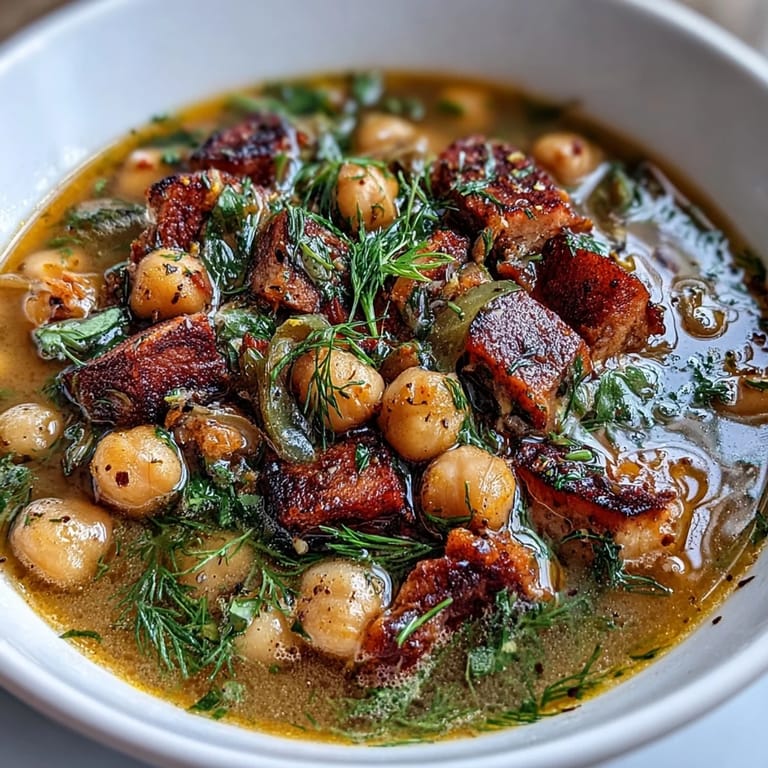
Save This soup has a way of appearing at the right moment—on mornings after I've been cooking too much heavy food, or on nights when someone needs feeding but I don't have energy for anything complicated. It's become my go-to because it feels nourishing without being dense, elegant without demanding attention, and genuinely delicious every single time.
Making It Creamier (If You Want)
If you like your soup with a silkier texture, here's what I do: before adding the broth, I take about half a cup of the drained chickpeas and mash them roughly with a fork right in the pot. They break down into the softer vegetables and create a naturally creamy base without any cream at all. It's so subtle that people don't realize why the soup feels richer—they just know it tastes good.
Variations That Actually Work
The beauty of this soup is that it forgives substitutions. Smoked turkey works just as well as ham if that's what you have, and honestly, the soup is wonderful without any meat too—just use vegetable broth instead and bump up the chickpeas slightly. I've added sun-dried tomatoes, swapped the dill for tarragon (which sounds odd but isn't), and once I used the juice of a lime instead of lemon when that was all I had.
Serving and Storing
This soup is a friend to people with full lives because it stores beautifully and tastes just as good, maybe better, the next day when the flavors have had time to know each other. I always make a full pot because the second serving is when you discover it's actually incredible.
- Store in the refrigerator for up to 4 days in an airtight container.
- Reheat gently on the stove and add a squeeze of fresh lemon juice before serving, since the brightness fades slightly over time.
- It freezes well for up to 3 months if you're planning ahead.
 Save
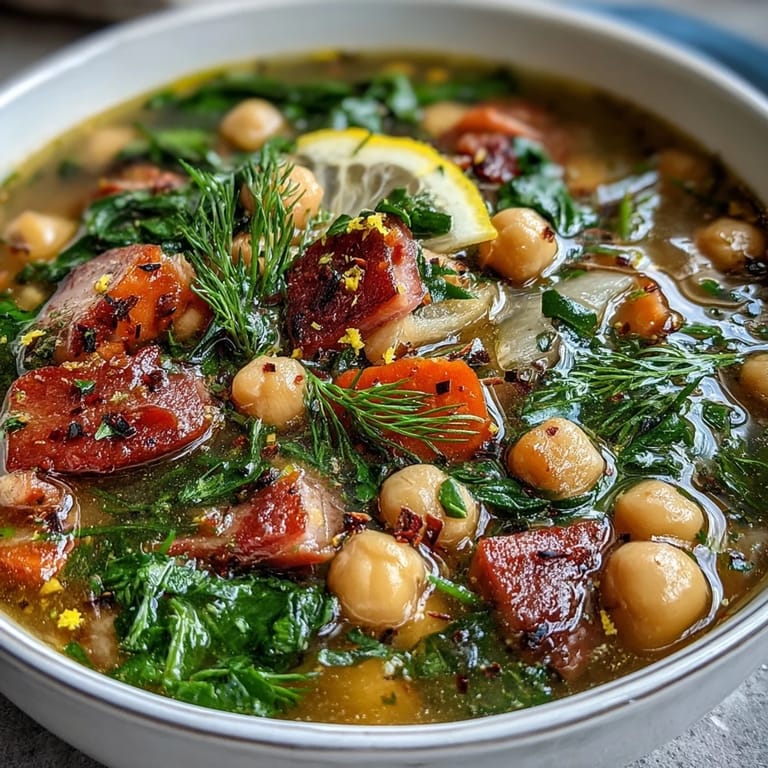
Save There's a reason this soup keeps appearing in my rotation: it tastes like it knows you. Serve it with crusty bread and a glass of something crisp, and watch how quickly the bowls empty.
Kitchen Help
- → Can I use smoked turkey instead of ham?
Yes, smoked turkey is a suitable substitute and offers a similar smoky flavor while keeping the dish hearty.
- → How can I thicken the soup?
Mash part of the chickpeas with a fork before adding to the pot to create a thicker and creamier texture.
- → Is it possible to make this dairy-free?
Absolutely, this dish is naturally dairy-free and uses olive oil and broth to create rich flavor.
- → What herbs complement the lemon and dill flavors?
Fresh dill is key, while dried thyme and bay leaf add depth without overpowering the bright lemon notes.
- → What side pairs well with this dish?
Crusty bread and a crisp white wine, such as Sauvignon Blanc, enhance the meal beautifully.