 Save
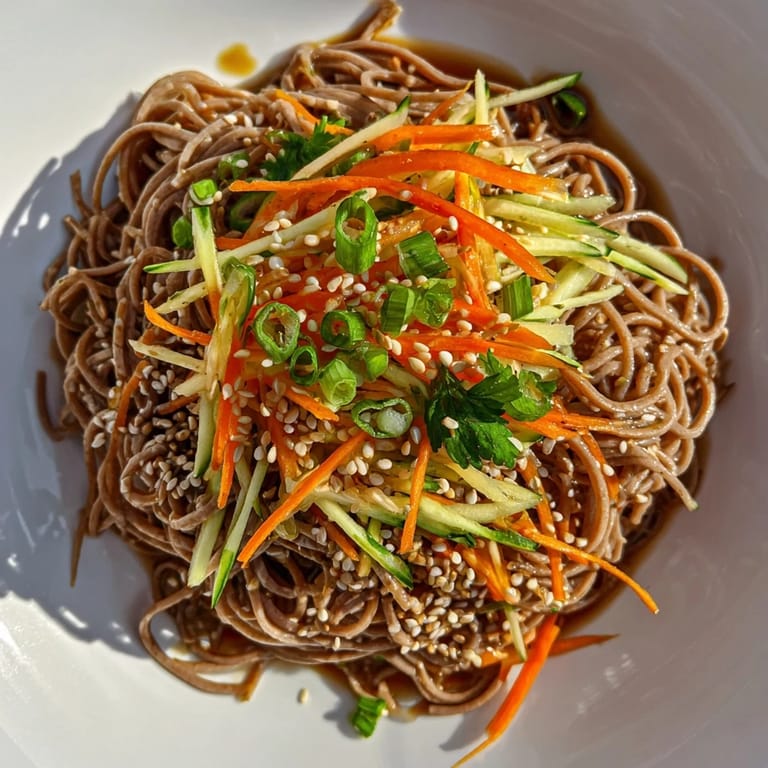
Save Last summer, I found myself standing in a sweltering kitchen at 2 PM with nothing but tired afternoon energy and an empty lunch situation. I'd seen other people's meal-prep photos online—all those beautiful stacked containers—and decided to actually try it. Somehow, I ended up combining cold noodles with sesame oil and whatever vegetables weren't wilting in my crisper drawer. The result was so unexpectedly good that I've been making these cups ever since, tossing them together on Sunday and eating through them all week.
My coworker peeked into my lunch container one day and actually asked if I'd made it myself, which was hilarious because I'd honestly never expected that reaction. Watching someone discover that meal prep doesn't have to taste boring or feel like a punishment was oddly satisfying—they became a believer after their first bite.
Ingredients
- Dried soba or rice noodles (200 g): Soba has that nutty flavor that pairs beautifully with sesame, but rice noodles work just as well and cook a bit faster.
- Soy sauce (3 tbsp): The backbone of your sauce—low sodium gives you control over the salt, which matters when everything sits in that sauce for days.
- Toasted sesame oil (2 tbsp): Never skip the toasted kind; it's the smell that tells you this isn't just another noodle bowl.
- Rice vinegar (1 tbsp): Cuts through the richness and keeps the whole dish from feeling heavy.
- Honey or maple syrup (1 tsp): A whisper of sweetness that balances the salt and spice without announcing itself.
- Chili garlic sauce (1–2 tsp): Start with less—you can always add more heat, but you can't take it back once you've sealed the containers.
- Cucumber, julienned (1 cup): The coolest, crispest part of the whole thing; cut it just before assembly if you have time, because it softens after a day.
- Carrots, julienned (2 medium): They stay crisp longer than cucumbers and add a gentle sweetness that the sauce loves.
- Green onions, thinly sliced (2): They brighten everything up without overpowering the other flavors.
- Toasted sesame seeds (2 tbsp): The final touch that makes people ask what you did differently.
- Fresh cilantro, chopped (1 tbsp, optional): If you're into cilantro, it adds a fresh layer; if you're not, the dish is perfect without it.
Tired of Takeout? 🥡
Get 10 meals you can make faster than delivery arrives. Seriously.
One email. No spam. Unsubscribe anytime.
Instructions
- Boil and chill your noodles:
- Get the water to a rolling boil and add the noodles, stirring occasionally so they don't clump up. The second they're tender but still have a tiny bit of bite, drain them and run them under cold water until they're cool to the touch. This matters—warm noodles will get mushy by the time you eat them.
- Make your sauce:
- Grab a small bowl and whisk together the soy sauce, sesame oil, rice vinegar, honey, and chili garlic sauce until it's smooth and golden. Taste it on a noodle and adjust—this is the moment to get the flavor exactly how you want it.
- Build your cups:
- Divide the chilled noodles equally among your containers, then layer the cucumber, carrot, and green onion on top. This keeps everything organized and pretty.
- Sauce and finish:
- Drizzle the sauce evenly over each portion, then sprinkle with sesame seeds and cilantro. Give everything a gentle toss right before eating so the noodles absorb the flavor without getting tangled or broken.
 Save
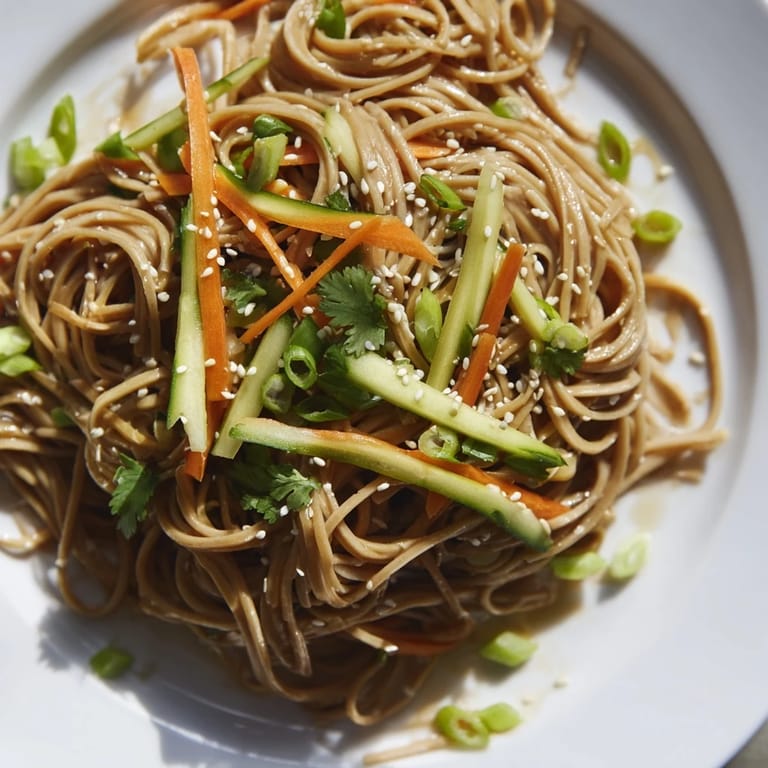
Save There's something quietly satisfying about opening your fridge mid-week and seeing those four identical containers lined up, knowing you've already solved lunch for the next few days. It's a small thing, but when you're busy, small things matter.
Storage and Make-Ahead Magic
These containers keep beautifully for up to three days, which is the sweet spot before the noodles start to absorb too much sauce and lose their bounce. I like to assemble everything the day before, but if you're in a rush, you can prep all the components and mix them right before eating—sometimes it's worth the two extra minutes for a fresher taste.
When You Want More Protein
The base recipe is vegetarian, but it's honestly begging for a protein if you're eating it as a full meal. Cubed tofu adds an earthy note, shredded chicken keeps things light, and edamame brings a pop of color and creamy texture that everyone seems to love.
Adapting This for Your Spice Level and Diet
Spice preferences are so personal, so start conservatively with the chili garlic sauce and taste as you go. For a gluten-free version, swap the soy sauce for tamari and use rice noodles or gluten-free soba, and everything works exactly the same way.
- Always taste your sauce before sealing the containers—what seems mild in a small bowl might feel hotter after a day of sitting.
- If cilantro isn't your thing, mint or a little extra green onion works beautifully instead.
- This dish is completely customizable, so treat the vegetables as suggestions, not rules.
 Save
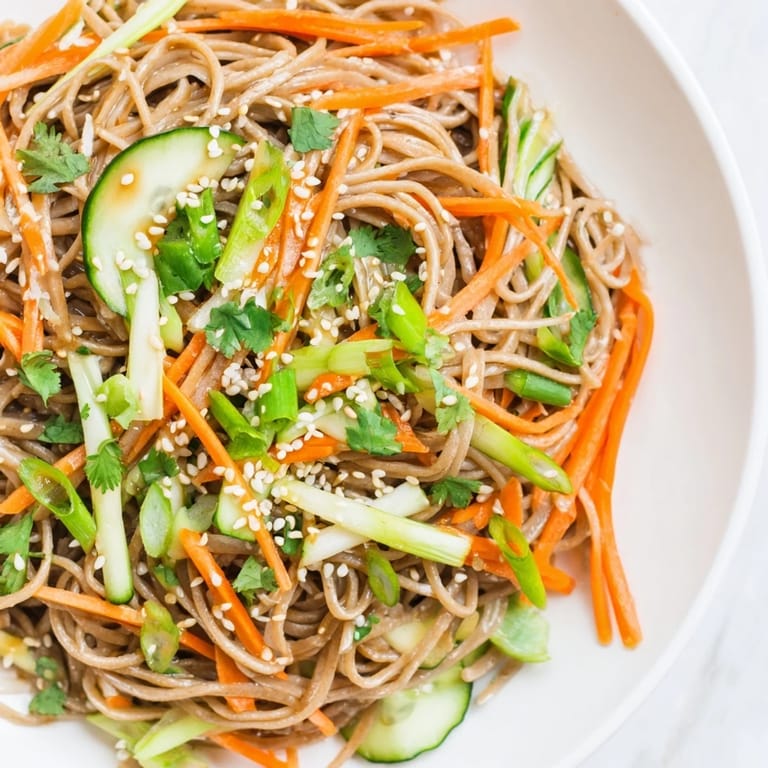
Save There's real freedom in knowing exactly what you're eating for lunch all week, and there's genuine pleasure in how something so simple tastes this good. Make these once, and they'll become part of your regular rotation.
Kitchen Help
- → What type of noodles work best?
Soba or rice noodles are preferred; both chill well and absorb flavors effectively.
- → How to adjust for spice preference?
Modify the amount of chili garlic sauce to achieve your desired heat level.
- → Can this be prepared ahead?
Yes, the noodles and toppings can be assembled in advance and refrigerated for convenience.
- → What garnishes enhance texture?
Julienned cucumber, carrots, green onions, toasted sesame seeds, and optional cilantro add crunch and fresh flavor.
- → Are there gluten-free options?
Use gluten-free tamari and gluten-free noodles to accommodate gluten sensitivities.