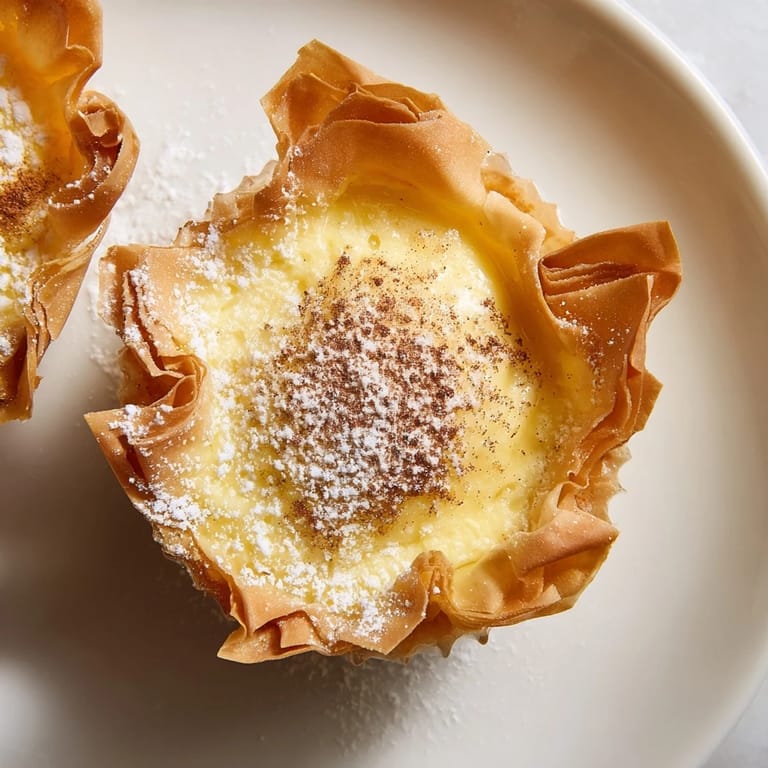
 Save
Save There's a café in Lisbon where I first bit into a Portuguese egg tart, and the flaky phyllo shattered between my teeth while warm custard, spiced with cinnamon, melted on my tongue. I've chased that exact feeling ever since, and after countless kitchen experiments, I realized the magic isn't complicated—it's about respecting the simplicity of butter, eggs, and that unmistakable warmth of cinnamon. These tarts became my answer to cravings that appear at odd hours, the kind of dessert that tastes like you spent hours perfecting it when really, you've just been patient and thoughtful.
I once made these for a friend who showed up after a rough day, skeptical about homemade desserts, and watched her shoulders drop the moment she took her first bite. She didn't say anything for a few seconds—just closed her eyes—and that quiet moment told me everything about why this recipe matters to me.
Ingredients
- Phyllo pastry sheets: Buy them fresh or frozen; frozen actually works beautifully once thawed. The layering is what gives you those shattered, golden cups.
- Unsalted butter, melted: This is your binding agent and your path to crispness—brush generously between each sheet.
- Whole milk: Don't skip it for a lighter alternative; the custard needs that richness to feel luxurious.
- Cornstarch: This is your thickener, and it prevents the custard from becoming grainy if you cook it past the perfect moment.
- Heavy cream: The secret to silkiness; don't substitute with milk.
- Granulated sugar: Sweetness that dissolves cleanly into the custard without grittiness.
- Egg yolks: Use room temperature eggs if you can—they incorporate more smoothly and cook more evenly.
- Vanilla extract: A whisper of flavor that rounds out the custard without overpowering.
- Ground cinnamon: The soul of this dessert; use good quality cinnamon that smells warm and complex.
- Powdered sugar: The final dusting that looks elegant and adds a subtle sweetness on top.
Tired of Takeout? 🥡
Get 10 meals you can make faster than delivery arrives. Seriously.
One email. No spam. Unsubscribe anytime.
Instructions
- Prep your oven and phyllo:
- Heat the oven to 200°C (400°F). Lay out your phyllo sheets and keep them under a damp kitchen towel so they don't dry out—they're delicate creatures.
- Build your cups:
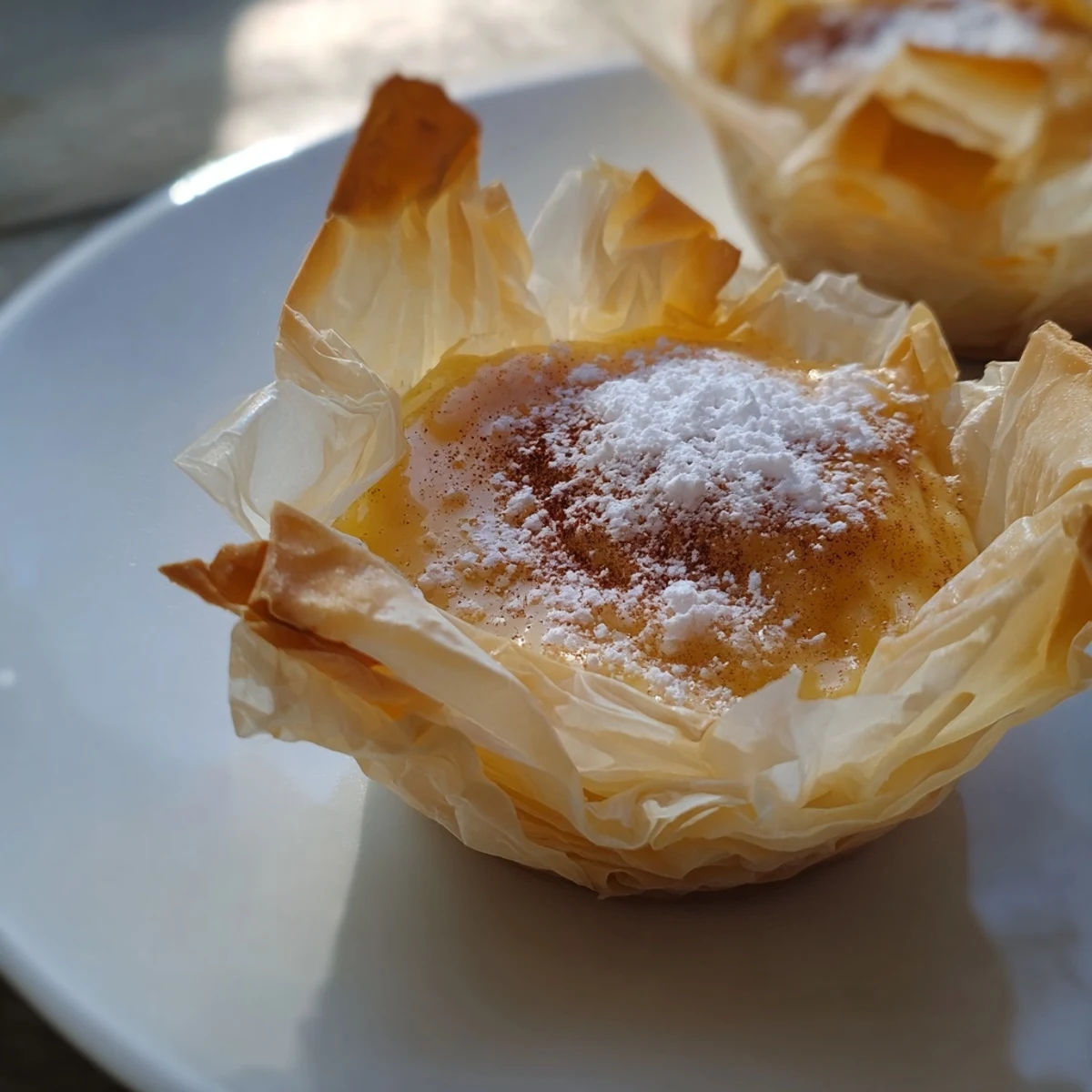
- Brush each sheet lightly with melted butter, then stack three together. Using a sharp knife or pizza cutter, cut squares just larger than your muffin cup openings, then gently press each stack into the tin, letting corners curl slightly for rustic appeal.
- Bake the shells:
- Bake for 8–10 minutes until the phyllo turns pale golden and feels crisp. The butter will have done its job.
- Make the custard:
- In a medium saucepan, whisk milk and cornstarch until completely smooth—lumps are your enemy here. Add cream, sugar, egg yolks, vanilla, cinnamon, and salt, whisking until everything is incorporated.
- Cook with patience:
- Place the pan over medium heat and whisk constantly; this takes about 5–7 minutes. You'll feel the custard thicken gradually, and you'll smell the cinnamon release its warmth—that's your signal you're nearly there. Stop the moment it coats the back of a spoon.
- Fill and bake:
- Pour warm custard into each phyllo cup, dividing evenly. Bake for 8–10 minutes until the custard sets with just a slight jiggle in the center.
- Finish and serve:
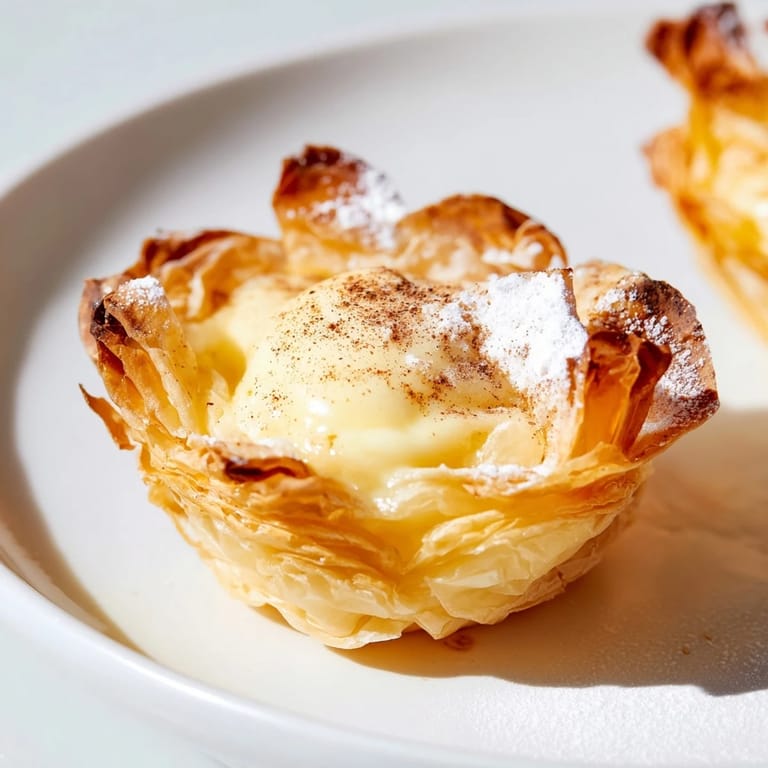
- Cool slightly, dust with cinnamon and powdered sugar, and serve while still warm enough that steam rises gently from the custard.
 Save
Save The first time I served these warm to my family, my mother tasted one and immediately asked for the recipe, which felt like the highest compliment she could give. That's when I realized this wasn't just a dessert—it was a small way of saying I care enough to spend time in the kitchen for you.
The Phyllo Secret
Phyllo is forgiving if you understand its personality. It loves butter and fears dryness, so the moment you pull it from its package, work quickly and keep unused sheets covered. I've learned that slightly thicker butter application means golden, crispy cups that shatter just the way you want them to, while too little butter gives you sad, chewy pastry that sticks.
Getting Your Custard Right
The custard is where patience pays off. Watch it carefully as it heats, and you'll notice the moment it shifts from thin liquid to silky cream—that's the moment to stop. One more minute of heat won't hurt, but five more will turn it heavy and dull the delicate flavor of the cinnamon and vanilla underneath.
Serving and Storage
These tarts sing when served warm, but they're equally lovely at room temperature, and even better gently reheated the next day. The phyllo will crisp back up, and the custard will settle into a silky firmness that's somehow more elegant than when freshly baked.
- Leftovers keep chilled for up to three days, tucked into an airtight container.
- Reheat in a 160°C (325°F) oven for 5–7 minutes to restore the phyllo's crispness without drying the custard.
- Pair with strong coffee, espresso, or a glass of cold white port for that authentic Portuguese experience.
 Save
Save These Portuguese egg tarts are proof that the best desserts are often the simplest ones, born from respecting good ingredients and giving them time to shine. Make them once, and they'll become the recipe you return to again and again.
Kitchen Help
- → What type of pastry is used for the tart cups?
Phyllo pastry sheets are layered and baked to create crisp, flaky cups that hold the custard filling.
- → How is the custard thickened?
Cornstarch is whisked into milk and combined with egg yolks, cream, and sugar, then cooked until thickened over medium heat.
- → What spice adds warmth to the custard?
Ground cinnamon is added to both the custard and as a dusting on top, providing a warm, aromatic flavor.
- → How should the tarts be served for best texture?
Serve slightly warm to enjoy the perfect contrast between creamy filling and crisp pastry.
- → Can the tarts be stored and reheated?
Yes, store leftovers chilled and reheat briefly in the oven to restore crispness.