 Save
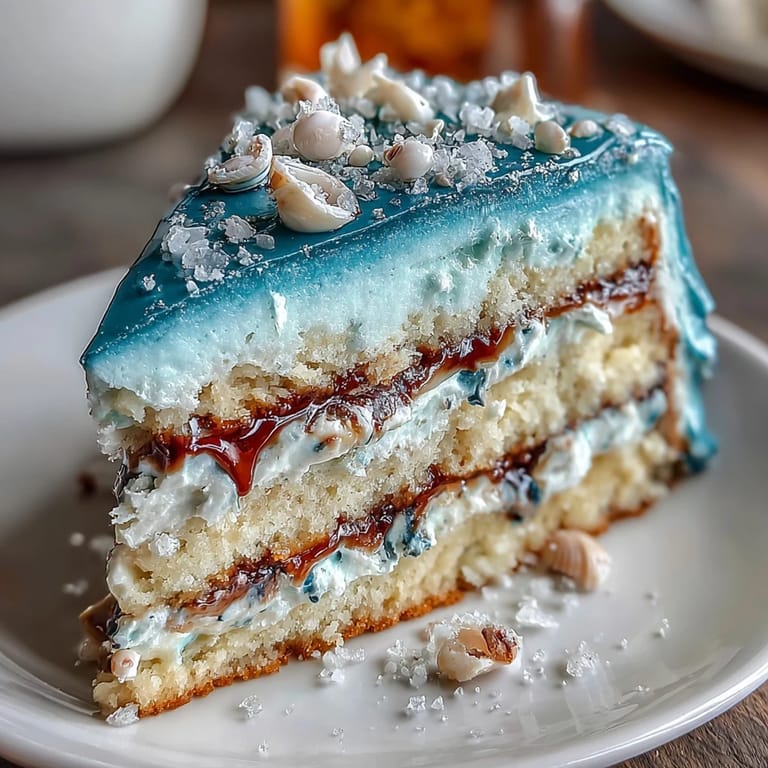
Save My friend Sarah mentioned offhandedly that her birthday was coming up, and when I asked her sign, she lit up talking about being a Pisces. That evening, I found myself scrolling through cake ideas and stopped cold at an image of an ocean blue ombre frosting that seemed to shimmer like water itself. I knew instantly this was the cake that had to exist for her party, something that captured that dreamy, fluid energy she always carried into a room. By the time I actually made it, I was already imagining how her eyes would widen when she saw it.
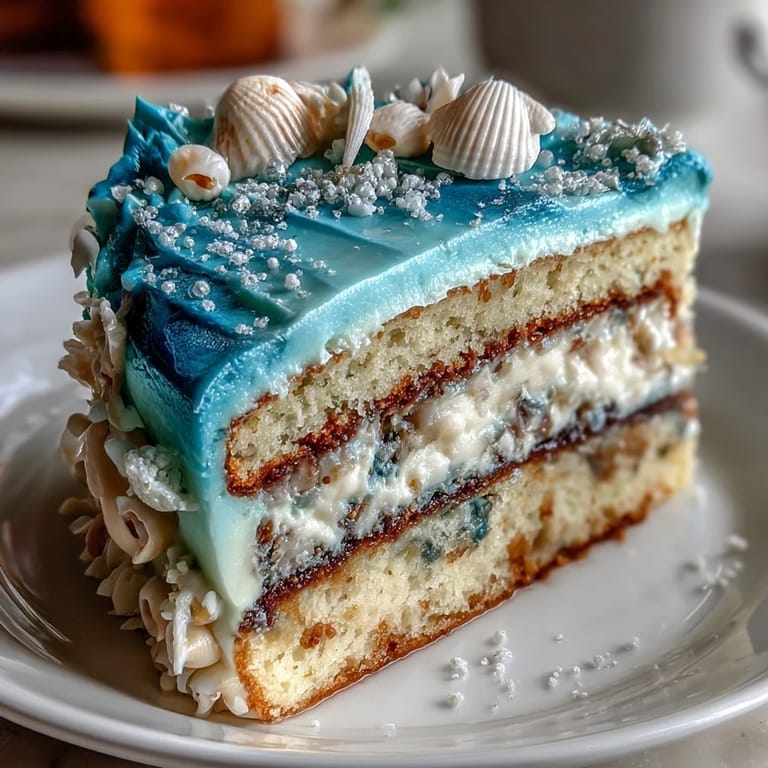
What I didn't expect was how meditative the frosting process would become. Standing there with four bowls of buttercream and different shades of blue gel coloring, carefully dropping in color and watching it bloom through the white, I felt oddly calm. My daughter wandered into the kitchen halfway through and stood watching in silence, then whispered, "It looks like the ocean is happening in bowls." When Sarah actually cut into the cake at her party, the whole room gasped, which might sound dramatic until you've experienced the satisfaction of a room gasping at something you created.
Ingredients
- All-purpose flour: The foundation of a tender crumb—sifting it with the baking powder and salt ensures even distribution so you don't end up with dense pockets.
- Baking powder: This is your lift agent, so make sure yours is fresh because old baking powder won't give you that light, fluffy rise.
- Unsalted butter: Room temperature is non-negotiable here because cold butter won't cream properly with the sugar, leaving you with a dense, sad cake.
- Granulated sugar: Creaming this with butter for several minutes incorporates air, which is literally what makes the cake fluffy.
- Eggs at room temperature: Cold eggs won't incorporate smoothly into the batter and can cause the mixture to break or separate.
- Pure vanilla extract: The real stuff makes a noticeable difference in flavor—imitation will work but tastes a bit flat by comparison.
- Whole milk at room temperature: This keeps the batter at an ideal temperature while you're mixing, preventing the butter from seizing.
- Unsalted butter for frosting: You need fresh, quality butter here because the frosting is 95 percent butter and sugar—there's nowhere to hide mediocre ingredients.
- Powdered sugar: Sift it first, every single time, or your frosting will have lumps that no amount of beating will fix.
- Blue gel food coloring: Liquid coloring will thin out your frosting and ruin the ombre effect, so gel is genuinely essential for this recipe.
Tired of Takeout? 🥡
Get 10 meals you can make faster than delivery arrives. Seriously.
One email. No spam. Unsubscribe anytime.
Instructions
- Get your mise en place ready:
- Preheat the oven to 350°F (175°C) and grease three 8-inch round pans, lining them with parchment paper so the cakes release cleanly. Having everything prepared before you start mixing means you won't panic when the batter is ready and your pans are still sitting empty.
- Build the dry mixture:
- Sift flour, baking powder, and salt into a bowl and set it aside—sifting is the part that actually matters for texture, not just a fancy step. This ensures every bit of the cake gets even leavening.
- Cream the butter and sugar:
- Beat the softened butter and sugar together for 3-4 minutes until it looks light, pale, and a little fluffy, almost like clouds. This is where the air gets incorporated into the cake, so don't skip this step or rush it.
- Add eggs one at a time:
- Drop in each egg individually, letting it fully incorporate before adding the next one, then add the vanilla extract. This prevents the batter from looking curdled or separated.
- Alternate wet and dry ingredients:
- Add the flour mixture and milk in alternating additions, starting and ending with flour, mixing just until combined. Overmixing at this stage develops gluten and makes the cake tough, so stop as soon as you don't see dry streaks.
- Divide and bake:
- Distribute batter evenly among pans, smooth the tops, and bake for 25-30 minutes until a toothpick comes out clean. The cakes will smell incredible right before they're done, and that's your signal to check them.
- Cool with patience:
- Let cakes sit in pans for 10 minutes, then turn them out onto wire racks to cool completely, which takes a couple of hours. Frosting warm cake is a recipe for melted, slippery disaster.
- Make the frosting:
- Beat softened butter until creamy, then add powdered sugar gradually while mixing, followed by vanilla and salt, then milk until spreadable. The key is going slow so you don't end up with a cloud of powdered sugar all over your kitchen.
- Create the ombre gradient:
- Divide frosting into four bowls and tint each one with blue gel coloring, creating shades from pale to deep ocean blue. Start light and add color drop by drop because gel coloring is concentrated, and one extra drop can shift the shade dramatically.
- Layer and frost:
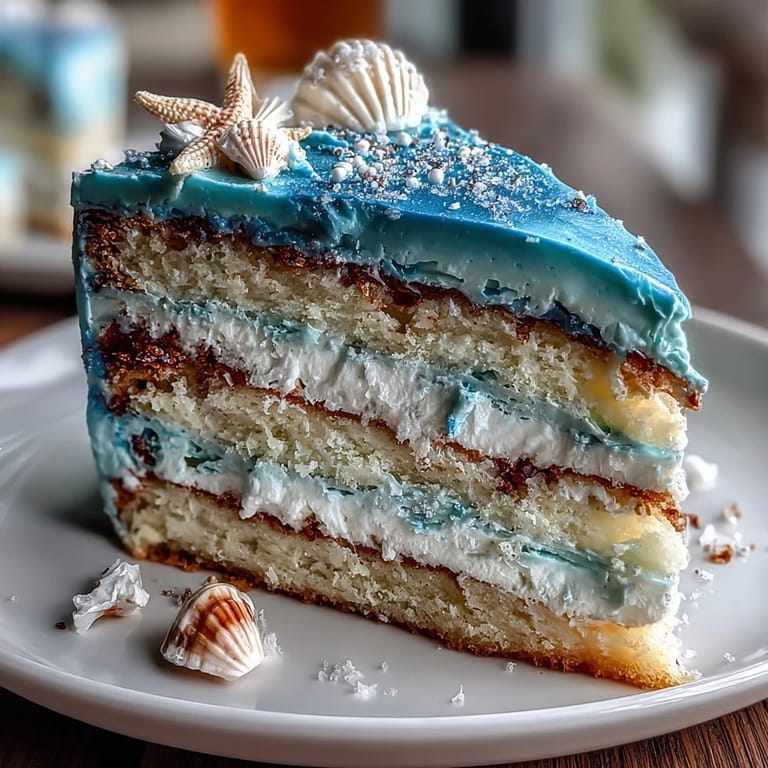
- Place the first cake layer on a plate, spread with the lightest blue frosting, and repeat with remaining layers. Using an offset spatula, frost the sides and top, starting with the palest shade at the top and gradually working down to the deepest blue at the base, blending where colors meet.
- Chill before serving:
- Refrigerate the finished cake for at least 30 minutes so the frosting sets and makes for clean slices. This step feels unnecessary until you try to slice a warm cake and end up with frosting smears instead of beautiful layers.
 Save
Save Watching Sarah's face when she saw the cake was the moment I understood why people bother learning to bake. It wasn't just about food anymore—it was about creating something beautiful enough to make someone feel genuinely special on their day.
The Ombre Technique That Actually Works
The ombre frosting seems intimidating until you actually start doing it, and then it becomes almost meditative. The secret is working with an offset spatula and blending colors where they meet rather than trying to keep them perfectly separate—that's what makes it look like an ocean gradient instead of painted stripes. I've found that starting with the lightest shade on top and working down to the deepest blue at the base feels most natural, but you can absolutely reverse it if you prefer the depths at the top.
Making This Cake Your Own
The vanilla base is intentionally simple because it's a blank canvas for personalization. Some people brush the layers with simple syrup for extra moisture, others add lemon zest to the batter for brightness, and I've even seen versions where someone incorporated a touch of almond extract for complexity. The decorative elements are where you can really play—white chocolate seashells, edible glitter, pearl-shaped dragées, or even blue sprinkles scattered on top.
Why This Cake Matters More Than Most
There's something about creating a cake specifically inspired by someone's zodiac sign that transforms it from dessert into a gesture. It says you thought about who they are, what speaks to them, and then you spent hours creating something beautiful in their honor. The Pisces connection isn't just decoration—it's intention baked into three layers of sponge and frosting.
- Gel coloring is your secret weapon for achieving those vibrant blues without compromising frosting texture.
- Don't skip the cooling time before frosting, even if your guests are arriving soon—warm cake equals frosting disaster.
- Make the frosting and bake the cakes on different days if possible, which reduces stress and gives you more time to focus on the ombre blending.
 Save
Save This cake became my answer to the question of how to celebrate people you care about with something that feels personal and magical. Make it for a Pisces, make it for anyone whose favorite color is blue, or make it just because you want your kitchen to smell like buttery vanilla while you create something that makes people genuinely happy.
Kitchen Help
- → What is the best way to achieve the blue ombre effect?
Divide the frosting into multiple portions and tint each with varying amounts of blue gel food coloring, ranging from pale to deep blue. Spread them layer by layer, blending edges gently.
- → How can I keep the cake moist?
Brushing the layers with simple syrup before frosting helps retain moisture and enhances softness throughout the cake.
- → What tools are recommended for frosting application?
An offset spatula allows for smooth, precise spreading and blending of the ombre frosting across cake surfaces.
- → Can I add flavor variations to the vanilla sponge?
Yes, incorporating lemon zest into the batter provides a refreshing citrus note that complements the vanilla beautifully.
- → How long should the cake chill before slicing?
Chill the cake for at least 30 minutes to allow the buttercream to set, ensuring cleaner, neater slices.