 Save
Save My sister texted me a photo of her garden in September—strawberries still going strong, and I knew exactly what I wanted to make. Mini pavlovas had been lurking in my mind ever since a friend served them at her patio lunch, those crispy-on-the-outside, marshmallowy-inside nests that somehow made everyone at the table slow down and actually taste what they were eating. The first time I attempted them solo, I was terrified of the egg whites, convinced I'd mess up the peaks, but something about the quiet focus of beating them—listening for that shift in sound—made the whole process feel almost meditative.
I made these for a small birthday gathering last spring, and what stuck with me wasn't the compliments—though there were plenty—but watching my friend's seven-year-old carefully balance her pavlova on a napkin, completely absorbed in the task of not dropping it. That concentration, that care taken with something delicate, felt like I'd accidentally created a small moment that mattered.
Ingredients
- Egg whites (4 large, room temperature): This matters more than you'd think; cold eggs won't whip up properly, so take them out of the fridge about 30 minutes before starting, and make sure your bowl is absolutely grease-free or they'll never reach stiff peaks.
- Superfine sugar (1 cup / 200 g): The fine grain dissolves faster into the egg whites, creating that glossy, smooth meringue without grainy texture—regular sugar works but you'll need to beat longer and risk overdoing it.
- Cornstarch (1 teaspoon): This is the secret ingredient that keeps the inside slightly chewy while the outside stays crisp; it absorbs some moisture and creates that signature pavlova texture.
- White vinegar (1 teaspoon): It's subtle but essential, helping stabilize the egg whites and adding a whisper of tang that balances the sweetness without announcing itself.
- Vanilla extract (1 teaspoon for meringue): Choose real vanilla if you can; it deepens the flavor in a way that artificial extract can't quite match.
- Heavy whipping cream (1 cup / 240 ml, cold): Keep it cold so it whips quickly and holds those soft peaks; warm cream becomes grainy and disappoints.
- Powdered sugar (2 tablespoons): Dissolves instantly into cream without the gritty feeling of granulated sugar, and helps stabilize the whipped cream.
- Fresh strawberries (1½ cups / 225 g): Choose ones that smell sweet and feel slightly soft—the ones that make you close your eyes when you smell them—and macerate them with a little sugar and lemon juice to release their own juices and intensify the flavor.
Tired of Takeout? 🥡
Get 10 meals you can make faster than delivery arrives. Seriously.
One email. No spam. Unsubscribe anytime.
Instructions
- Set the stage:
- Preheat your oven to 250°F (120°C) and line a baking sheet with parchment paper. Make sure your mixing bowl and beaters are completely clean and dry—any bit of grease or moisture will sabotage the egg whites, so wipe everything down with a clean cloth or vinegar-dampened paper towel if you're being extra cautious.
- Beat the egg whites to soft peaks:
- Pour your room-temperature egg whites into the bowl and turn the mixer to medium speed. You're listening for the moment when the foam gets thick and billowy, and when you lift the beaters, small peaks form that curl slightly at the tip—this usually takes about 3 to 4 minutes of steady beating.
- Add sugar gradually and build to stiff peaks:
- Now comes the patient part: add the superfine sugar one tablespoon at a time, beating after each addition. This slow approach dissolves the sugar properly and prevents the meringue from becoming grainy; after all the sugar is in, keep beating until the mixture is glossy, thick, and holds stiff peaks that stand straight up without drooping.
- Fold in the secret ingredients:
- Sprinkle the cornstarch, vinegar, and vanilla over the meringue, then use a spatula to gently fold them in with as few strokes as possible. You want to preserve all that air you just whipped into the eggs, so be tender about it—a dozen careful folds should do the trick.
- Shape the nests:
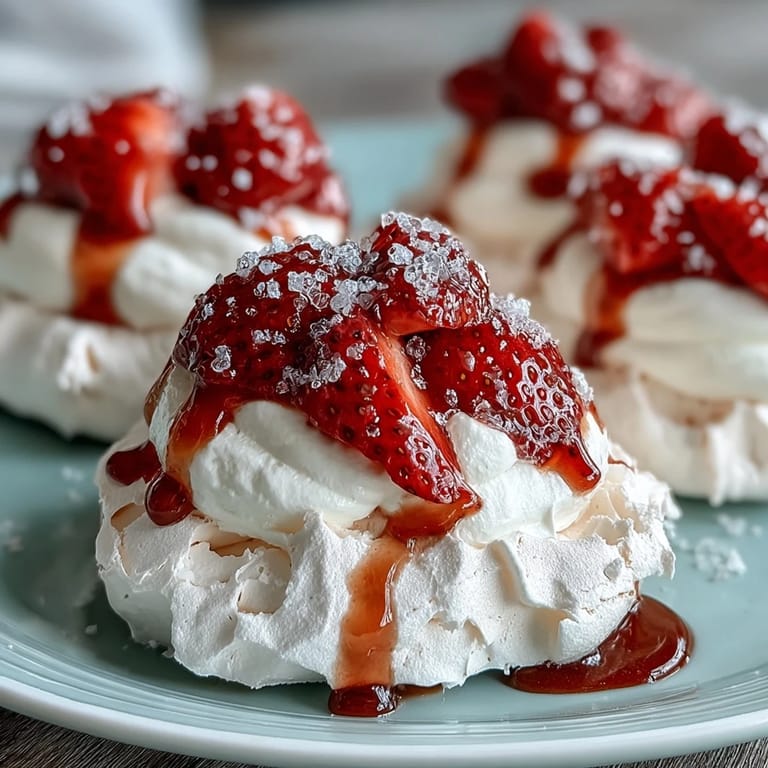
- Spoon or pipe the meringue into 6 small mounds on your parchment paper, leaving a couple of inches between each one, then use the back of a spoon or a piping tip to create a gentle indentation in the center of each nest. The shape doesn't need to be perfect; in fact, rustic-looking pavlovas often feel more charming and homemade.
- Low and slow baking:
- Bake for exactly 1 hour at 250°F—the meringues should turn pale cream colored, feel crisp on the outside when you gently tap one, but still have that hidden chewiness inside. When the hour is up, turn off the oven, prop the door open a crack (a wooden spoon works perfectly), and let them cool completely inside the oven; this gradual cooling prevents cracking and keeps them tender.
- Prepare the strawberries:
- While the meringues cool, toss your sliced strawberries with a tablespoon of granulated sugar and a teaspoon of lemon juice in a small bowl. Let them sit for about 15 minutes—they'll release their own juices and become even more flavorful and juicy.
- Whip the cream:
- Pull out your cold heavy cream and whip it in a clean bowl until it starts to thicken, then add the powdered sugar and vanilla and keep going until soft peaks form. This should only take a few minutes; overbeat it and you'll have grainy butter, so stop while it's still cloud-like and voluminous.
- Assemble and serve:
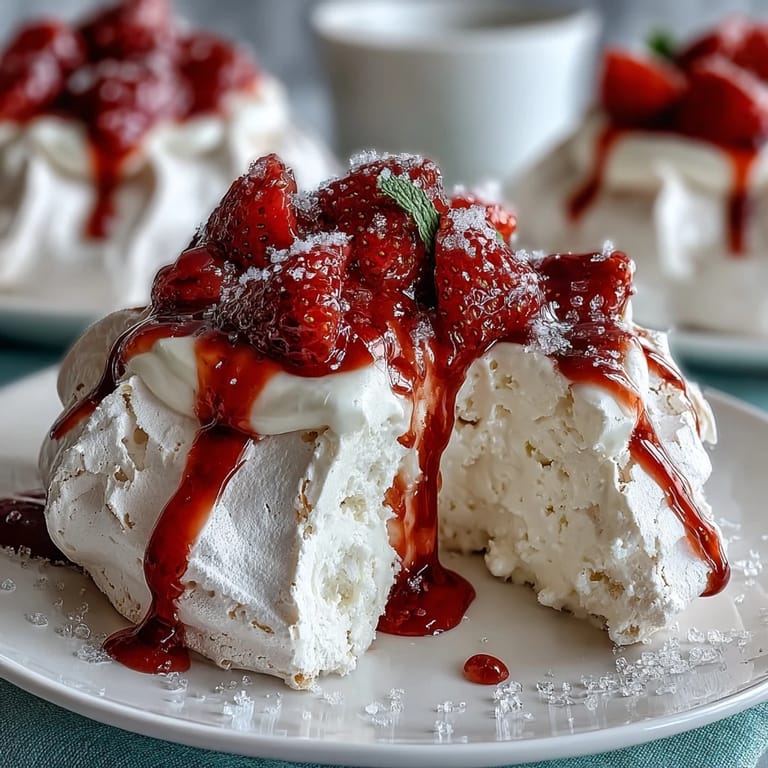
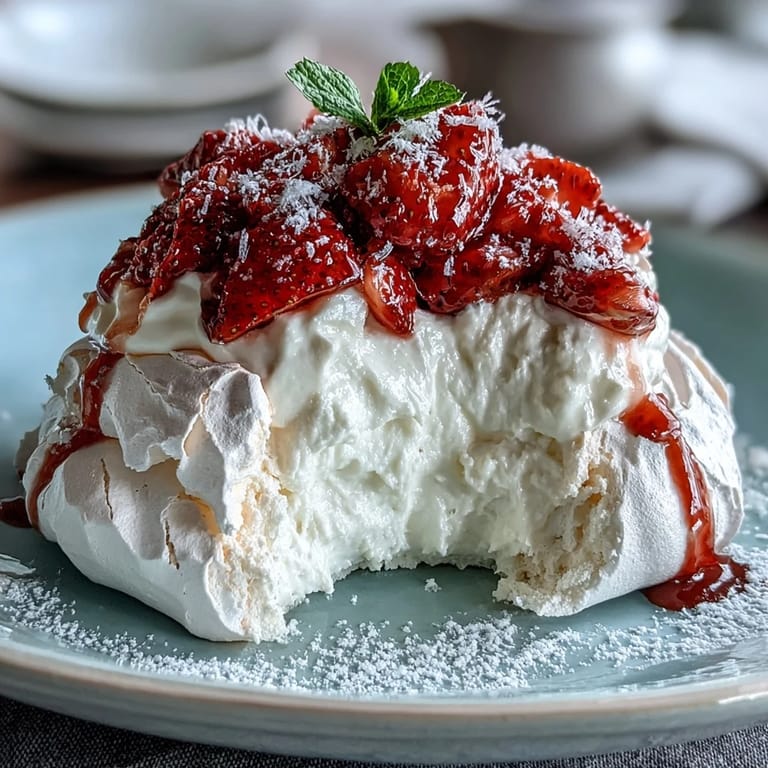
- Place each cooled meringue on a serving plate, spoon a generous dollop of whipped cream into the center, and top with the macerated strawberries and a few spoonfuls of their juices. Serve immediately so the meringue stays crisp and the cream stays cool.
 Save
Save There's something almost magical about the moment you pull pavlovas from the oven and the kitchen fills with that warm, slightly sweet meringue smell. My kitchen timer went off once while I was on a video call with my mom, and I could hear in her voice the exact second she realized what I was baking—that immediate recognition of something special, and I knew I'd nailed it.
The Texture Trick
The secret to perfect pavlovas lies in understanding that they're supposed to be textural contradictions. The outside should shatter between your teeth while the inside stays chewy and almost marshmallow-soft—if you've made them and they're hard all the way through, you've baked them too long or at too high a temperature. If they're soft and sticky, the oven wasn't hot enough or they didn't cool properly. It's a narrow window, but once you nail it once, your hands remember the feel of a properly done meringue.
Why Strawberries and Cream Matter
Maceration—letting the strawberries sit with sugar and lemon juice—sounds fancy but it's just giving them permission to release their own juices. This creates a gentle syrup that soaks into the meringue slightly, softening it just enough that it's not aggressively crunchy, while the cream stays cool and billowy. The lemon juice brightens everything and cuts through the sweetness in a way that makes the whole dessert feel fresh rather than heavy.
Timing and Storage
One of the best things about this recipe is that it's forgiving about timing—the meringue nests can be made a full day ahead and stored in an airtight container, which means you can do the stressful part when you're calm and focused, then just focus on whipping cream and slicing berries an hour before guests arrive. The only thing you can't do ahead is the final assembly, because once cream meets meringue, time becomes important and texture degrades within 10 or 15 minutes.
- Make the meringues the morning of or even the day before, and keep them in an airtight container away from humidity.
- Whip your cream no more than an hour before serving, and keep it cold until the last moment.
- Slice and macerate strawberries up to 2 hours ahead; their juices will intensify and they'll taste even better.
 Save
Save These little meringue nests have a way of making people feel special, which is really all any dessert should do. Make them when you want to impress someone—or even just yourself—because sometimes the most graceful meals are the ones we create in quiet focus, then share with the people we love.
Kitchen Help
- → How do I achieve crisp meringue nests?
Bake the meringue at low temperature (around 120°C) for one hour, then let them cool inside the oven with the door slightly open to maintain crispness.
- → Can I use other fruits instead of strawberries?
Yes, fresh berries like raspberries or blueberries work well and can be macerated similarly for added sweetness.
- → What ensures fluffy whipped cream topping?
Use cold heavy cream and beat it with powdered sugar and vanilla until soft peaks form for a smooth, light texture.
- → How to prevent meringue from cracking?
Beat egg whites until stiff peaks form, fold ingredients gently, and avoid sudden temperature changes during baking and cooling.
- → Can these be prepared in advance?
Yes, meringue nests can be baked a day ahead and stored airtight; assemble with cream and strawberries just before serving to retain texture.