 Save
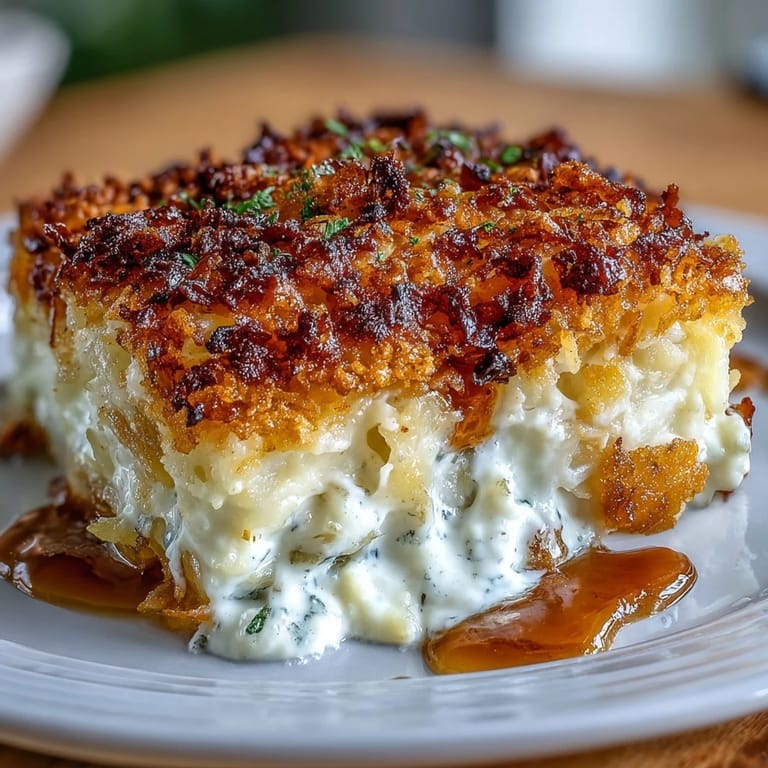
Save My aunt brought this casserole to a family gathering years ago, and nobody realized it was the lightened-up version until she mentioned it halfway through. The crispy cornflake topping caught everyone's attention first, then the creamy potato filling won them over—there was something about the tangy Greek yogurt that made it feel fresher than the traditional version without losing any comfort. I've made it countless times since, and it's become my go-to when I want something that feels indulgent but doesn't leave me feeling heavy afterward.
I made this for a potluck last winter, and what struck me most was how the casserole held its temperature in my car during the drive over—it arrived still bubbling, which meant the cheddar and yogurt sauce stayed silky rather than separating. One of my coworkers asked for the recipe immediately because she was amazed something this satisfying could be on the lighter side.
Ingredients
- Frozen shredded hash brown potatoes: Using frozen saves you chopping time and honestly keeps the texture more consistent—just thaw them fully and squeeze out excess moisture so your casserole doesn't turn watery.
- Reduced-fat shredded cheddar cheese: Don't skip the good quality stuff here; it melts more smoothly and actually tastes cheesy rather than like a plastic version of itself.
- Yellow onion and garlic: These two are your flavor foundation, and taking the time to cook them until soft before building the sauce makes everything taste more polished.
- Plain Greek yogurt: Make sure it's plain and not vanilla, and I prefer 2% over nonfat because nonfat can sometimes taste a bit thin when baked.
- Low-sodium broth: This keeps the sauce from getting too salty when combined with the cheese, and you can swap between chicken and vegetable depending on your preference.
- Cornflakes: Crush them just enough so they're still chunky—this creates pockets of crispy texture rather than a dense, breadcrumb-like topping.
Tired of Takeout? 🥡
Get 10 meals you can make faster than delivery arrives. Seriously.
One email. No spam. Unsubscribe anytime.
Instructions
- Set up and preheat:
- Get your oven going at 350°F and grease your baking dish generously. This step might seem simple, but a well-greased dish means your casserole releases cleanly and you're not scraping edges later.
- Sauté your aromatics:
- Heat olive oil in a large skillet and add your diced onion, letting it soften for about 3 minutes until it's translucent and sweet-smelling. Add the garlic and cook for just 1 minute more—you want it fragrant but not brown, which would make it taste bitter.
- Make a light roux:
- Sprinkle flour over the onion mixture and stir constantly for 1 minute. This prevents lumps when you add the broth and helps thicken the sauce naturally.
- Build the sauce:
- Gradually whisk in your broth, letting it come together smoothly without any floury lumps. You'll notice it thickens slightly as it simmers for 2 to 3 minutes.
- Add the yogurt magic:
- Remove the pan from heat and stir in your Greek yogurt along with the onion powder, garlic powder, salt, and pepper. The heat matters here—if you add yogurt to a screaming hot pan, it can break, so take a breath and let it cool slightly first.
- Combine everything:
- Toss your thawed hash browns and cheddar cheese into a large bowl, then pour the yogurt sauce over and stir until every potato piece is coated. Don't be timid with the mixing; you want everything evenly distributed.
- Layer and top:
- Spread the potato mixture into your prepared baking dish, then toss your crushed cornflakes with melted butter and scatter them evenly across the top. The butter helps them brown beautifully.
- Bake until golden:
- Bake uncovered for 40 to 45 minutes, until the casserole is bubbling around the edges and the cornflake topping is deeply golden. The bubbling edges mean the sauce is hot throughout.
- Rest before serving:
- Let it cool for 5 to 10 minutes so the sauce sets slightly and won't run all over the plate. This resting time also makes serving so much neater.
 Save
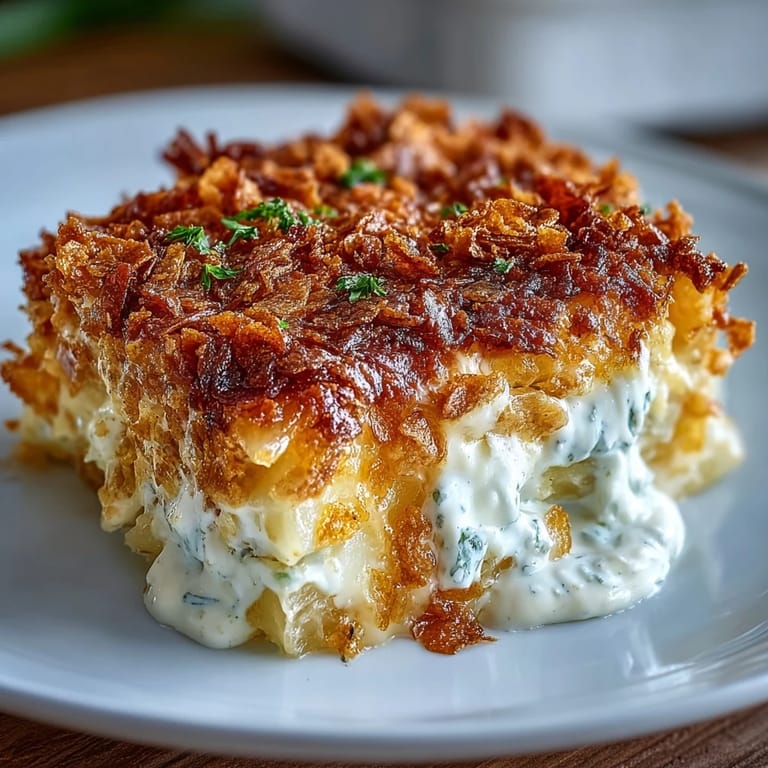
Save My mom called to ask how I managed to bring a dish that looked so restaurant-quality to a church dinner, and I remember laughing because it's honestly one of the easiest things I make. There's something deeply satisfying about serving something that's both comforting and thoughtful, especially when people realize they don't have to feel bad about enjoying it.
Why This Casserole Works
The beauty of using Greek yogurt here is that it gives you tang and protein without the heaviness of sour cream or heavy cream. It's become my favorite trick for casseroles because it keeps the creamy texture everyone loves while making the whole dish feel brighter and more balanced. The broth acts as a buffer, thinning the yogurt just enough so it coats the potatoes rather than clumping up, and together they create something that tastes rich but feels lighter on your stomach.
The Cornflake Topping Secret
That crispy golden topping isn't just decoration—it's the textural contrast that makes you want to go back for seconds. I learned early on that crushing the cornflakes too much turns them into dust, so now I crush them just enough to break them into irregular chunks. When they bake with butter, they crisp up beautifully and provide this satisfying crunch against the creamy potato base beneath.
Variations and Customizations
One of my friends adds diced green onions to her version for a fresh, oniony bite that cuts through the richness, and it genuinely transforms the dish into something with more complexity. I've also tried adding diced bell peppers for sweetness and color, or even a handful of chopped fresh chives right before serving for a pop of flavor. The basic recipe is sturdy enough to handle additions without falling apart, which is why it's such a reliable foundation for whatever vegetables or flavors you're craving.
- Stir in green onions or bell peppers for extra texture and flavor.
- For gluten-free, swap regular flour and cornflakes with their gluten-free counterparts.
- Make it ahead, refrigerate overnight, and bake an extra 10 minutes to compensate for the chill.
 Save
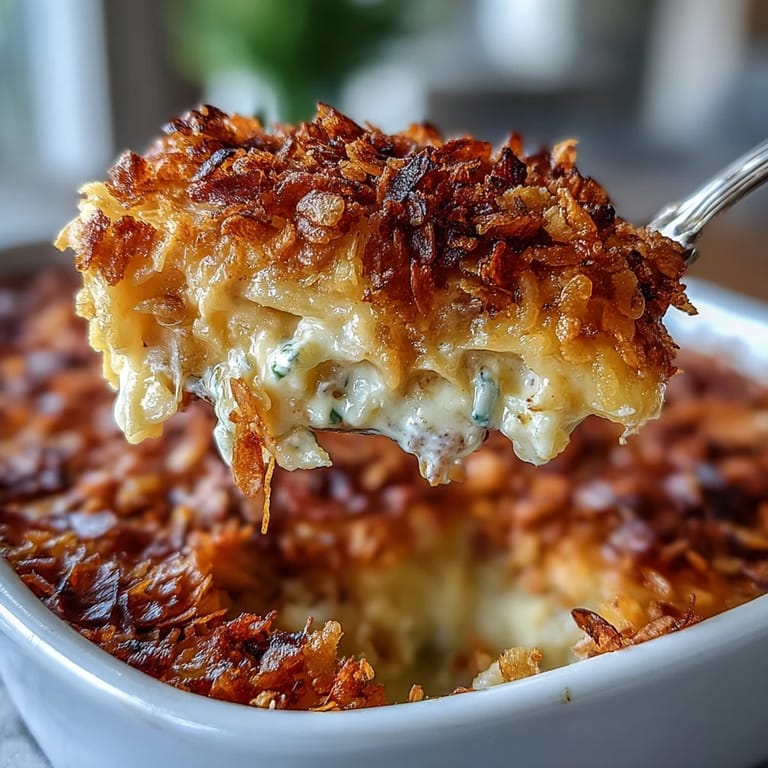
Save This casserole has become my answer to those moments when I want to bring something that feels special but doesn't stress me out. It's proof that comfort food and healthier eating don't have to be on opposite sides of the table.
Kitchen Help
- → Can I use fresh potatoes instead of frozen shredded ones?
Yes, fresh potatoes can be shredded and used, but ensure they are well-drained to avoid excess moisture which may affect the casserole’s texture.
- → Is it possible to make this casserole gluten-free?
Absolutely. Substitute regular flour with a gluten-free alternative and use gluten-free cornflakes for the topping.
- → What variations work well with this dish?
Adding chopped green onions, diced bell peppers, or swapping cheddar for another cheese can enhance the flavor and texture.
- → Can vegetable broth be used instead of chicken broth?
Yes, vegetable broth is a great alternative, especially for vegetarian versions, maintaining the dish’s savory depth.
- → How can I make the topping extra crispy?
Lightly crushing cornflakes and mixing them with melted butter before sprinkling ensures a crisp, golden crust after baking.