 Save
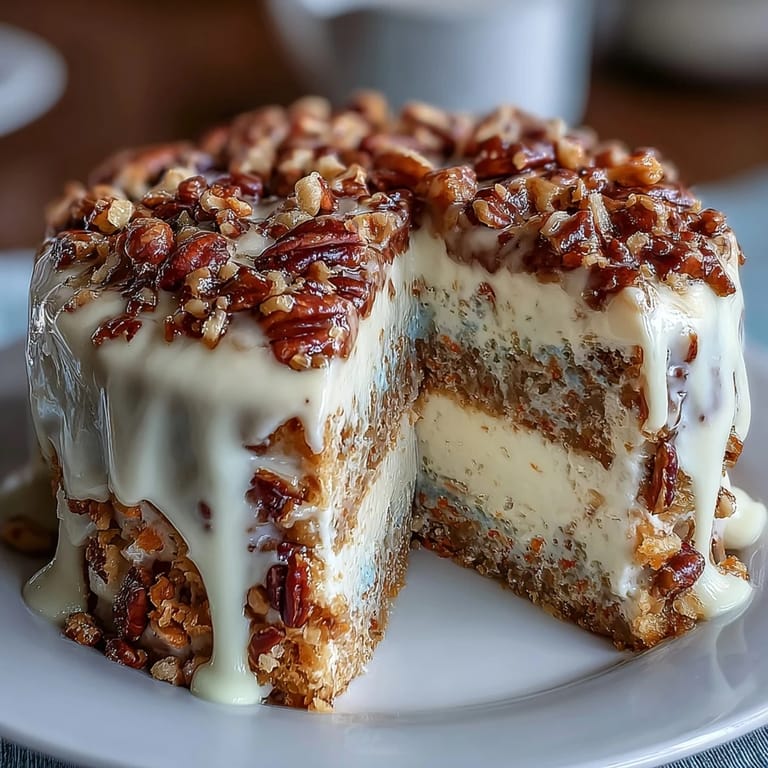
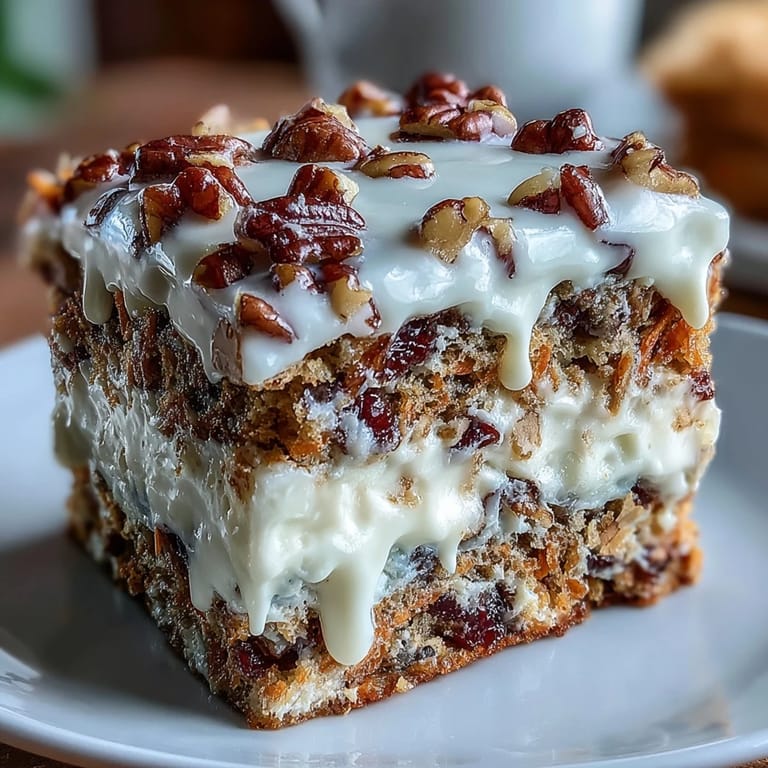
Save Spring arrived with a farmers market haul and my sister's text asking if I could make something for her book club. I stood in my kitchen holding a bunch of carrots still dusted with soil, suddenly remembering how my grandmother used to say carrots belonged in dessert as much as vegetables. That afternoon, I mixed up this three-layer carrot cake and watched it rise in the oven, the smell of warm spices filling every corner of the house until my kids came downstairs asking what was happening. The cream cheese frosting came together like clouds, and by evening, everyone at that book club asked for the recipe—though honestly, the real magic is in how simple it actually is.
I'll never forget watching my mom taste this cake at my nephew's first birthday party. She closed her eyes for a moment, then looked at me with this expression that said she was tasting something more than ingredients—maybe it was spring, maybe it was the effort, maybe just the sweetness of everyone gathered in one room. That's when I realized this cake works because it celebrates something: the season, the occasion, or just a Tuesday afternoon when you decide baking matters.
Ingredients
- All-purpose flour (2 1/2 cups): The base that keeps everything tender; I learned to measure by spooning and leveling rather than scooping, which prevents dense layers.
- Baking powder and baking soda (2 tsp and 1 1/2 tsp): This combination creates lift without an eggy taste, though I always check expiration dates since old leaveners won't rise properly.
- Cinnamon, nutmeg, and ginger (1 tsp, 1/2 tsp, and 1/2 tsp): These warm spices are what make carrot cake feel like spring and autumn at once; fresh ground makes a noticeable difference.
- Eggs (4 large, room temperature): Room temperature eggs emulsify better with oil and create a finer crumb than cold eggs, a lesson I learned through a few dense failures.
- Granulated and brown sugar (1 1/2 cups and 1/2 cup): The brown sugar adds moisture and caramel notes that make the cake feel richer than it actually is.
- Vegetable oil and applesauce (1 cup and 1/2 cup): Oil keeps the cake tender while applesauce adds moisture without heaviness, striking a balance that butter alone can't achieve.
- Finely grated carrots (3 cups): The smaller the grate, the more they distribute evenly throughout the batter and the less you taste individual carrot pieces; a box grater's fine side is your friend.
- Chopped walnuts (1 cup): Chopping them yourself rather than buying pre-chopped means fresher flavor and control over chunk size.
- Cream cheese and butter for frosting (16 oz and 1/2 cup): Both must be softened but not melted, or your frosting becomes greasy instead of fluffy.
- Powdered sugar (4 cups, sifted): Sifting removes lumps that would create a grainy frosting, which I skip at my peril every single time I rush.
Tired of Takeout? 🥡
Get 10 meals you can make faster than delivery arrives. Seriously.
One email. No spam. Unsubscribe anytime.
Instructions
- Set your stage:
- Preheat the oven to 350°F and grease three 8-inch round pans with parchment circles on the bottom; this matters because carrot cake is delicate and parchment prevents sticking disasters. Room temperature ingredients come next—pull eggs and butter out now so they're ready when you need them.
- Whisk the dry blend:
- In a medium bowl, whisk flour, baking powder, baking soda, cinnamon, nutmeg, ginger, and salt together until the spices are evenly distributed. This step prevents little pockets of pure baking soda taste that ruin everything.
- Cream the sweetness:
- Beat eggs with both sugars until the mixture turns pale and slightly thickened, about 2 to 3 minutes; you'll feel and see the texture change. Add oil, applesauce, and vanilla, mixing until smooth and glossy.
- Bring it together:
- Add the dry ingredients to the wet mixture in two additions, stirring just until combined—don't overmix or the cake becomes tough instead of tender. Fold in carrots and walnuts gently, letting them settle throughout the batter.
- Divide and bake:
- Pour batter evenly into the three prepared pans and smooth the tops with a spatula, making them level so layers bake evenly. Bake for 30 to 35 minutes until a toothpick comes out with just a few moist crumbs.
- Cool with patience:
- Let cakes sit in the pans for 10 minutes—this matters because they're still setting and will collapse if turned out immediately. Turn them onto wire racks and let them cool completely, at least an hour, before frosting.
- Make the frosting silk:
- Beat softened cream cheese and butter together until smooth, then gradually add sifted powdered sugar, vanilla, and salt, beating until the mixture becomes light and fluffy. If it seems grainy, you've either not beaten it enough or used cold ingredients; a few more minutes of beating fixes this.
- Assemble the layers:
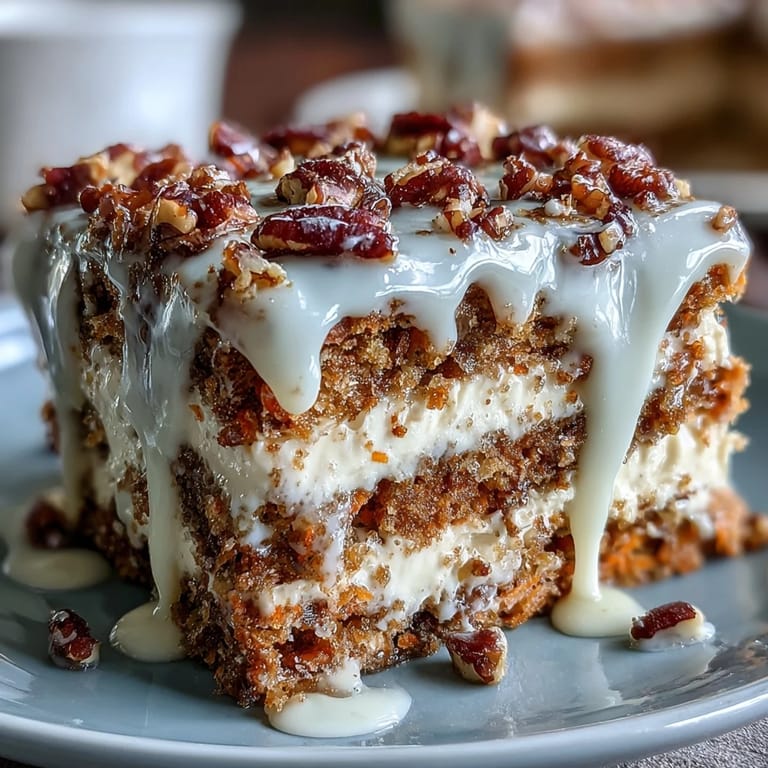
- Level the cake layers if needed with a serrated knife, place one on your serving plate, spread a generous layer of frosting across the top, then repeat with the second and third layers. Frosting the sides can be messy—an offset spatula or butter knife dipped in warm water helps smooth everything out.
 Save
Save There's something about carrot cake that makes people share stories—at my nephew's birthday, someone talked about their grandmother's version, another person mentioned their favorite bakery cake, and suddenly this simple dessert became a conversation. That's when I understood that some recipes are more than food; they're tickets to memory and connection.
The Secret of Spices
The warmth in this cake comes from how cinnamon, nutmeg, and ginger work together like a choir. When I started baking, I treated spices like an afterthought, measuring them carelessly. Now I crack whole nutmeg when I can and use fresh cinnamon from a good source, and the difference is subtle but real—the cake tastes like spring and comfort simultaneously, which is the whole point of carrot cake anyway. People taste spice depth they can't name, which is the real magic.
Three Layers Versus Two
Making three layers instead of two changes everything about how this cake feels and tastes. Thinner layers bake more evenly, stay moister, and create that impressive height that makes people think you spent hours on this. The frosting distribution is different too—more layers mean more frosting lines, which sounds decadent but actually feels lighter because each bite has less frosting density. I used to make two-layer cakes until someone mentioned this technique, and now I can't imagine going back.
Variations and Flexibility
This cake invites experimentation without losing its identity. I've added raisins plumped in hot water, chopped dried pineapple for brightness, and even a handful of shredded coconut for tropical notes. The base stays sturdy enough to handle these additions, which means you can make this cake your own without worrying about ruining the structure. One spring I made it with crushed pineapple instead of some applesauce, and that slight tartness made everything taste fresher somehow.
- Fresh edible flowers or candied carrot curls on top transform the cake from homey to elegant in seconds.
- Make it a day ahead and refrigerate—the flavors actually improve as everything settles overnight, and assembly becomes easier.
- A light Riesling or chai tea alongside a slice creates a pairing that feels intentional and special.
 Save
Save This cake exists in that perfect space where impressive doesn't mean difficult, and where celebrating something simple like spring or a Tuesday evening feels completely valid. Bake it once, and you'll understand why people keep asking for slices.
Kitchen Help
- → What spices are used in the cake batter?
Cinnamon, nutmeg, and ginger provide a warm, balanced spice blend that complements the fresh carrots and walnuts.
- → Can I prepare this cake in advance?
Yes, baking it a day ahead and refrigerating helps flavors meld. Bring to room temperature before serving for best texture.
- → How can I add extra texture or flavor?
Adding raisins or chopped dried pineapple to the batter enhances sweetness and texture without overpowering the cake.
- → What’s the best way to frost the cake?
Beat cream cheese and butter until smooth, then gradually add powdered sugar and vanilla. Spread generously between and over the layers.
- → Are there any allergen considerations?
This cake contains eggs, wheat, tree nuts, and dairy. Always verify ingredient labels to avoid hidden allergens.
- → Which beverages pair well with this cake?
A lightly sweet Riesling or chai tea complements the spice and sweetness while balancing richness.