 Save
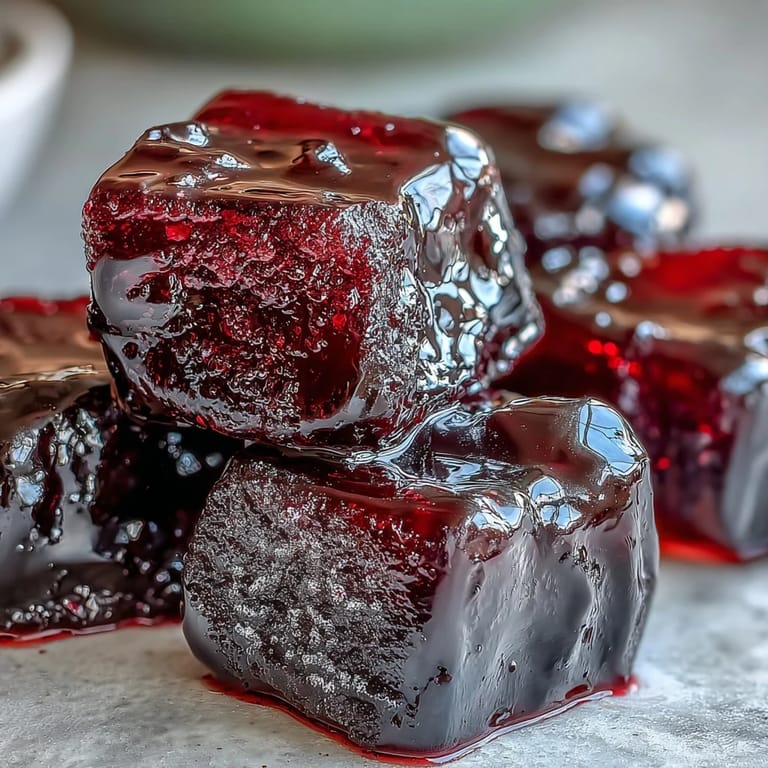
Save There's something about the first time you taste something truly unexpected that stays with you. I was at a small Nordic market on a grey afternoon, browsing their candy section, when I spotted these dark, jewel-like squares dusted in sugar. The shopkeeper caught my curious look and handed me one to try. That first chew—the bright tartness of black currant meeting the mysterious warmth of licorice—felt like tasting someone's secret recipe, the kind passed down in whispers. It completely undid my idea of what candy could be, and I left determined to recreate it at home.
Last winter, I made a batch to bring to a dinner party where I didn't know many people. Halfway through the evening, someone bit into one and their whole face changed—that moment of surprise and recognition. Before I knew it, three different people were asking for the recipe, and suddenly I wasn't the awkward guest anymore, I was the one who'd brought the mysterious candy. Those little squares became a conversation starter in the best way.
Ingredients
- Black currant purée: This is your foundation—fresh or frozen works equally well, but make sure to strain it so you get a smooth base without seeds or pulp that might catch during cooking.
- Lemon juice: A small splash that brightens the currant and prevents the candy from tasting one-dimensional, almost like seasoning salt in savory cooking.
- Granulated sugar and corn syrup: Together they create the right texture—the corn syrup keeps things tender and chewy rather than crystalline, so don't skip it or substitute.
- Powdered gelatin: This is your thickener and the magic ingredient that gives these candies their distinctive chew; blooming it first ensures it dissolves smoothly without lumps.
- Licorice extract: The soul of the recipe—start with less and taste as you go, because licorice flavor can overwhelm quickly if you're not careful.
- Salt: Just a whisper to sharpen the flavors and keep everything from tasting flat and one-note.
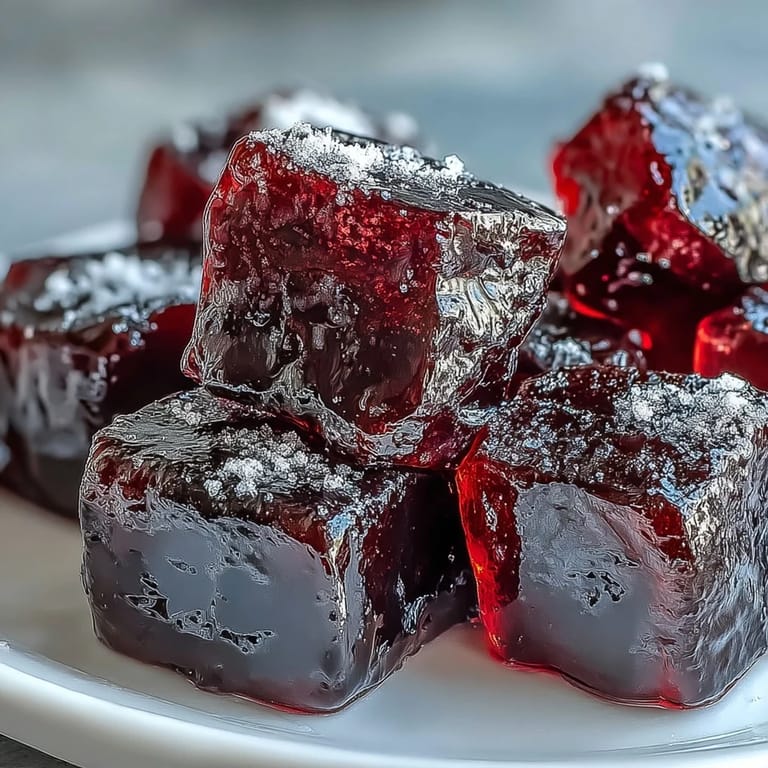
- Confectioners sugar and cornstarch coating: A practical mix that prevents sticking and gives these candies that lovely dusted finish, though you can skip it if you prefer them bare.
Tired of Takeout? 🥡
Get 10 meals you can make faster than delivery arrives. Seriously.
One email. No spam. Unsubscribe anytime.
Instructions
- Prepare your stage:
- Line your 8x8-inch pan with parchment paper and give it a light grease—this matters because even a sticky corner will cause frustration when you're trying to cut. Think of this as setting yourself up for success.
- Bloom the gelatin:
- Sprinkle the powdered gelatin over cold water and let it sit for 10 minutes without stirring; it'll absorb the water and become spongy, which means it'll dissolve evenly into your hot syrup instead of clumping. This step feels small but it's where most people stumble.
- Warm the fruit:
- In a medium saucepan, combine your black currant purée with lemon juice and heat gently over low heat—you're just warming it through, not cooking it. You want the surface to shimmer slightly, releasing the fruit's aroma into your kitchen.
- Create the syrup:
- In a separate saucepan, combine sugar, corn syrup, and water, then heat over medium heat, stirring until the sugar dissolves completely. Once it starts boiling, stop stirring and attach your candy thermometer—this is where patience becomes your ingredient, watching it climb toward 250°F (121°C) without interference.
- Combine syrup and gelatin:
- The moment your syrup hits 250°F, remove it from heat and stir in your bloomed gelatin until it disappears completely into the hot liquid. It'll feel almost silky at this point, which is exactly right.
- Marry the mixtures:
- Pour the syrup-gelatin combination into your warm black currant purée and whisk continuously until the mixture becomes smooth and uniform in color. This is the moment where the two components truly become one, and it's one of the most satisfying parts of the process.
- Add the magic:
- Stir in your licorice extract and salt, then taste a tiny spoonful by dipping a clean spoon in—this is your only chance to adjust the flavor, so do it now. Add more extract if you want a bolder licorice note, but remember you can't take it back.
- Set and cool:
- Pour everything quickly into your prepared pan and spread it as evenly as you can with an offset spatula or the back of a spoon. Let it sit at room temperature for 1–2 hours until it's fully set and no longer sticky to the touch—the waiting is the hardest part, but resist the urge to refrigerate it.
- Cut and coat:
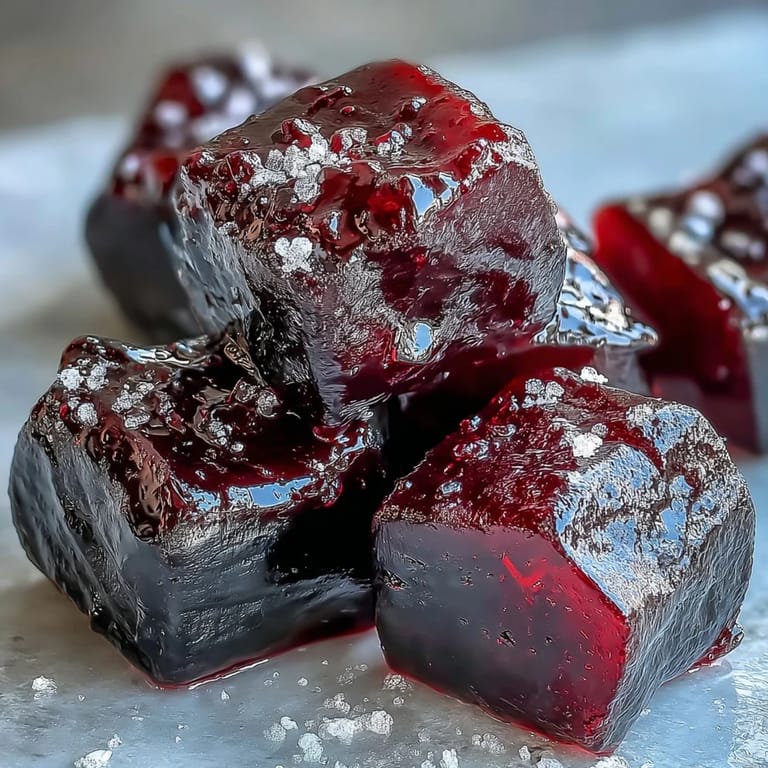
- Mix confectioners sugar and cornstarch in a shallow bowl, dust your cutting board, then turn out the candy slab and cut it into 1-inch squares with a sharp, slightly dampened knife. Toss each piece in the coating mixture to prevent them from sticking together.
 Save
Save My favorite memory with these candies happened on a quiet Tuesday morning when my neighbor stopped by unannounced, and I nervously offered her one from a batch I'd made the day before. She chewed slowly, thoughtfully, and then said, "This tastes like my grandmother's kitchen," and I realized that's what great candy does—it carries memory in flavor. Those candies became proof that you don't need expensive ingredients or restaurant training to create something that matters to people.
The Art of Temperature Control
One of the most important lessons I learned came from a batch that went slightly too far—I was distracted, turned away for just a moment, and suddenly the syrup had gone from clear amber to a darker, more brittle state. That taught me that candy making rewards attention and respect for the process. A candy thermometer isn't just a tool; it's your conversation partner, and you have to listen to what it's telling you throughout the cook, especially in those final degrees where everything changes.
Flavor Variations Worth Exploring
While black currant and licorice are a perfect pairing, the real joy of this recipe is how adaptable it becomes once you understand the method. I've experimented with black raspberry instead of black currant, which creates something slightly softer and more delicate in flavor, and I've played with adding finely ground licorice root powder for a deeper, almost woody undertone. Each variation teaches you something new about how flavors interact and complement each other in candy form.
Storing and Sharing Your Creation
These candies keep beautifully in an airtight container at room temperature for up to a week, though I've never had a batch last that long because they disappear into the days—grabbed as little treats, shared with friends, or simply savored quietly with afternoon tea. The confectioners sugar coating prevents them from sticking together, but if they ever do bond slightly, a gentle pry with a butter knife works wonders.
- Keep them away from humidity, which causes the coating to dissolve and the candies to start sticking to each other.
- Store them in a cool cupboard rather than the refrigerator, which can change their texture over time.
- These make wonderful gifts when wrapped individually in small glassine squares, giving them an almost professional appearance.
 Save
Save Making these candies transformed how I think about what's possible in a home kitchen. There's real magic in understanding heat, timing, and flavor balance—and the reward is something nobody can buy, something uniquely yours.
Kitchen Help
- → What gives the candy its chewy texture?
The combination of gelatin and the sugar syrup boiled to 250°F creates the chewy consistency typical of this confection.
- → Can I substitute the black currant purée?
Yes, black raspberry or blackberry purée can be used for a different but complementary fruity flavor.
- → How do I prevent the candy pieces from sticking together?
Coating the cut pieces with a mix of confectioners sugar and cornstarch helps keep them separate and prevents sticking.
- → What is the role of licorice extract in this candy?
Licorice extract provides a distinctive aromatic depth that balances the tartness of black currant and adds nostalgic warmth.
- → How long should the candy cool before cutting?
Let the candy cool at room temperature for 1–2 hours until fully set before cutting it into pieces.
- → Is it necessary to use a candy thermometer?
Yes, boiling the sugar syrup to the precise temperature ensures the correct texture and firmness of the candy.