Save
Save A warm bakery smell often wafted through my apartment the very first spring I dared to make focaccia from scratch, windows open and the morning sun pooling on the counter. Not every loaf turned out airy or golden, but that made the first real success feel like a small victory. Something about the glossy olive oil and the brightness of fresh herbs just sang of the changing season. There was flour in my hair and basil between my fingers, and suddenly the process mattered as much as the result.
I once brought this to a raucous spring picnic, still warm in a towel-lined basket, and somehow it vanished before anyone even noticed the wine had run out. One friend claimed it tasted like 'a garden in bread form', and I've saved that message in my phone for darker seasons. No crumb was left behind, and more than one person asked if I was secretly Italian.
Ingredients
- Bread flour: Gives the focaccia structure and its signature chew—look for unbleached, and don’t be afraid to fluff and spoon it for accuracy.
- Fine sea salt: Dissolves smoothly into the dough, seasoning it evenly without any harshness.
- Active dry yeast: Make sure your packet isn’t expired—proofing in warm water will guarantee the puff.
- Lukewarm water: Should feel just warm to the touch, not hot; the right temperature makes the yeast come alive.
- Extra-virgin olive oil: Both in and on the dough gives deep flavor and a beautiful golden crust—don’t skimp!
- Cherry tomatoes: For juicy bursts—pat them dry after cutting or your dough will get soggy spots.
- Fresh rosemary leaves: Add the unmistakable piney aroma (I like to bruise them lightly to release the oils).
- Fresh thyme leaves: The earthy citrus notes amplify the bread’s springtime feel.
- Fresh chives: Scatter them for a subtle, savory mildness—snipping with scissors right before baking keeps them freshest.
- Fresh basil: Tearing basil by hand (not chopping) keeps the flavor bright and less bruised.
- Flaky sea salt: Brings crunch and drama—sprinkle just before baking for those dazzling little bursts of salinity.
- Freshly ground black pepper: Adds warmth and a bite, seasonal to your taste.
Tired of Takeout? 🥡
Get 10 meals you can make faster than delivery arrives. Seriously.
One email. No spam. Unsubscribe anytime.
Instructions
- Mix the dry ingredients:
- Use your largest bowl and whisk together the bread flour and fine sea salt until everything is light and evenly combined.
- Activate the yeast:
- In a small bowl, dissolve your yeast in the lukewarm water—it should turn creamy and form a thin layer of bubbles after five minutes.
- Bring it all together:
- Add the bubbly yeast mixture and olive oil to the flour, then stir with a wooden spoon; don’t be afraid if the dough looks sticky or shaggy.
- First rise:
- Transfer the dough into a greased bowl, cover with a damp towel, and leave somewhere warm and draft-free for an hour or so, until doubled in size.
- Prepare the tray:
- Generously oil your baking tray—I like to use my hands—then gently tip the risen dough into it and stretch it softly to the corners.
- Dimple and proof again:
- Press oily fingertips over the dough in purposeful little pushes to form deep dimples; cover again and let it puff for another half-hour.
- Top and season:
- Drizzle a final film of olive oil over the dough, then scatter the tomatoes, herbs, flaky salt, and black pepper all over—be as artful or as haphazard as you like.
- Bake:
- Slide the tray into a preheated oven and bake for 22–25 minutes; watch for golden bronzed edges and the most tempting smell filling your kitchen.
- Cool and serve:
- Let the bread rest for a few minutes in the tray, then cut into thick slabs and serve while warm, or let the flavors mingle at room temperature.
 Save
Save Years after that picnic, a neighbor dropped by just as I pulled a focaccia out of the oven, lured in by the scent, and I watched her close her eyes on the first bite like the world had briefly stood still. It was one of those small, wordless moments that made the act of sharing bread feel bigger than the recipe itself.
Making It Your Own: Adaptable Toppings and Pairings
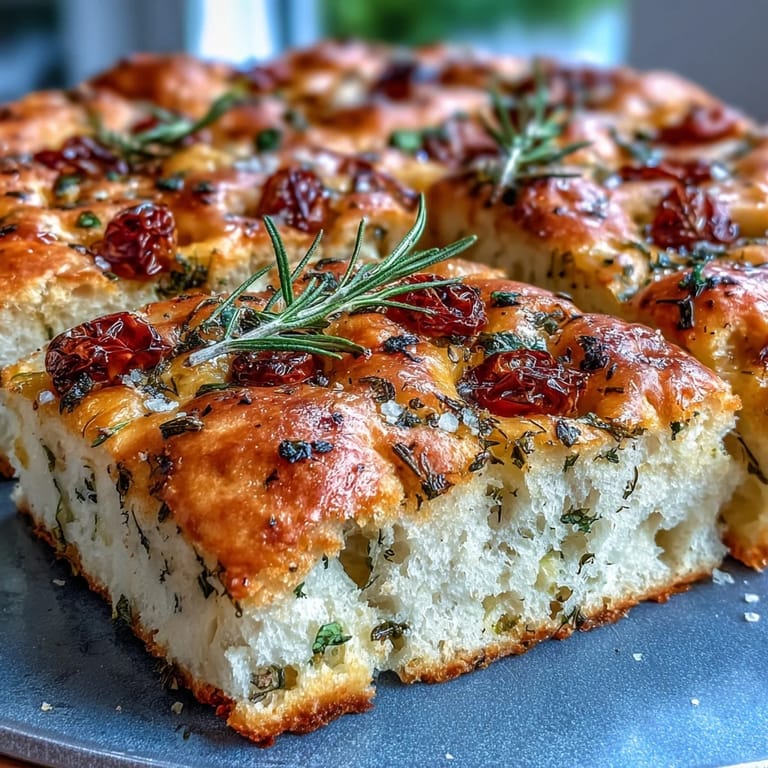
Experimenting with toppings is half the fun, and the focaccia’s airy texture is the perfect canvas. Sometimes I add a tangle of caramelized onions or thin slices of lemon for brightness, and in late spring, edible flowers are wonderful for color and conversation. Pairing it with a sharp cheese or a bowl of lightly dressed greens always brings balance to the table.
Working with Yeast: What I’ve Learned
Letting the yeast do its slow, quiet magic can feel intimidating, but even imperfect dough tends to reward the effort. I’ve learned not to fuss with it too much; just let it be, and don’t fret if your kitchen isn’t warm. Sometimes I rise the bowl on a chair near a sunny window, wrapped in a towel, and marvel at how soft and alive the dough becomes.
Final Touches: Serving and Storing
To keep the focaccia crusty, I leave it uncovered for the first hour out of the oven. If any is left, it toasts up beautifully—even days later—for the best open-faced sandwiches. Serve with peppery olive oil for dipping and maybe a glass of crisp white wine to make it a real celebration.
- Canyon-cut slices make great picnic sandwiches.
- Reheat in a hot oven for a few minutes to restore the crust.
- Don’t store in plastic; wrap in a tea towel on the counter for best texture.
 Save
Save No matter who gathers at your table, a tray of freshly baked focaccia always sparks joy—sometimes it disappears before you even get to sit down. Enjoy the process, and savor every warm, herby bite.
Kitchen Help
- → How wet should the dough be?
The dough should be slightly sticky and elastic—soft enough to spread into the tray but not so wet that it runs. Use oiled hands to handle it and add small water or flour adjustments only if necessary.
- → Can I swap the herbs?
Yes. Use other soft spring herbs like parsley, dill or tarragon for a different flavor profile. Robust herbs such as rosemary or thyme work well in smaller amounts to avoid overpowering the crumb.
- → What’s the best way to get a crisp edge?
Generously oil the baking tray and brush the edges with extra-virgin olive oil before baking. High heat and a well-oiled tray encourage a golden, crisp edge while keeping the interior tender.
- → How do I store and reheat leftovers?
Store wrapped at room temperature for up to two days or refrigerate for longer. Reheat in a 180°C oven for 8–10 minutes or toast slices in a skillet to refresh the crust and warm the interior.
- → Can I add cheese to the dough or topping?
Yes—mix grated Parmesan into the dough for subtle savory depth or sprinkle on top before baking. Hard cheeses add flavor but watch for browning; add delicate cheeses after baking if desired.
- → How do I know the first rise is done?
The dough should roughly double in volume and hold a slight indentation when gently pressed. A warm, draft-free spot speeds proofing; timing varies with temperature.