 Save
Save There's something about assembling a poke bowl that feels less like cooking and more like creating edible art. My friend Sarah brought one back from a trip to Honolulu, and I became obsessed with recreating that exact balance of spicy, creamy, and fresh all in one bite. What started as a weekend experiment has become my go-to meal when I want something that tastes like a vacation but takes barely longer than ordering takeout.
I made this for a casual dinner party last summer, and my usually quiet coworker Jake actually asked for seconds, which still ranks as one of my greatest kitchen victories. Everyone kept commenting on how the textures worked together so seamlessly, and honestly, I think it was the contrast of the creamy avocado against the spicy kick that sold them.
Ingredients
- Sushi rice (2 cups): The foundation everything else depends on, and rinsing it until the water runs clear is non-negotiable if you want that perfectly fluffy, slightly sticky texture.
- Rice vinegar (3 tbsp), sugar (1 1/2 tbsp), salt (1 tsp): This trio transforms plain rice into something with subtle tang and sweetness that balances the spicy tuna beautifully.
- Sushi-grade tuna (400 g): Quality matters here more than anywhere else, so buy from a reputable fishmonger and ask specifically for sushi-grade, which means it's been frozen properly to eliminate parasites.
- Kewpie mayonnaise (2 tbsp): It's richer and slightly sweeter than regular mayo, which makes the marinade taste noticeably better if you can find it.
- Sriracha (2 tsp): Start with this amount and adjust to your heat preference, keeping in mind that the longer it sits, the spicier it becomes.
- Sesame oil (1 tsp), soy sauce (1 tsp), lime juice (1 tsp): These three create the umami backbone that makes the tuna taste restaurant-quality rather than homemade.
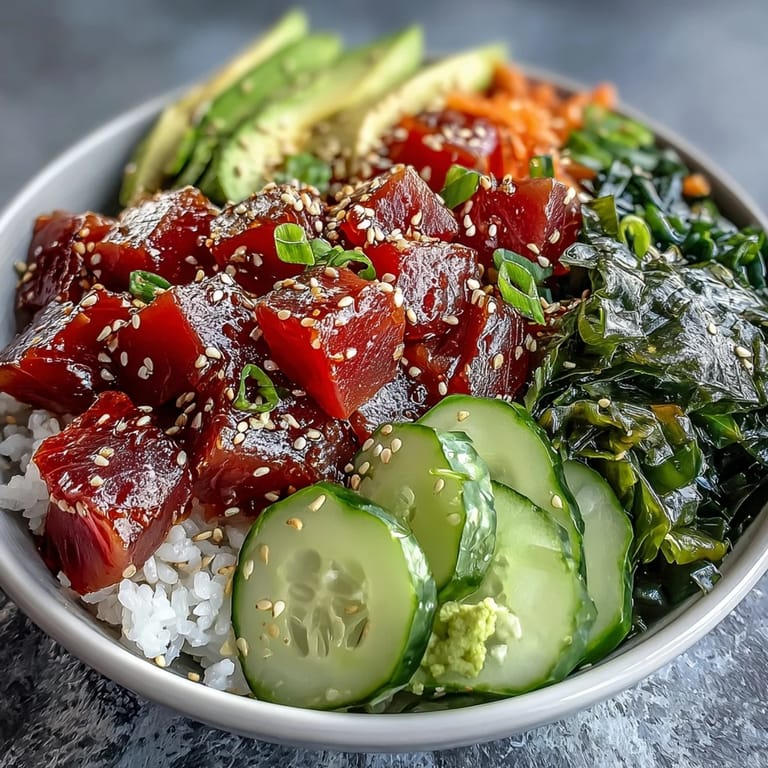
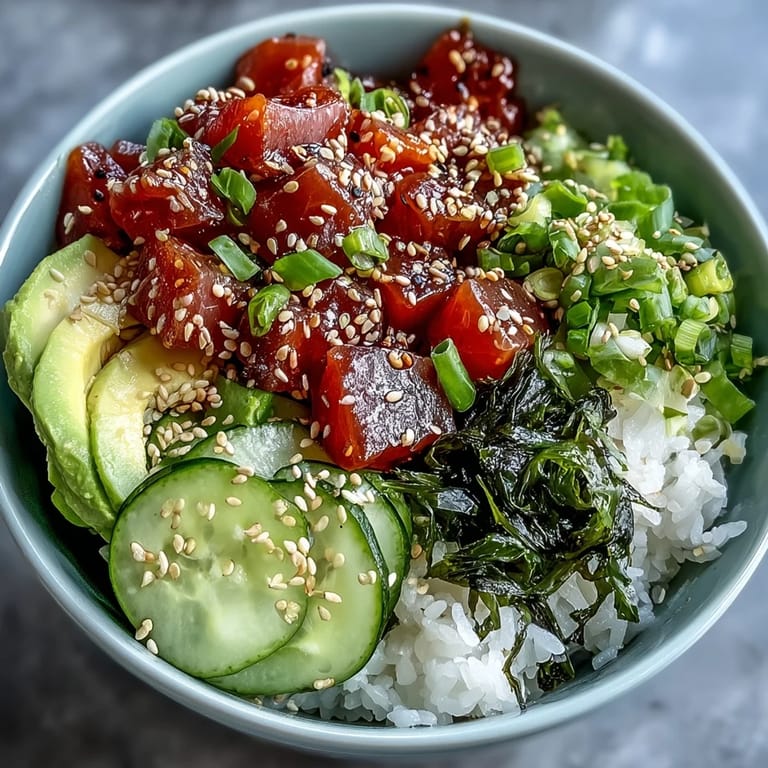
- Cucumber, avocado, edamame, seaweed, pickled ginger: Each topping adds its own texture and brightness, so don't skip any of them even if you think you might.
Tired of Takeout? 🥡
Get 10 meals you can make faster than delivery arrives. Seriously.
One email. No spam. Unsubscribe anytime.
Instructions
- Rinse and cook the rice:
- Under cold running water, rub the rice gently between your fingers until the water changes from milky white to almost clear—this removes excess starch that would otherwise make everything gummy. Combine with water in a saucepan, bring to a boil, cover, and let it simmer on low for exactly 15 minutes before resting off heat for 10 minutes.
- Season the rice:
- While the rice is still warm (but not piping hot), gently fold in the vinegar-sugar-salt mixture with a rice paddle or fork, fluffing as you go so it cools evenly. Taste it as you work, and once it's room temperature, you'll notice that subtle sweet-tart flavor that makes everything taste authentically Japanese.
- Prepare the spicy tuna marinade:
- Whisk together mayo, Sriracha, soy sauce, sesame oil, and lime juice until it's creamy and slightly chunky, then add your diced tuna and green onion, tossing gently so you don't break up the pieces. Let it sit in the fridge while you prep everything else so the flavors can meld together.
- Get your toppings ready:
- Slice your cucumber paper-thin, halve and slice your avocado (do this last so it doesn't brown), shell the edamame if needed, and arrange everything within arm's reach. Having everything prepped means assembly becomes almost meditative rather than stressful.
- Assemble the bowls:
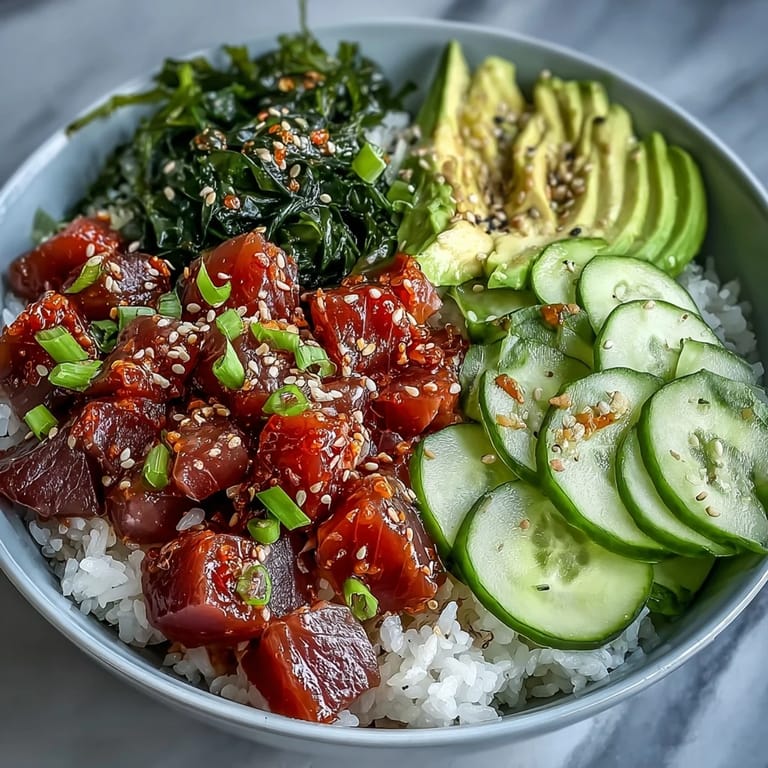
- Divide rice evenly among four bowls, creating a small indent in the center, then spoon the spicy tuna mixture right into that sweet spot. Arrange all your toppings in separate sections around the tuna, so each bite can be customized with whatever appeals to you at that moment.
- Final touches and serve:
- Sprinkle with extra sesame seeds and furikake if using, then eat it immediately while the rice is still slightly warm and everything is at its textural best. Any leftovers taste fine cold, but honestly, poke bowls are best eaten fresh.
 Save
Save My mom tried this once and declared it her new favorite way to eat fish, which is huge coming from someone who usually plays it safe with cooking. That moment made me realize that poke bowls aren't just trendy food—they're genuinely exciting, customizable meals that bring people together.
The Magic of Sushi Rice
Sushi rice is its own whole thing, honestly, and the difference between mediocre and magnificent comes down to patience and technique. Once you nail the ratio of vinegar, sugar, and salt, and you understand why each ingredient matters, you'll start applying that knowledge to other rice dishes too. The warmth of the rice helps the vinegar solution distribute evenly, which is why timing matters, and why you shouldn't skip the resting period no matter how hungry you are.
Why Spicy Tuna Beats Everything Else
There's something primal about the combination of heat, creaminess, and raw fish that just works in a way that salmon or tofu toppings, while delicious, can't quite replicate. The Sriracha-mayo combination is actually the secret weapon here because the fat in the mayonnaise carries the heat slowly across your palate instead of hitting you all at once. If you've had mediocre poke before, it's probably because someone skimped on the marinade or used low-quality tuna, which is the equivalent of building a house on bad foundation.
Building Your Perfect Bowl
The most underrated part of poke is the architecture of it, because you're not just throwing ingredients together. When you arrange each topping intentionally, you're creating pockets of flavor and texture that make every spoonful slightly different. Some people get precious about the presentation, and while I'm not one of those people, I do notice that a thoughtfully arranged bowl just tastes better somehow, which might be entirely psychological but feels very real.
- Balance your hot and cool elements so the pickled ginger and spicy tuna are spread out rather than clustered in one spot.
- Slice your avocado last and use a gentle hand when arranging it so it stays pretty and doesn't turn into mush.
- Don't be shy with the seaweed and sesame seeds because they're what add the crunch that makes this bowl sing.
 Save
Save This bowl has become my answer to the question of what to make when I want something special but don't want to spend three hours in the kitchen. It's proof that simple ingredients, when treated with respect and combined thoughtfully, can create something truly memorable.
Kitchen Help
- → How do I prepare the sushi rice?
Rinse the sushi rice until water runs clear. Cook with water on low heat for 15 minutes, then let it rest off heat for 10 minutes. Mix in rice vinegar, sugar, and salt while fluffing gently.
- → What gives the tuna its spicy flavor?
The tuna is coated in a marinade of mayonnaise, Sriracha chili sauce, soy sauce, sesame oil, and lime juice, which creates a spicy and tangy profile.
- → Can I substitute other fish for tuna?
Yes, salmon can be used as an alternative for a different texture and flavor while keeping the dish fresh and vibrant.
- → What toppings complement the spicy tuna?
Fresh cucumber, avocado slices, shelled edamame, pickled ginger, seaweed salad or nori strips, and toasted sesame seeds all add texture and taste contrast.
- → How can I make this dish healthier?
Swap sushi rice for brown rice or quinoa to increase fiber and nutrients, keeping the bowl wholesome and nutritious.
- → What beverages pair well with this bowl?
A crisp, dry white wine like Sauvignon Blanc or a light Japanese beer complements the flavors without overpowering them.