 Save
Save My neighbor Marco stopped by one evening with a paper-wrapped package of prosciutto from his favorite Italian deli, and somehow we ended up assembling these crostini on my kitchen counter while debating whether figs or pears were better. The simplicity struck me immediately—just a few quality ingredients, minimal effort, and suddenly we had something that tasted like we'd been fussing for hours. That night taught me that the best appetizers don't require complexity, just intention.
I made these for a dinner party last spring when fresh figs were at their peak, and I remember my friend Sarah closing her eyes after her first bite—not in an over-the-top way, just genuinely savoring the moment. That's when I realized these crostini aren't just food; they're a small edible conversation starter that somehow makes the evening feel special.
Ingredients
- Baguette or rustic Italian bread: A good crust matters here because it needs to stay crispy even after toasting; thinner slices mean you get that perfect snap without the bread getting chewy inside.
- Extra-virgin olive oil: Don't skimp on quality here—this is one of just a few ingredients, so it shows, and the fruitiness adds another layer of flavor.
- Prosciutto: Buy it sliced thin at the deli counter rather than pre-packaged if you can; it drapes more elegantly and tastes fresher.
- Fresh figs: They should yield slightly to pressure but not be mushy; this is where seasonal timing matters most.
- Goat cheese or ricotta: Completely optional but creates a creamy buffer that balances the salty prosciutto beautifully.
- Honey: A light drizzle at the end brings sweetness that ties everything together, though it's easy to overdo it.
Tired of Takeout? 🥡
Get 10 meals you can make faster than delivery arrives. Seriously.
One email. No spam. Unsubscribe anytime.
Instructions
- Toast the bread until golden:
- Preheat your oven to 400°F and brush both sides of each bread slice lightly with olive oil—you want a thin, even coating, not a pool of oil. Place the slices on a baking sheet, turn them halfway through, and listen for that satisfying crackle when they come out after about 8-10 minutes.
- Cool and build the base:
- Let the crostini rest for a minute or two so they're still warm but cool enough to handle. If you're using the goat cheese, spread a thin, almost delicate layer on each piece; it should be visible but not thick.
- Layer with prosciutto and figs:
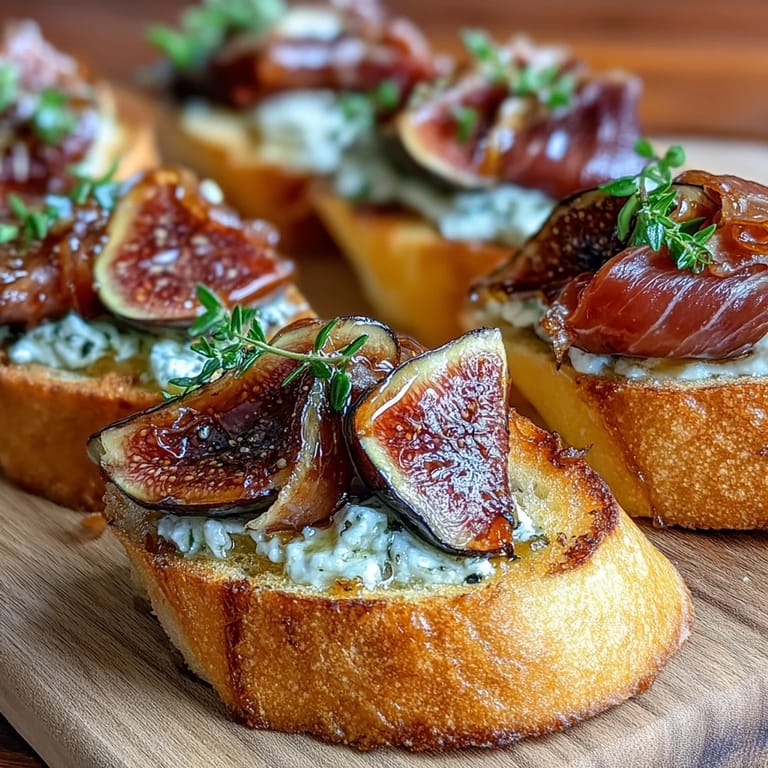
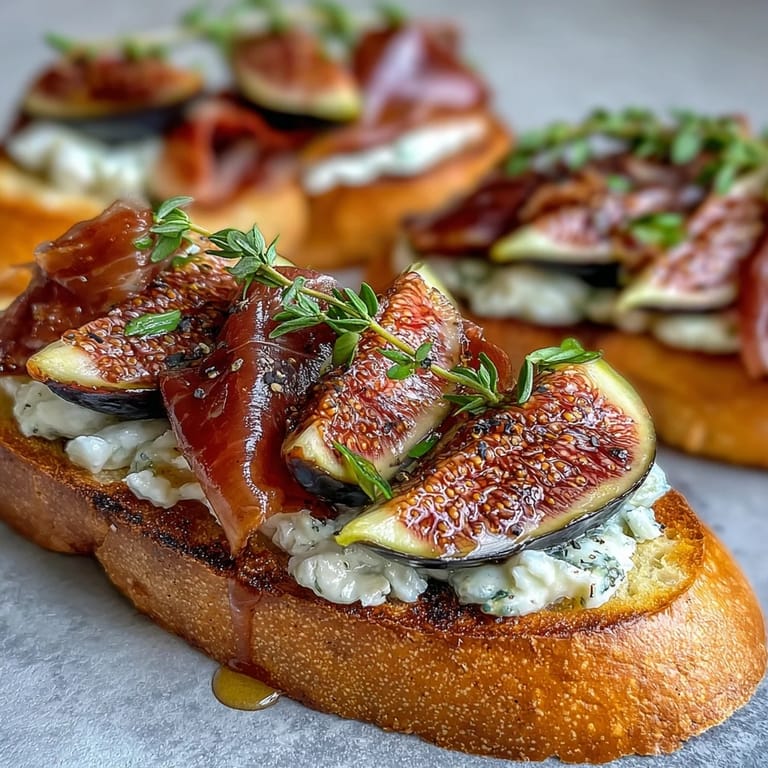
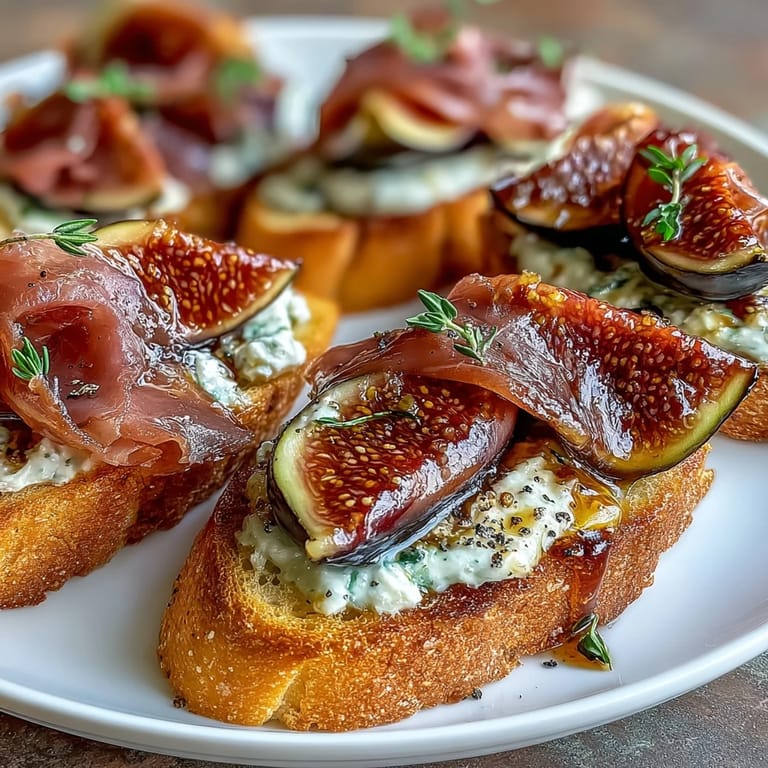
- Drape a slice of prosciutto across each crostini, then arrange your fig slices on top—I usually do 3-4 slices per crostini to cover most of the surface. The figs add a subtle jewel-like appearance that makes these feel more intentional than they actually are.
- Season and garnish:
- A grind of black pepper on each one is essential—it cuts through the sweetness and adds complexity. Fresh thyme or arugula gives a peppery finish, though honestly, sometimes simple is better than fancy.
- Finish with honey and serve:
- If you're using honey, drizzle it so sparingly you almost feel like you're being stingy—it should enhance, not overwhelm. Serve immediately while the bread is still warm and everything is at its best.
 Save
Save There's something about serving food you've assembled with your own hands that shifts the mood at a table—suddenly people slow down and actually taste what they're eating instead of just grabbing and moving on. These crostini taught me that presentation and intention matter as much as the ingredients themselves.
When Figs Aren't in Season
Late fall and winter used to stop me from making these, until I realized that ripe pears sliced thin work beautifully in their place. The texture is different—softer, less jammy—but the principle of sweet fruit with salty meat remains the same, and honestly, sometimes the seasonal variation is what keeps a recipe from feeling stale in your rotation.
Pairing and Serving Ideas
These shine as an appetizer before a light pasta or salad, and they pair wonderfully with a glass of Prosecco or crisp white wine. I've also made them for casual entertaining because you can toast the bread an hour or two ahead and assemble just before serving, which takes the last-minute pressure off.
Small Touches That Elevate Everything
The difference between good crostini and ones people actually remember comes down to paying attention to each layer. Quality prosciutto, figs at their peak, and restraint with the honey all matter in ways that seem small until you taste them. These little details are what separate an appetizer from a moment worth savoring.
- Toast the bread just until crisp—a minute too long and it becomes bitter instead of nutty.
- Let your figs come to room temperature before slicing so they're sweeter and juicier.
- Assemble no more than 15 minutes before serving so the bread stays crisp and the figs don't weep into the toppings.
 Save
Save This recipe teaches you that sometimes the most elegant meals come from respecting good ingredients rather than overcomplicating them. Make these once and you'll find yourself reaching for them whenever you want to create a moment without the fuss.
Kitchen Help
- → What type of bread works best for this dish?
Rustic Italian bread or a classic baguette are ideal for toasting, providing a firm base that crisps well without becoming soggy.
- → Can I substitute the figs?
Yes, ripe pears offer a similar sweetness and texture, making a great seasonal alternative to fresh figs.
- → Is it necessary to add goat cheese?
Goat cheese or ricotta is optional but adds a creamy layer that complements the prosciutto and figs nicely.
- → How should I toast the bread for best results?
Brush slices with olive oil and bake at 400°F (200°C) for about 8–10 minutes, turning halfway until golden and crisp.
- → What garnishes enhance the flavor profile?
Fresh thyme leaves or arugula add a peppery freshness, while a light honey drizzle brings subtle sweetness.
- → Can nuts be added for extra texture?
Yes, toasted walnuts or pistachios provide a pleasant crunch and complement the savory and sweet components.