 Save
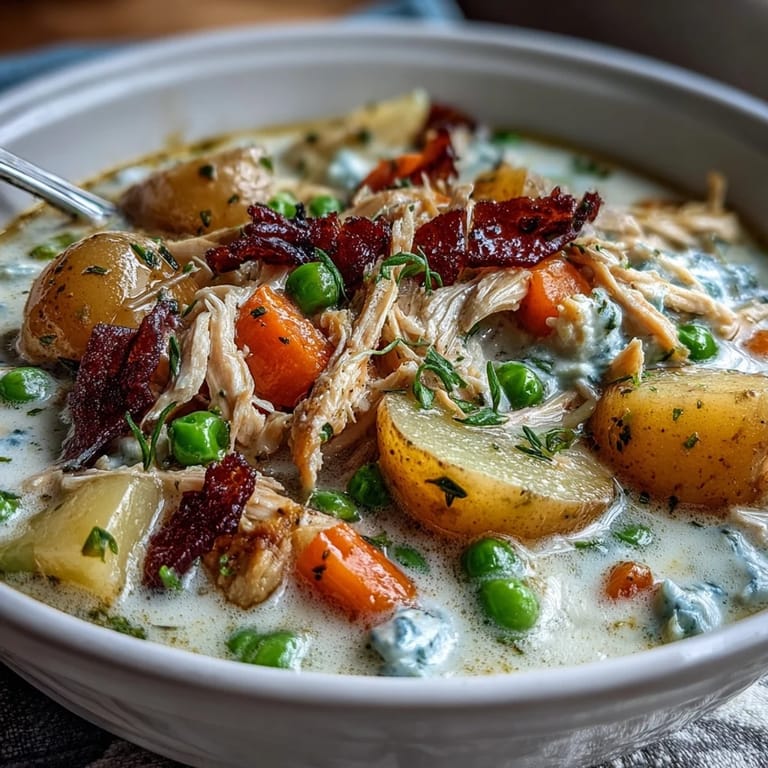
Save There's something about the smell of a slow cooker working away on a cold afternoon that just feels like coming home. My neighbor handed me her version of this soup one winter, and I remember standing in my kitchen thinking how it managed to be both elegant and comforting at the same time—all those pot pie flavors swimming in a creamy broth instead of trapped under pastry. I've tweaked it more times than I can count, but the core magic stays the same: throw everything in, let time do the work, and end up with something that tastes like someone spent hours fussing in the kitchen when really you barely spent twenty minutes prepping.
I'll never forget the first time I made this for my book club—it was my turn to host and I'd been nervous about the timing all week. But I started this soup that morning before anyone arrived, and by the time we sat down, the whole house smelled incredible and the soup was creamy and perfect. Two of the women asked for the recipe right then and there, but honestly, the best part was watching them get quiet while eating, the kind of quiet that only happens when food is hitting just right.
Ingredients
- Chicken breasts or thighs: Thighs give you more flavor and stay juicier, but breasts work fine if that's what you have—just don't skip the shredding step or you'll miss the texture that makes this feel homemade.
- Yukon Gold potatoes: They hold their shape better than russets and have a naturally buttery flavor that belongs in this soup.
- Carrots and celery: These form the flavor base along with the onion and garlic, so don't rush chopping them—uniform pieces cook more evenly.
- Frozen peas and corn: Fresh is lovely if you have it, but honestly frozen vegetables work beautifully here and you don't have to feel guilty about not using fresh.
- Low-sodium chicken broth: This matters more than you'd think because you're adding cream later, so regular broth would be too salty.
- Whole milk and heavy cream: The combination gives you richness without being heavy, but you could use all cream if you want to be extra, or all milk if you need to lighten it.
- All-purpose flour: You're making a traditional roux here, which is just butter and flour cooking together—the foundation of everything creamy and good.
- Unsalted butter: Use real butter for the roux; it makes a difference you can taste.
- Salt, pepper, thyme, parsley, and paprika: These quiet seasonings let the chicken and vegetables shine without announcing themselves.
Tired of Takeout? 🥡
Get 10 meals you can make faster than delivery arrives. Seriously.
One email. No spam. Unsubscribe anytime.
Instructions
- Prep your vegetables and layer them in:
- Dice everything into similar-sized pieces so they cook at the same rate—don't overthink this, but don't leave anything huge either. Throw the chicken, potatoes, carrots, celery, peas, corn, onion, and garlic into your slow cooker like you're building something worth waiting for.
- Pour in the broth and season:
- Add your broth and sprinkle in the salt, pepper, thyme, parsley, and paprika, then give everything a good stir so the seasonings distribute evenly. At this point you can walk away knowing the hard part is done.
- Let time work its magic:
- Cover and cook on LOW for 6 to 7 hours, or HIGH for 3 to 4 hours if you're in a hurry—either way, the chicken will be falling apart and the vegetables will be tender and flavorful. You'll know it's ready when you lift the lid and the aroma makes you pause.
- Shred the chicken:
- Take out the chicken pieces with tongs and shred them with two forks right on a cutting board—this is actually meditative and takes about two minutes. Return the shredded chicken to the pot where it can soak up all that beautiful broth.
- Make your creamy base:
- In a separate saucepan, melt butter over medium heat and whisk in flour, stirring constantly for a minute or two until it smells nutty and turns a pale golden color. Slowly pour in the milk while whisking so you don't end up with lumps—keep whisking and cooking until it thickens, which takes about 3 to 4 minutes and you'll see the change happen in front of your eyes.
- Marry the cream mixture into the soup:
- Pour this thickened milk mixture into the slow cooker along with the heavy cream and stir gently to combine. Crank the heat to HIGH and let it cook for another 15 to 20 minutes so the soup thickens and everything gets to know each other.
- Taste and adjust:
- This is your moment to decide if it needs more salt, pepper, or anything else—trust your palate because you know your own taste better than any recipe does. Some days I add a pinch more thyme, other days I leave it exactly as is.
 Save
Save There was a moment last spring when my daughter came home from college and walked into the kitchen while this was simmering, and she just stood there breathing in the smell without saying anything. That's when I knew this soup had crossed from being a recipe into being something that meant home to her.
Why This Beats Regular Pot Pie
A traditional pot pie is gorgeous but also a production—you're making filling, making or buying dough, dealing with an oven, hoping the pastry doesn't get soggy. This soup gives you every single flavor and texture you love about pot pie without any of that theater. The slow cooker does the heavy lifting, the vegetables get tender and golden, and the cream makes everything luxurious without the pastry commitment.
The Right Toppings Make It Special
You could ladle this into a bowl and eat it plain, and it would be delicious and satisfying. But if you want to get a little fancy, bake some refrigerated biscuit dough or puff pastry on the side and serve the soup underneath or with the biscuit on top—suddenly it feels like you made something special. I've also crumbled oyster crackers on top when I'm feeling casual, and honestly that's just as good.
Making It Your Own
I started using chicken thighs instead of breasts because a friend mentioned they had more flavor, and now I don't go back. A handful of fresh parsley or fresh thyme stirred in at the very end adds a brightness that reminds you it's still vegetables and chicken, not just cream. If you need to make it gluten-free, use a gluten-free flour blend for the roux and serve it with gluten-free bread or just skip the topping altogether.
- Add a splash of white wine or a teaspoon of lemon juice at the end if you want to brighten everything up.
- Leftover soup freezes beautifully for up to three months, so make a double batch and thank yourself later.
- This feeds six people generously, but you can halve it if you're cooking for fewer or double it for a crowd.
 Save
Save This soup is the kind of thing you make when you want to feel like you've taken care of people, even though you barely lifted a finger. Serve it hot, watch someone's face when they taste it, and know you've done something right.
Kitchen Help
- → What cuts of chicken work best for this dish?
Boneless, skinless chicken breasts or thighs work well. Thighs provide richer flavor and tenderness if preferred.
- → Can I use frozen vegetables instead of fresh ones?
Frozen peas and corn are included in the ingredients and work perfectly. For potatoes, carrots, and celery, fresh diced vegetables are best for texture.
- → How is the creamy texture achieved?
The creamy consistency comes from thickening the broth with a roux made of butter and flour, then whisking in whole milk and heavy cream.
- → Can this dish be made gluten-free?
Yes, substituting the all-purpose flour with a gluten-free flour blend for the roux and serving with gluten-free bread makes it suitable for gluten-sensitive diets.
- → What is the recommended cooking time using a slow cooker?
Cook on LOW for 6-7 hours or on HIGH for 3-4 hours until the chicken is fully cooked and vegetables are tender.
- → Are there any allergen considerations?
This dish contains wheat (from flour and optional biscuits), milk, and potentially eggs if using certain biscuit brands. Peas and corn may also cause reactions for some individuals.