 Save
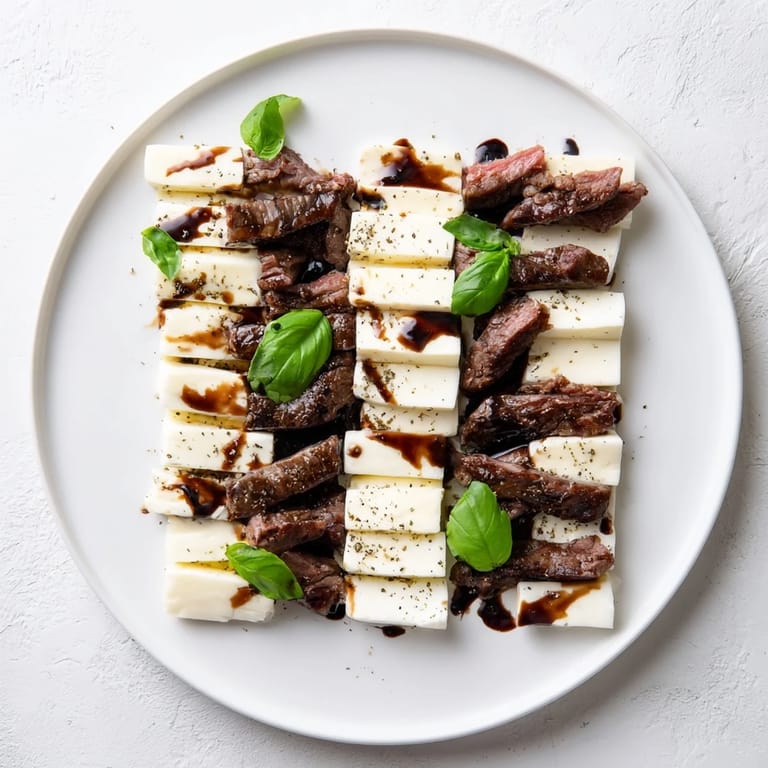
Save I discovered Safari Stripes by accident at a gallery opening downtown, where a caterer had arranged these impossibly neat rows of cream and caramel-brown on a slate board. The visual trick of it caught my eye first, but when I tasted that contrast between cool, creamy cheese and warm, glossy meat ribbons finished with balsamic, I couldn't stop thinking about it. A week later, I was in my kitchen trying to recreate that moment, armed with only the memory of how it looked and tasted. What started as an experiment became something I now make whenever I want to impress without fussing.
I made this for my partner's coworkers last spring, nervous that something so visually simple might seem too spare for a dinner party. Instead, it became the thing people kept returning to, peeling off another stripe and asking where the recipe came from. That night taught me that restraint and intentional plating matter more than complexity, and that food arranged with care sends its own kind of message.
Ingredients
- Fresh mozzarella, 250 g, sliced into 1 cm thick strips: Look for blocks labeled fior di latte and slice them yourself so they stay creamy and don't dry out.
- Feta cheese, 200 g, sliced into 1 cm thick strips: The tang of feta plays against the richness of mozzarella, but make sure yours is firm enough to slice cleanly.
- Beef tenderloin, 200 g, cut into 1 cm thick strips: Tenderloin cooks quickly and stays tender, which is essential for stripes you want to eat without effort.
- Chicken breast, 200 g, cut into 1 cm thick strips: Pound them slightly before cutting so they cook evenly and don't toughen.
- Olive oil, 2 tbsp: Use something good enough to taste because it gets seared into the meat.
- Salt and freshly ground black pepper, to taste: Season generously before the pan hits heat, not after.
- Balsamic vinegar, 120 ml: The good stuff matters here since it becomes the glaze; cheap balsamic tastes thin and bitter.
- Honey, 1 tbsp: It rounds out the vinegar's sharp edges and gives the glaze shine.
- Fresh basil leaves: Tear them just before serving or they'll bruise and turn dark.
- Cracked black pepper: This final grind adds texture and a whisper of heat that wakes up the whole dish.
Tired of Takeout? 🥡
Get 10 meals you can make faster than delivery arrives. Seriously.
One email. No spam. Unsubscribe anytime.
Instructions
- Build your balsamic glaze first:
- Pour the balsamic vinegar and honey into a small saucepan and bring it to a gentle simmer over medium heat. Watch it bubble slowly and reduce for about 8 to 10 minutes, stirring occasionally, until it's dark and thickened enough to coat the back of a spoon. When a drop falls from the spoon, it should hold its shape for a moment before sliding off. Let it cool completely before you use it, or it'll pool everywhere instead of clinging to the meat.
- Season and sear the meat strips:
- Pat your beef and chicken strips dry with paper towels so they sear instead of steam. Scatter salt and pepper across both sides generously, then heat your skillet over medium-high heat with the olive oil shimmering. Sear the beef first, just 1 to 2 minutes per side, until the outside is golden but the inside stays rosy. Set it aside on a clean plate, then repeat with the chicken, which needs about the same time to stay tender and juicy. Don't crowd the pan or the strips will steam themselves.
- Arrange the stripes on your serving platter:
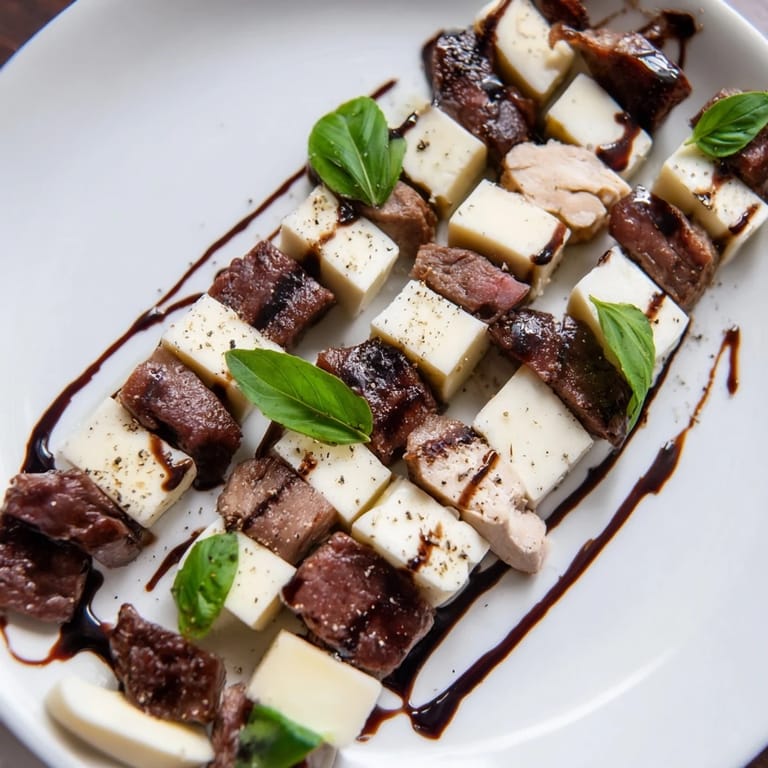
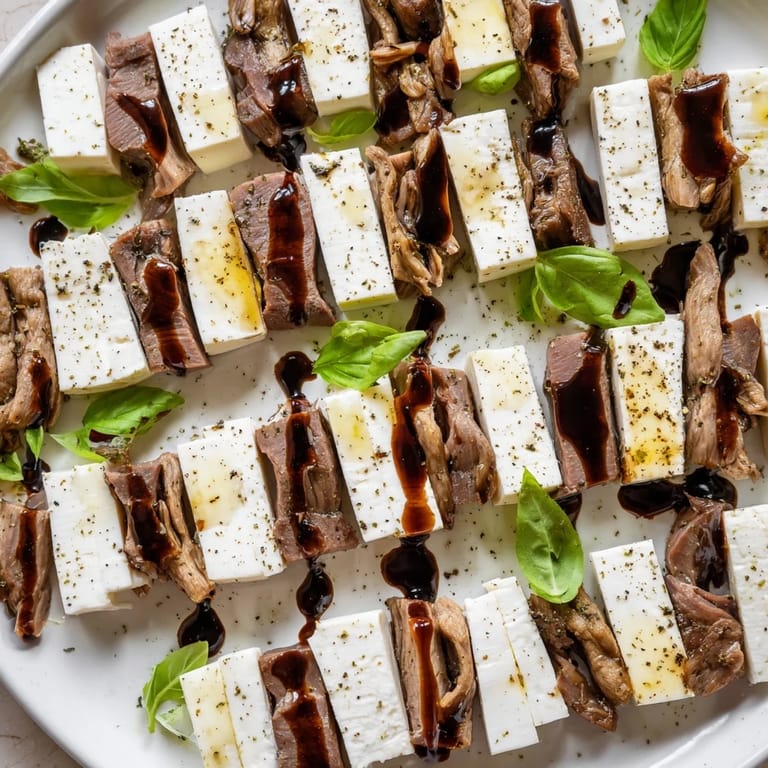
- Lay out your mozzarella strips in a row, then a row of beef, then feta, then chicken, then back to mozzarella. The visual rhythm is part of what makes this dish work, so take a moment to make the lines straight and the spacing even. Your platter becomes almost architectural, which is half the appeal.
- Glaze the meat and finish:
- Once the meat has cooled to barely warm, drizzle the balsamic reduction generously over just the meat stripes, letting it catch light and look glossy. Scatter torn basil leaves across everything and finish with a final shower of cracked black pepper, then bring it to the table while the meat is still warm.
 Save
Save A friend once said watching me plate this was like watching someone play dominoes, and I realized she was right—every element matters because they're all so visible. There's something vulnerable about a dish so stripped down, where you can't hide behind sauce or complexity. But that's also why it lands so hard when it lands right.
The Art of Contrast
The magic here lives in opposites: warm against cool, salt against tang, tender against creamy. When you taste a bite that has all four elements, something clicks. The beef and chicken warm your mouth while the cheese cools it, and the balsamic hums underneath everything like a bass note. It's why this works as an appetizer rather than a salad or a main—your palate stays alert the whole time you're eating it.
Timing and Temperature
The meat needs to cool enough that it won't wilt your cheese, but warm enough that you still taste the sear and the tenderness. I've learned this the hard way, rushing to plate while the beef was still hot and watching the mozzarella soften into puddles. Now I give the meat about five minutes to rest while I'm finishing the glaze, which gives me just enough time to arrange the cheese and breathe. Temperature control is invisible work, but it's what separates this from a soggy pile.
Making It Your Own
The beauty of stripes is that they're infinitely flexible. I've made this with prosciutto folded into tight ribbons instead of seared chicken, and with grilled eggplant for a friend who doesn't eat meat. The structure stays the same, only the flavor profile shifts. You can even play with different cheeses—goat cheese, burrata, smoked mozzarella—as long as you keep one creamy and one tangy to maintain the balance.
- Try adding thin slices of roasted red pepper between the meat and cheese for a subtle sweetness.
- If you want smokiness, use smoked paprika in your seasoning blend before you sear.
- A sprinkle of aged balsamic instead of fresh basil gives it a deeper, almost earthy finish.
 Save
Save This dish reminds me why I cook in the first place: not to show off, but to make something that slows people down and makes them actually taste what's in front of them. It's generous in its simplicity.
Kitchen Help
- → What cheeses are used in the platter?
Fresh mozzarella and feta cheese sliced into strips provide creamy texture and tangy notes.
- → How is the balsamic glaze prepared?
Balsamic vinegar is simmered with honey for 8-10 minutes until thick and syrupy, then cooled before drizzling.
- → Can the meats be substituted?
Yes, prosciutto or smoked turkey can replace the beef and chicken for different flavor profiles.
- → Is there a vegetarian alternative?
Grilled eggplant or portobello mushroom strips can replace meats for a vegetarian-friendly option.
- → What garnishes enhance this platter?
Fresh basil leaves and cracked black pepper add aroma and a hint of spice to the presentation.