 Save
Save There's something about the smell of leeks hitting hot butter that instantly transports me to a small kitchen in Lyon, even though I've never been there. My grandmother used to make this soup on quiet Sunday afternoons, and I'd watch her slice leeks with this meditative patience I could never quite match. Years later, I realized she wasn't just cooking—she was teaching me that the best dishes don't need to shout. Potato leek soup whispers, and somehow that makes it impossible to ignore.
I made this for my best friend during her first week in a new apartment, when she was too overwhelmed to cook for herself. She cried a little when she tasted it, not because it was sad, but because something warm and real had shown up exactly when she needed it. That's when I understood that this soup does something beyond nourishing—it communicates care in a way words sometimes can't.
Ingredients
- Leeks (3 medium, white and light green parts): These are the soul of the soup, and cleaning them properly means slicing them lengthwise first, then rinsing between each layer under running water—grit loves to hide in there.
- Unsalted butter (2 tablespoons): This is your flavor foundation, so don't skip it or substitute it with oil; the dairy creates a richness that plant-based alternatives struggle to match.
- Yellow onion (1 medium, diced): It softens into the background, adding depth without announcing itself, which is exactly what you want here.
- Yukon Gold potatoes (3 medium, peeled and diced): These varieties break down into a natural creaminess that makes blending almost effortless and gives you that luxurious texture without cream hiding behind it.
- Garlic (2 cloves, minced): One minute is all it takes; any longer and it turns bitter and overpowering.
- Vegetable broth (4 cups): Use low-sodium so you can control the saltiness yourself—it makes all the difference between a soup that tastes like something and one that tastes like instructions.
- Whole milk or heavy cream (1 cup): Milk gives you something lighter and more approachable; cream transforms it into something you'll want to sink into on cold nights.
- Bay leaf (1): It's subtle but necessary, like an old friend who doesn't talk much but whose presence matters.
- Salt and black pepper: Taste as you go; the soup will tell you what it needs if you listen.
- Ground nutmeg (1/4 teaspoon, optional): A whisper of this transforms the soup into something almost mystical, but skip it if you're not sure—it's bold.
- Fresh chives or parsley (2 tablespoons, chopped): Garnish right before serving so they stay bright and don't wilt into insignificance.
Tired of Takeout? 🥡
Get 10 meals you can make faster than delivery arrives. Seriously.
One email. No spam. Unsubscribe anytime.
Instructions
- Clean your leeks like you mean it:
- Slice them lengthwise down the middle, then rotate and slice them into thin half-moons. Hold them under cool running water, fanning the layers apart with your fingers to release any hidden grit—you'll know it's clean when the water runs clear and you don't hear that sandy crunch between your teeth.
- Start the flavor base:
- Melt butter in a large pot over medium heat until it's foaming gently, then add your leeks and onion. Stir occasionally and let them soften for about 7 minutes—you're looking for them to turn translucent and sweet, not brown and bitter.
- Wake it up with garlic:
- Add your minced garlic and cook for exactly one minute, stirring constantly so it perfumes the butter without burning.
- Build the body:
- Stir in the potatoes, bay leaf, and vegetable broth. Bring everything to a boil—you'll see it happen suddenly, like the soup is waking up—then reduce the heat to a gentle simmer and cover it. Let it cook for 20–25 minutes until the potatoes fall apart when you nudge them with a spoon.
- Blend to silky perfection:
- Remove the bay leaf and grab your immersion blender, plunging it deep into the pot and moving it around until the soup transforms into something uniformly creamy. If using a countertop blender, work in batches and be careful with the heat—steam burns are no joke.
- Finish with cream and seasoning:
- Stir in your milk or cream and heat it gently until it's steaming but not boiling; dairy breaks and separates if you're too aggressive. Taste it now and add salt, pepper, and nutmeg, adjusting until it tastes like the best version of itself.
- Serve with intention:
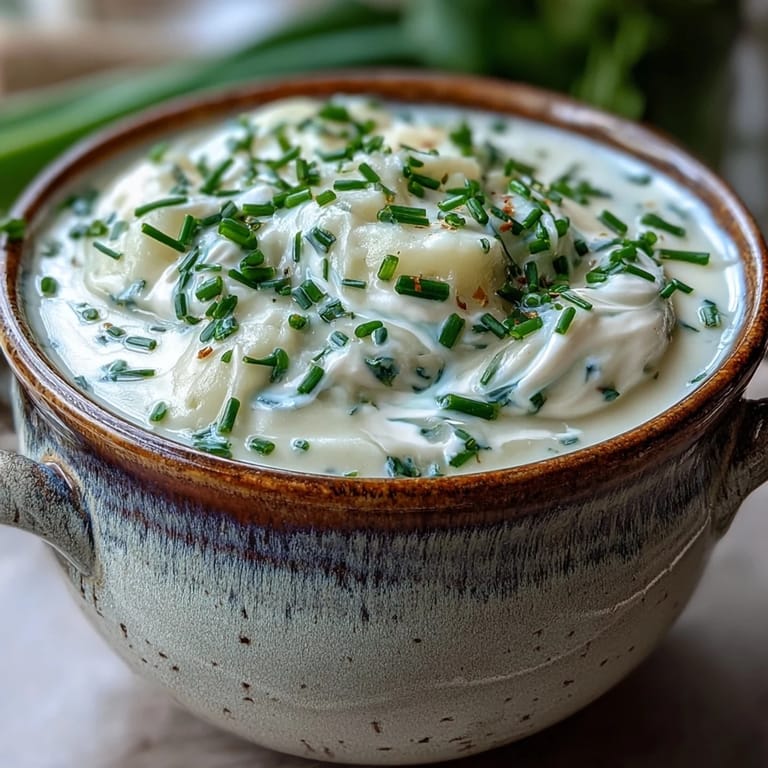
- Ladle it into bowls and finish with a scatter of chives, a drizzle of olive oil, or a small swirl of cream, whatever feels right in the moment.
 Save
Save Years later, my friend still texts me asking for this recipe, not because she can't find it online, but because she remembers how it made her feel. That's the real magic of potato leek soup—it's not complicated enough to be impressive, but it's made with enough intention that it lands differently than something tossed together quickly.
Why Leeks and Potatoes Are a Perfect Match
Leeks are mild and slightly sweet when cooked, while potatoes are earthy and grounding—together they create a flavor that's both comforting and interesting without needing much else to shine. I've tried making this with onions alone, and it's fine, but it misses the silky delicacy that leeks bring to the table. The combination has been trusted for generations across French kitchens, and there's wisdom in that kind of tradition.
Making It Your Own
This soup is a blank canvas, which means you can push it in directions that feel right for your kitchen and your mood. Some nights I add a splash of white wine after sautéing the vegetables, letting it reduce slightly before adding the broth—it adds a subtle sophistication that makes the soup feel less everyday. Other times I top it with crispy bacon bits or a dollop of sour cream, or I skip the cream entirely and keep it clean and light.
Timing and Storage Tips
This soup comes together in under an hour, which means it's perfect for those nights when you want something warm and real but don't have hours to spend. It also freezes beautifully for up to three months—just let it cool completely, portion it into containers, and you've got comfort on demand. I always leave the chives off before freezing and add them fresh when reheating, so they stay bright and don't turn into sad little shadows.
- Make a double batch and freeze half in smaller portions for desperate weeknight dinners.
- If you're reheating from frozen, thaw it overnight in the fridge or warm it gently on the stove, never in the microwave if you want to keep the creamy texture intact.
- Leftover soup thickens slightly as it cools, so add a splash of broth or milk when you reheat it to get back to that perfect consistency.
 Save
Save This soup has quietly become one of my most-made recipes, the kind you don't brag about but always come back to. It's a reminder that some of the best things in cooking aren't about technique or fancy ingredients—they're about showing up and paying attention.
Kitchen Help
- → What type of potatoes work best?
Yukon Gold potatoes are ideal because they naturally create a creamy texture when cooked. Their medium starch content allows them to break down slightly while maintaining structure. Russets also work well for an even smoother result, though they may produce a thicker consistency.
- → How do I properly clean leeks?
Slice leeks lengthwise and cut into half-moons. Place them in a bowl of cold water, swish vigorously, then let sit for 5 minutes. The grit will settle to the bottom. Lift the leeks out carefully, leaving the dirt behind. Repeat if necessary until the water remains clear.
- → Can I make this dairy-free?
Absolutely. Substitute butter with olive oil for sautéing, and use coconut milk, almond milk, or cashew cream instead of dairy milk or cream. The result will still be silky and satisfying, though the flavor profile will shift slightly depending on your alternative choice.
- → How long will this keep in the refrigerator?
Store cooled soup in an airtight container for up to 4 days. The flavors often deepen and improve after a day or two. Reheat gently over low heat, stirring occasionally. If it has thickened too much, simply thin with a splash of broth or water before serving.
- → Can I freeze this soup?
Yes, freeze for up to 3 months. Cool completely before transferring to freezer-safe containers, leaving space for expansion. Thaw overnight in the refrigerator. Note that creamy versions may separate slightly upon reheating—whisk vigorously or give it a quick blend to restore texture.
- → What can I serve with this soup?
Crusty bread, baguette slices, or garlic toast are classic accompaniments. A simple green salad with vinaigrette cuts through the richness. For a heartier meal, add a grilled cheese sandwich or serve alongside roasted vegetables. The soup also pairs beautifully with light white wines like Sauvignon Blanc.