 Save
Save I'll never forget the first time I attended a holiday party where the food itself was the centerpiece—a towering, color-blocked grazing board that looked like it belonged on a theater stage. It was inspired by The Nutcracker Suite, and I remember standing there, enchanted, realizing that feeding people doesn't always mean cooking. Sometimes it means creating an edible work of art, a feast that tells a story through color and texture. That board changed how I think about entertaining, and now whenever the holidays roll around, I find myself recreating that magic with my own Nutcracker-inspired creation.
I once made this board for a small holiday dinner, stacking everything on mismatched cake stands and vintage platters I'd collected over years. As we sat down, my grandmother actually gasped—she said it looked like the stage sets she'd seen in New York decades ago. That moment taught me that food is theater, and when you arrange it with intention and color, it becomes a conversation piece, a memory maker, something that lingers long after the last grape is eaten.
Ingredients
- Brie: The creamy anchor of the white section—choose a wedge that's ripe but still holds its shape, and let it sit at room temperature for 30 minutes before serving so it becomes almost buttery
- Aged cheddar: This golden block adds sharpness and visual warmth; look for one with visible crystallization, which means it's been aged properly and will have complex flavor
- Blue cheese: A small amount goes a long way—this is your bold statement, the cheese that makes people pause and say yes or no with conviction
- Gouda: The orange beauty that bridges sweet and savory; it's forgiving and beloved by almost everyone
- Cranberry goat cheese: This pink-hued cheese brings tartness and elegance—it's the dress-up cheese that makes the board feel intentional
- Prosciutto, salami, and soppressata: Thin, delicate layers folded into loose roses or draped like silk ribbons; buy from the deli counter where you can ask for paper-thin slices
- Grapes and berries: These provide jewel-like color and natural sweetness; cluster them by shade to create visual rivers of color across your board
- Dried apricots: Their warm orange tone is nearly impossible to replicate with fresh fruit, and they add chewiness that contrasts beautifully with soft cheeses
- Pomegranate seeds: These ruby arils are your finale—add them last because they can stain and roll, but they're worth the drama
- Marcona almonds and pistachios: These are not the everyday grocery store nuts—they're buttery and sophisticated, and people notice the difference
- Candied pecans: The sweet element among the savory; homemade is better, but quality store-bought works in a pinch
- Olives: Choose mixed colors for visual interest; they anchor the board and add that briny, salty note that makes people reach for cheese
- Crackers and baguette: These are your vehicles for everything else; quality matters here because they're tasted on their own
- White chocolate bark and dark chocolate: Break or cut into elegant shards rather than leaving whole—it feels more intentional and photographs better
- Macarons and petit fours: These are your jewelry; they say this board was made with care and attention to beauty, not just hunger
- Rosemary and edible flowers: Fresh greenery and delicate blooms aren't just garnish—they signal that this is special, that someone thought about every detail
Tired of Takeout? 🥡
Get 10 meals you can make faster than delivery arrives. Seriously.
One email. No spam. Unsubscribe anytime.
Instructions
- Building your foundation:
- Start with your largest board or the base tier of your stand system. This is like priming a canvas—you're creating the stage. If you're using cake stands and pedestals, nestle them now, varying the heights so each level is visible and accessible. Stability matters more than you'd think, so test everything before you add food.
- Creating the neutral base layer:
- Begin with crackers, baguette slices, and nuts scattered naturally across the lowest tier. These aren't decoration—they're the foundation that holds everything together. Arrange them with intention but not obsessive precision; a few scattered nuts look organic, while perfectly lined crackers look formal. Leave gaps; you're about to fill them with color.
- Establishing your color blocks:
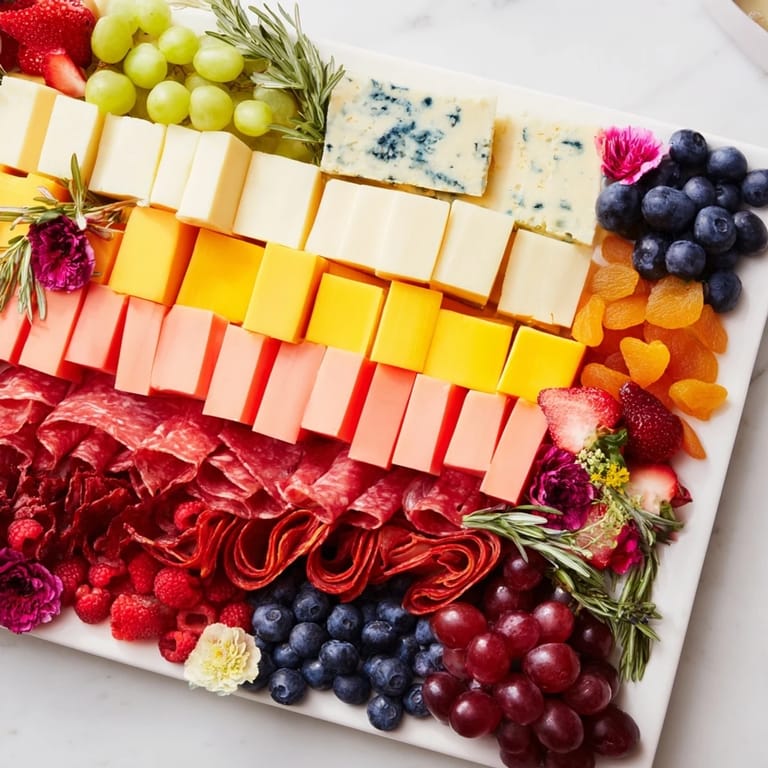
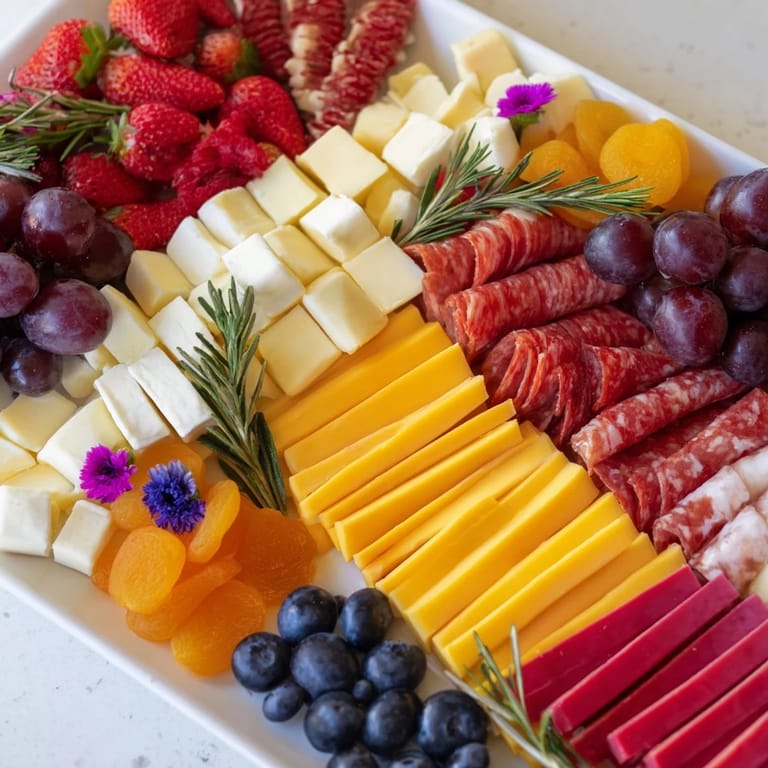
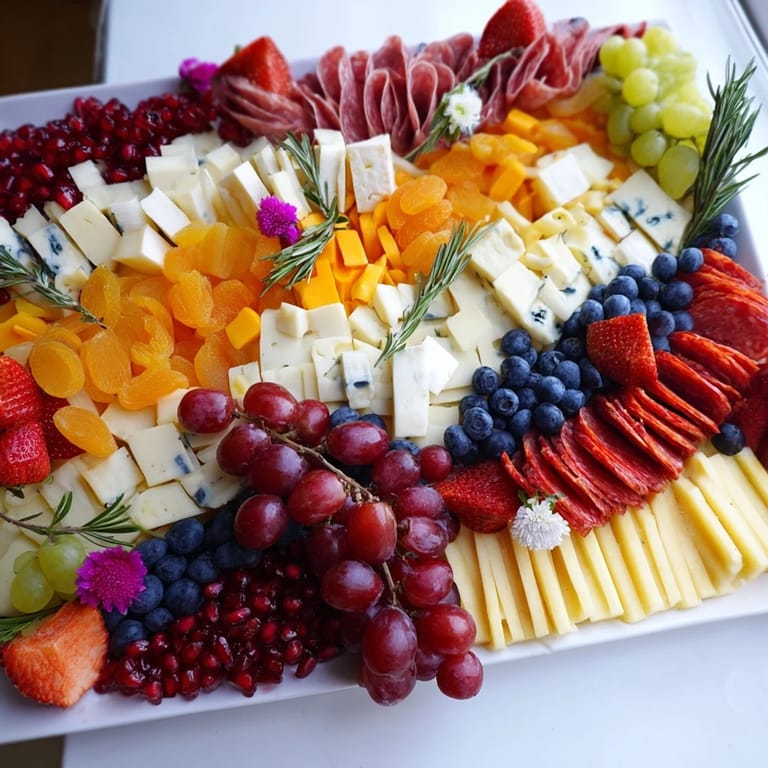
- This is where the magic happens. Work in sections, one color family at a time. Start with your largest cheese block—say, the white brie—and place it prominently. Then add a contrasting color beside it, like the deep blue cheese. As you work, you're creating visual rhythm: white next to gold next to blue creates drama and balance. Step back frequently to see the whole picture, not just the piece you're placing.
- Arranging the cheeses:
- Don't just plop wedges down; think about geometry and light. Angle some pieces so the color and texture catch the light. Cut the brie in half to show its creamy interior. Slice the cheddar at different angles. Leave some cheeses whole. This variation in presentation makes the board feel curated, not just assembled. Each cheese should be distinctly visible and feel like an invitation to taste.
- Folding and draping the charcuterie:
- This is the choreography part. Loosely fold prosciutto into soft roses, letting the delicate pink show. Drape soppressata in gentle waves between cheese sections, creating visual movement. Don't worry about perfection; a slightly messy fold of prosciutto looks more natural and inviting than something too precise. Charcuterie is about flow and layering, about creating pockets of color and texture.
- Layering fruits by color:
- Now bring in the living jewels. Cluster red grapes together, then transition to green grapes, then blueberries. This isn't random—you're creating a color gradient or contrasting blocks depending on your vision. Strawberries lean toward the red zone, dried apricots live in the gold section. Pomegranate seeds go last, in a cascade or strategic accent, because they can roll and stain. Let some fruits nest against the cheese; they soften hard edges and add freshness.
- Filling with nuts and olives:
- Use small bowls or clusters to contain the smaller elements. Green pistachios next to blueberries, brown candied pecans near the dark chocolate. Mixed olives get their own little moment, maybe nestled between the charcuterie and fruit. These elements provide texture variation and unexpected flavors that keep people reaching back.
- Placing sweets and chocolate:
- Chocolate shards catch light beautifully when placed at angles. Macarons should be stacked or stood slightly upright so their colors glow. Petit fours—arrange them like little treasures, maybe in a cluster or scattered across a tier. Sweets are the crescendo, so place them where they naturally draw the eye—often on the upper tiers where they're elevated and celebrated.
- Garnishing with greenery and flowers:
- Fresh rosemary sprigs should look like they're growing from the board, not placed on top of it. Tuck them between cheeses, along the edges, anywhere they create the impression of a living, breathing creation. Edible flowers—violets, pansies, nasturtiums—go in the last moments before serving. They're your final flourish, your signature, the thing that makes people say, I can't eat something this beautiful.
- The final check:
- Step back. Look at your board from above and from the side. Is there visual balance? Does your eye travel around it naturally? Are there color transitions that feel intentional? Are all the tiers stable and accessible? Make any last adjustments, refill any depleted sections, and then invite people to admire it before they eat it. The first moment of seeing is part of the experience.
 Save
Save There's a particular joy that happens when someone you love studies a board you've made, when their eyes light up at the realization that all these colors and flavors were arranged just for them. That's when I understand why people have been building and sharing boards for centuries—it's an act of love disguised as food. It says: I thought about what would bring you joy, I considered colors and flavors and balance, I made something that's as much about beauty as it is about sustenance.
Choosing Your Board and Stands
The physical foundation matters more than you'd think. A large wooden board is classic and warm, but marble is stunning if you want a more elegant feel. The real secret is creating height and dimension—flat boards feel flat, but when you layer with cake stands, pedestals, and even overturned bowls beneath serving pieces, you create drama and visual interest. Vary your heights: one tier at tabletop level, one elevated 6 inches, one at 12 inches. This isn't just about aesthetics; it makes every element visible and accessible, and it gives you more surface area to work with. Mix your serving vessels too—a marble board for the base, a vintage platter in the middle, a small cake stand for the top. The variation makes it feel intentional and collected, not like you bought a matching set.
Timing and Temperature Strategy
The biggest mistake people make is setting up their board too early. If you assemble everything 3 hours before guests arrive, the cheeses will be cold, the chocolate will be firm, and the whole thing will feel less alive. Here's the rhythm: lay out your crackers, nuts, and non-perishable elements up to 2 hours ahead. Add the cheese 45 minutes before serving—this gives them time to bloom and soften without becoming weeping puddles. Add fruits, especially cut fruits, 20 to 30 minutes before service. Add the delicate things—pomegranate seeds, any garnishes, the final macarons—right before people arrive. This timing keeps everything at its best. If you're serving this at a warm gathering, refresh the board halfway through by bringing out backup cheese and fruit; nothing looks worse than a picked-over, warm platter.
Customizing for Your Crowd and Season
The beauty of this board is that it's completely customizable to your vision and your guests' preferences. For a vegetarian celebration, simply omit all the charcuterie and add marinated artichokes, roasted red peppers, or pickled vegetables to fill the void and add color. Love seafood? Smoked salmon draped near the brie is restaurant-quality elegant. Want to make it themed for a specific Nutcracker character—Sugar Plum Fairy, Rat King, Snow King? Let that inspire your color palette: soft pinks and whites, deep reds and blacks, icy blues and silvers. In summer, lean toward fresh berries and lighter cheeses; in winter, embrace dark chocolate and dried fruits. You're not following a recipe slavishly—you're creating a vision that reflects who you are and what your guests love. That's where the real magic lives.
- If a guest mentions an allergy or preference, you have time to adjust—swap out the walnut candied pecans for sunflower seeds, replace the brie with an extra gouda
- Leftover components last for days, so you're not wasting ingredients; you're investing in meals to come
- This board works for any occasion: holiday parties, bridal showers, anniversaries, just because it's Saturday and you want to celebrate
 Save
Save Making this board is an act of creation, a moment where you get to play with color and flavor and beauty in a way that most cooking doesn't allow. It's one of those dishes where the process is as joyful as the outcome, and watching people gather around it, seeing their faces light up, knowing that you created that moment—that's everything.
Kitchen Help
- → How do I create the multi-tier effect?
Use cake stands, pedestals, or overturned bowls beneath platters to build height and layers for a dramatic appearance.
- → What cheeses are best for color blocks?
Brie, aged cheddar, blue cheese, gouda, and cranberry goat cheese offer vibrant colors and varied textures.
- → Can this board be adapted for vegetarians?
Yes, omit charcuterie and increase cheese, add marinated vegetables or roasted nuts to maintain variety.
- → How should I arrange the ingredients by color?
Group cheeses, charcuterie, fruits, nuts, and sweets into distinct blocks by their color to enhance visual appeal.
- → What garnishes add final touches?
Fresh rosemary sprigs and edible flowers provide festive color pops and fresh aroma.
- → What beverages pair well with this board?
Sparkling wine, light red wine, or herbal tea complement the flavors beautifully for entertaining.