 Save
Save I stumbled onto jar meals during a chaotic Tuesday morning when I had no time for lunch prep. Staring into my pantry, I spotted a row of mason jars and thought, why not layer everything like a salad jar but for soup? The first time I poured boiling water into one and watched the pasta soften while the vegetables released their color, I realized I'd found something special—a way to have homemade minestrone without the fuss.
My coworker saw me heat up a jar at my desk and asked what smelled so good. When I told him it was homemade soup from a jar he'd prepped days earlier, he laughed until I let him try a spoonful. Now he texts me photos of his attempted jars, half of which come out slightly wrong but taste right anyway.
Ingredients
- Small pasta (ditalini, elbow, or mini shells): These tiny shapes cook quickly in the boiling water and nestle perfectly between vegetables without getting stuck in layers.
- Dried red lentils: They soften fast and turn the broth a warm amber color while adding protein and earthiness.
- Cannellini beans: Rinse them well so the jar water stays clear and they add creamy texture without mushiness.
- Zucchini, carrots, and celery: Dice them small and about the same size so they cook evenly and look intentional in the jar.
- Frozen peas and spinach: Frozen is actually better here because they stay fresher longer in the fridge and don't wilt before serving.
- Sun-dried tomatoes: Chop them fine and drain well, or their oil will make the jar look cloudy but still tastes wonderful.
- Tomato paste: A small spoonful goes a long way and adds deep umami that makes people think you fussed.
- Italian herbs and seasonings: Layer them at the top so they distribute into the water; salt and pepper can go in too.
- Vegetable bouillon cube: Crumble it completely so it dissolves evenly and nothing tastes over-seasoned in one bite.
Tired of Takeout? 🥡
Get 10 meals you can make faster than delivery arrives. Seriously.
One email. No spam. Unsubscribe anytime.
Instructions
- Prep your vegetables with intention:
- Dice everything into small, uniform pieces so they look beautiful in the jar and cook at the same speed. I use my smallest cutting board for this step because it forces me to slow down and do it right.
- Layer like you're building something special:
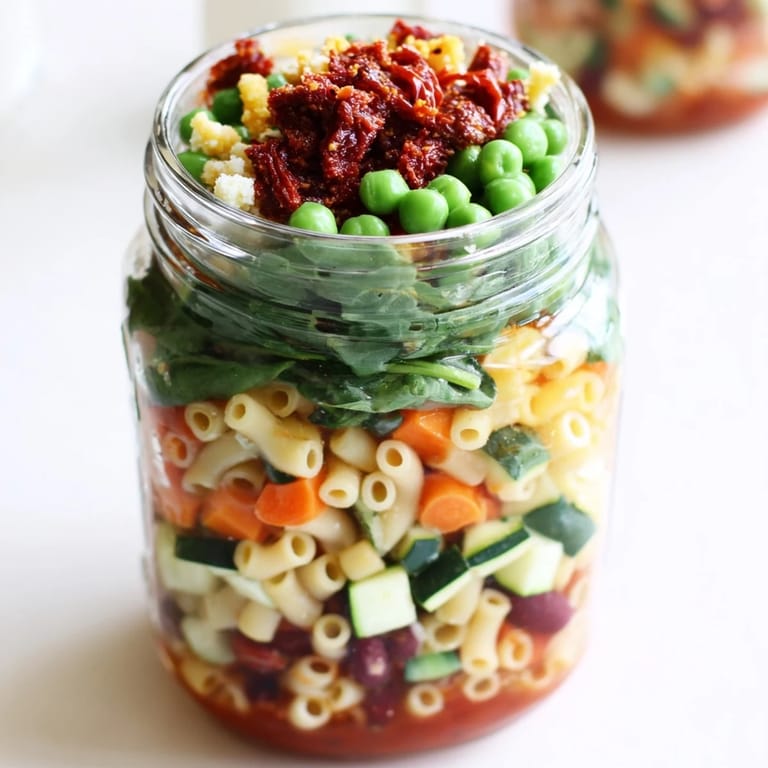
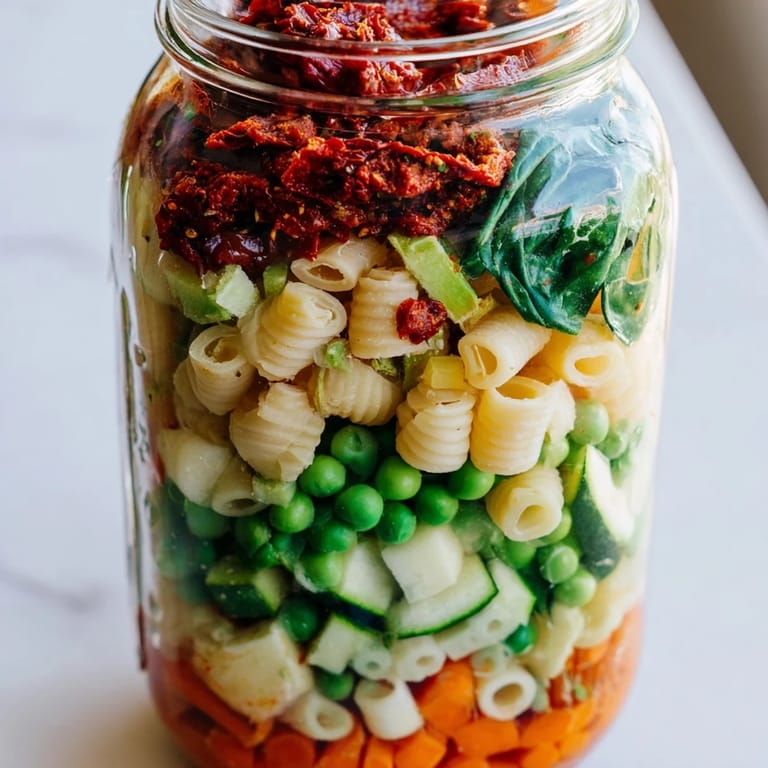
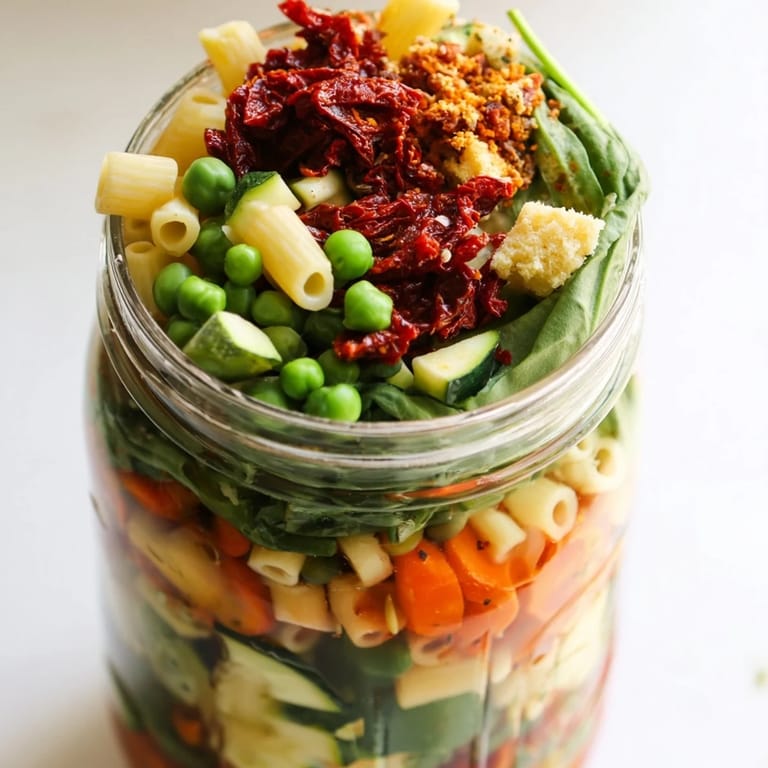
- Start with pasta on the bottom, then lentils, beans, carrots, celery, zucchini, peas, spinach, and sun-dried tomatoes in that exact order. Each layer should be visible through the glass, which not only looks intentional but also keeps heavier ingredients from crushing delicate greens.
- Add your flavor base:
- Spoon tomato paste directly onto the spinach layer, then scatter herbs, spices, and crumbled bouillon on top. Press down very gently—not hard enough to bruise anything, just enough to settle the layers.
- Seal and store with confidence:
- Screw the lids on tight and refrigerate up to four days, knowing that every jar is a future lunch already waiting.
- Transform with boiling water:
- Pour two cups of boiling water directly into the jar right at the table if you want to watch it happen, or do it in a bowl and stir well. Either way, let it sit for 10 to 15 minutes so the pasta softens and flavors bloom.
- Taste and adjust:
- Stir before serving and add salt, pepper, or a pinch more herbs if it needs it. The bouillon cube dissolves unevenly sometimes, leaving pockets that need mixing.
 Save
Save One winter afternoon, I gave four jars to my neighbor who'd just had surgery and couldn't cook. A week later she told me they saved her, that having something warm and nourishing without thinking made recovery feel less lonely. That's when this recipe stopped being just a convenience trick and became something with real purpose.
Why This Recipe Works as a Make-Ahead Meal
The magic is in the order. Heavier vegetables settle at the bottom and won't squash the fragile spinach on top, while the drier ingredients like pasta and lentils stay intact because they're not touching liquid until you pour the water. Refrigeration holds everything stable for days, and the flavors actually deepen as everything sits together, sealed and patient.
How to Customize Without Losing Balance
Swap zucchini for green beans, carrots for sweet potato, or spinach for kale without changing the timing or water amount. What matters is keeping vegetables roughly the same size and adding items in layers by weight, not by what you like best. I've tried adding mushrooms (too much water) and broccoli (takes too long to soften), so some experiments teach you what the recipe actually needs.
The Microwave Versus Stovetop Decision
If you have a kettle and fifteen minutes, let the jar sit at room temperature and let boiling water do the work slowly and evenly. If you're hungry and at home, microwave it in a bowl for three to four minutes and you'll have hot soup in half the time. Both methods work, and neither one makes you a better cook—only more aware of what you actually need in that moment.
- A metal lid in the microwave will spark, so always use a bowl or remove the lid first.
- Stir halfway through microwaving so the pasta at the bottom doesn't cook faster than the top.
- Let it cool for one minute before eating because that boiling water traps heat, and burned tongue ruins the whole experience.
 Save
Save This soup reminds me that good food doesn't require ceremony, just intention. Keep jars in your fridge, and you'll always have something warm and honest waiting.
Kitchen Help
- → How do I prepare the layered soup in the jar?
Add boiling water to cover the ingredients, stir or shake, then let sit 10-15 minutes or microwave until pasta is tender.
- → Can I customize the vegetables or beans?
Yes, you can swap in your preferred vegetables or beans. Adjust water and seasonings accordingly for best results.
- → What type of pasta works best for layering?
Small pasta varieties like ditalini, elbow macaroni, or mini shells hold up well in layering and cooking.
- → Is this suitable for vegan or gluten-free diets?
Omit Parmesan for a vegan option and use gluten-free pasta to accommodate gluten-free needs.
- → How should the jars be stored before preparation?
Seal jars tightly and refrigerate for up to 4 days until ready to add hot water and enjoy.
- → Can I enhance the flavor before serving?
A splash of olive oil or fresh basil added before serving adds a fresh, flavorful touch.