 Save
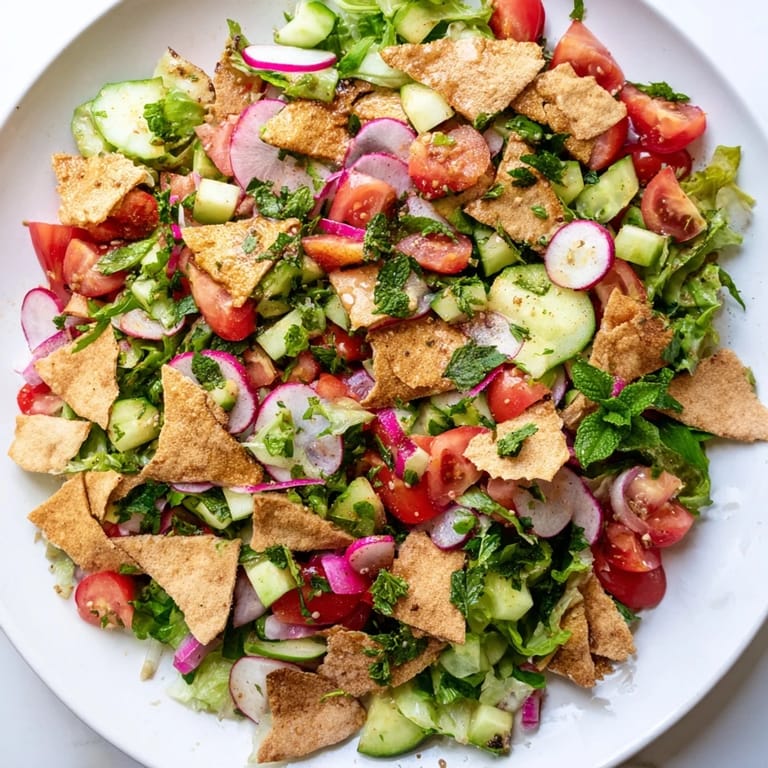
Save My neighbor Zahra taught me fattoush one afternoon when I wandered over asking about the smell of fresh herbs drifting from her kitchen. She didn't follow a recipe, just moved through her kitchen with practiced ease, talking about how her grandmother would make this for lunch in Beirut, the way the sumac adds this citrusy brightness that no lemon alone could give. Within minutes she had me chopping vegetables alongside her, laughing when I sliced a radish too thick. That first bite, with the pita still warm and crispy, changed how I thought about salads entirely.
I made this for a summer dinner party last year, and what struck me was how people kept going back for more, even though salad is usually the thing everyone politely eats before the main course. Someone asked for the recipe, then another person did, and by the end of the night I realized it wasn't just good, it was the dish people actually remembered. That's when I knew fattoush belonged in regular rotation at my table.
Ingredients
- Mixed greens: Romaine is sturdy and holds up to dressing, but arugula adds a peppery note that makes this feel less basic, and if you can find purslane it brings a lemony earthiness that's pure magic.
- Tomatoes: Use the ripest ones you can find, or honestly, skip them if they're mealy and watery—the cucumber and herbs carry enough freshness.
- Cucumber: Choose one that's firm and not too seedy, and dice it just before serving so it doesn't weep into the salad.
- Radishes: These are your crunch and peppery bite, slice them thin so they're not overwhelming.
- Red onion: Thinly sliced raw adds sharpness that mellows slightly as it sits, but start with less if you're onion-sensitive.
- Fresh parsley and mint: These are non-negotiable—they're what makes this taste like Beirut on a plate, so use the freshest you can get.
- Pita bread: Day-old pita works fine, even better since it crisps more easily.
- Extra-virgin olive oil: This matters more here than in most recipes because it's the base of your dressing.
- Sumac: If you don't have this, the salad is good but not fattoush—it's the ingredient that makes everything click, with a tartness that brightens without the heaviness of more lemon juice.
- Lemon juice and red wine vinegar: Together they build a dressing that's balanced and complex, neither too acidic nor flat.
Tired of Takeout? 🥡
Get 10 meals you can make faster than delivery arrives. Seriously.
One email. No spam. Unsubscribe anytime.
Instructions
- Crisp up the pita:
- Heat your oven to 375°F and cut the pita into rough bite-sized pieces—they don't need to be perfect. Toss them with olive oil and salt, spread them on a baking sheet in a single layer, and bake for 8 to 10 minutes until they're golden and make a satisfying snap when you bite one. This is the moment where the salad becomes something special.
- Build your salad base:
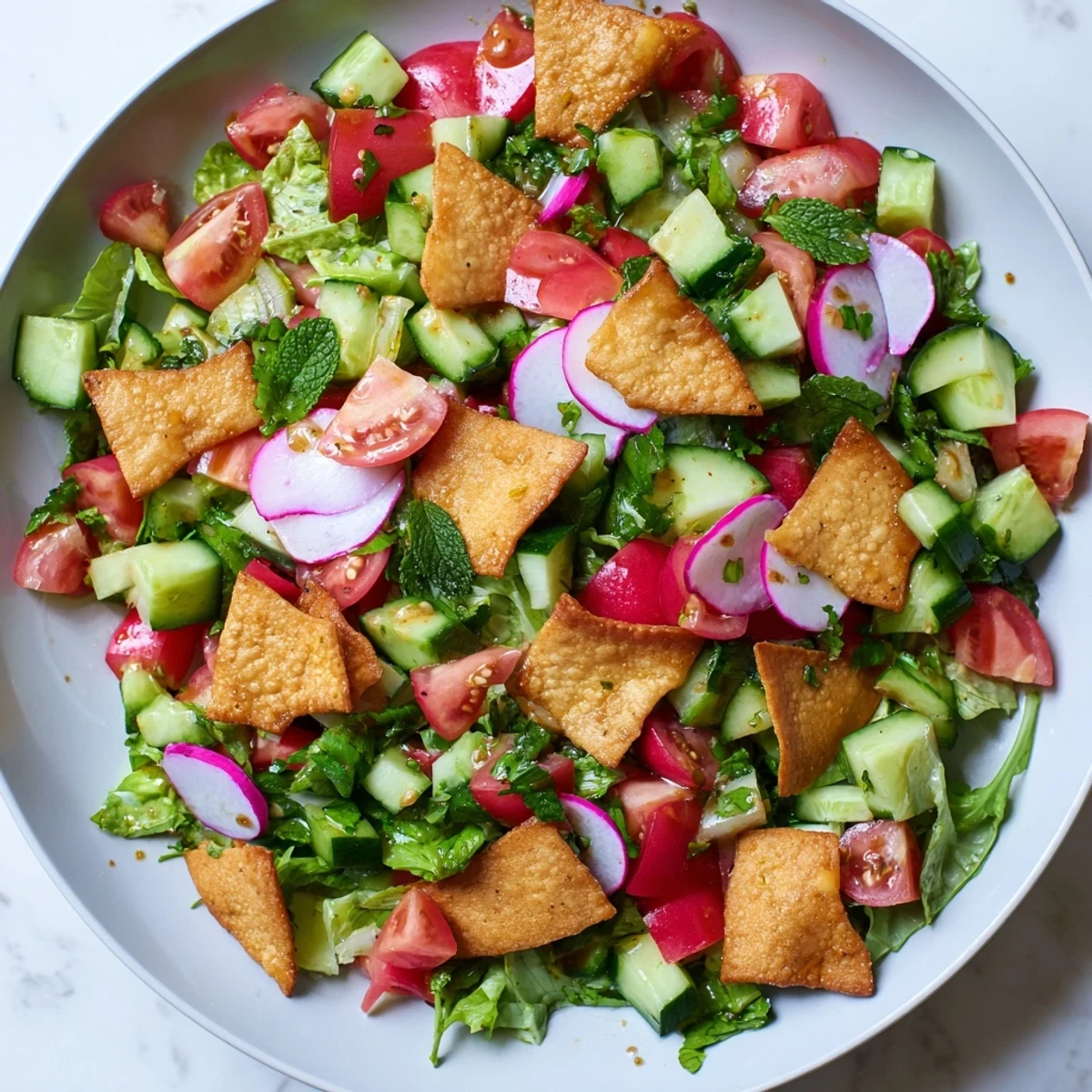
- While the pita toasts, get your large bowl and add all the raw vegetables and herbs—greens, tomatoes, cucumber, radishes, red onion, parsley, and mint. Don't dress it yet or everything will get soggy.
- Make the dressing:
- In a small bowl, whisk together the olive oil, lemon juice, vinegar, sumac, minced garlic, salt, and pepper. Taste it straight from the spoon—it should be bright and a little tangy, with that signature sumac flavor coming through.
- Bring it together:
- Add the cooled pita chips to your salad bowl, pour the dressing over everything, and toss gently but thoroughly so every leaf gets coated. Do this just before serving so the chips stay crispy.
- Taste and adjust:
- A pinch more salt, a squeeze more lemon, or another pinch of sumac might be needed depending on your tomatoes and how fresh your herbs are. Serve right away.
 Save
Save What I love most about this salad is that it taught me eating could be about more than taste—it's about texture, the snap of a fresh radish, the way a warm pita chip resists before it cracks in your teeth. That sensory part is what makes people keep coming back for just one more bite.
The Sumac Secret
Sumac is a spice that sounds exotic until you taste it and realize it's been hiding in Middle Eastern kitchens for centuries because it simply works. It gives you all the brightness of citrus without adding more liquid to your dressing, so your vegetables stay crisp instead of drowning. Once you understand this, you'll start adding sumac to other salads and wondering why it's not in your spice cabinet permanently.
The Pita Chips Game-Changer
Homemade pita chips are easier than you'd think and completely change the texture game compared to store-bought croutons. The garlic clove trick from the notes section—rub it on the pita before you oil and bake it—turns something simple into something unforgettable, though honestly plain is good too if you're short on time.
Variations and Flexibility
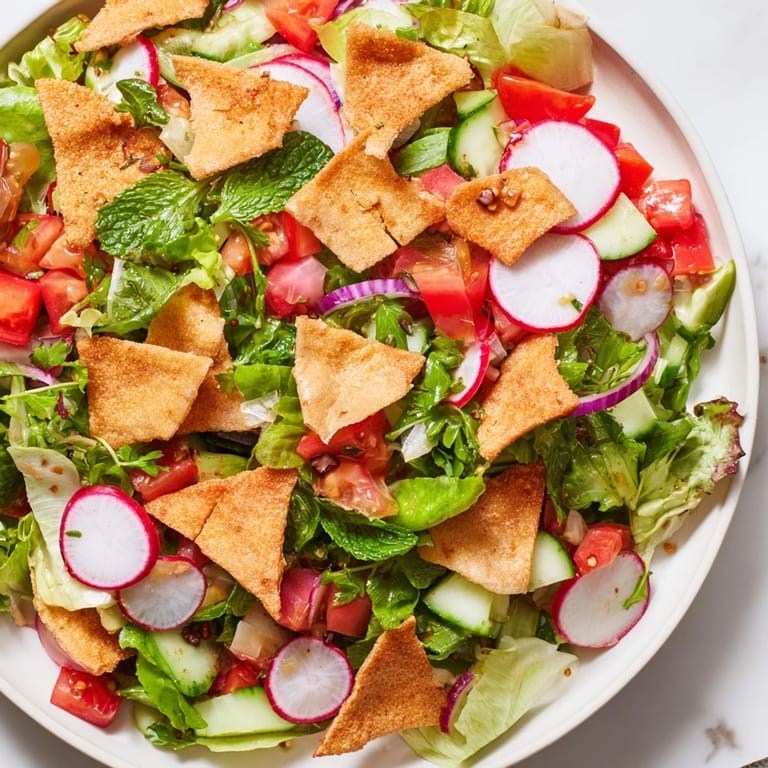
This is a salad that welcomes additions and substitutions without falling apart. I've added diced bell peppers for sweetness, thrown in green onions, even tossed in some crumbled feta if I'm not being strict about vegan. The base is sturdy enough to handle your preferences. The herbs are what anchor it to Lebanese roots, but the vegetables can shift with whatever is best at your market.
- Add bell peppers, green onions, or other fresh vegetables if you want more volume or different flavors.
- For gluten-free eating, use gluten-free pita bread or skip the chips and add toasted chickpeas for crunch instead.
- Make extra dressing if you're serving more people or want to ensure everything is well coated.
 Save
Save This salad has become my answer to almost any occasion—a simple lunch, a dinner party side, something to bring to a gathering. It reminds me that the best recipes are the ones that feel natural to make, that taste bright and alive, and that somehow manage to be both uncomplicated and impressive.
Kitchen Help
- → What makes Fattoush distinctive?
Crisp pita chips and sumac spice bring a unique texture and tangy flavor that set it apart from typical salads.
- → Can pita chips be prepared ahead of time?
Yes, pita chips can be baked in advance and stored in an airtight container to maintain crunch.
- → How is the dressing made for this salad?
The dressing combines olive oil, fresh lemon juice, red wine vinegar, ground sumac, garlic, salt, and pepper whisked until smooth.
- → Are there suitable substitutions for pita chips?
For gluten-free options, substitute pita chips with toasted gluten-free bread cubes or omit entirely.
- → What herbs complement this salad best?
Fresh parsley and mint provide bright, aromatic notes essential to authentic flavor balance.
- → How should the salad be served for best texture?
Add pita chips just before serving and toss gently to preserve their crispness.