 Save
Save I'll never forget the December evening when my grandmother taught me that the most elegant appetizers don't require a single flame. We were preparing for our annual holiday dinner, and she pulled out her grandmother's large ceramic platter, the one reserved only for special occasions. "The secret," she whispered, arranging vibrant red currants into clusters, "is to make people feel like they've stepped into something magical the moment they see the table." That platter, with its jewel-like berries and fragrant herb sprigs, became the centerpiece of every celebration after that. It's a reminder that sometimes the most memorable dishes are the ones that simply celebrate what nature already gave us.
I remember the first time I served this to my book club, I almost apologized for how simple it seemed. But then Sarah took a photo for Instagram, and within minutes, everyone was asking for the recipe. What I realized that night was that people don't just want to eat beautiful food—they want to feel like they're part of something thoughtful. That platter became our signature opening course for years.
Ingredients
- Fresh red currants: These tiny, jewel-like berries are the true stars. If you can't find them, cranberries work beautifully and actually hold their color longer throughout your gathering
- Pomegranate arils: They add glossy depth and a subtle tartness. Pro tip: buy them pre-seeded from the produce section if you want to save yourself forty minutes of tedious work
- Red grapes, halved: The halving makes them cluster better and creates more visual interest on the platter
- Goat cheese, shaped into small rounds: This is where creaminess meets sophistication. Use a small cookie scoop or melon baller to make perfect little spheres—it transforms the whole presentation
- Brie, cut into cubes: The butter-soft interior contrasts beautifully with the tartness of the berries. Keep it cold until the last minute so it holds its shape
- Aged cheddar, cut into cubes: This adds a sharp, savory note that keeps the platter from feeling too sweet
- Assorted crackers: Choose a mix of textures and shapes for visual variety. I like mixing water crackers, seeded crackers, and something with herbs
- Baguette rounds: Thin slices toasted until just crisp create an elegant foundation for cheese
- Fresh flat-leaf parsley: This is your main greenery. Its feathery fronds genuinely resemble holly leaves when arranged thoughtfully
- Fresh mint: A smaller accent that adds brightness and an unexpected freshness to the palette
- Fresh rosemary: Even just a few sprigs add an unmistakable festive aroma to your entire gathering
- Toasted pecans or walnuts: Toast them yourself in a dry skillet for three minutes—store-bought roasted nuts never compare
- Honey for drizzling: A light drizzle over the goat cheese rounds creates this beautiful golden gleam and adds subtle sweetness
Tired of Takeout? 🥡
Get 10 meals you can make faster than delivery arrives. Seriously.
One email. No spam. Unsubscribe anytime.
Instructions
- Prepare Your Canvas:
- Get your large platter out and let it breathe for a moment. I like to imagine the finished arrangement before I start. Wash every berry and herb, then pat them completely dry with paper towels. Moisture is the enemy of a beautiful presentation.
- Create Your Berry Clusters:
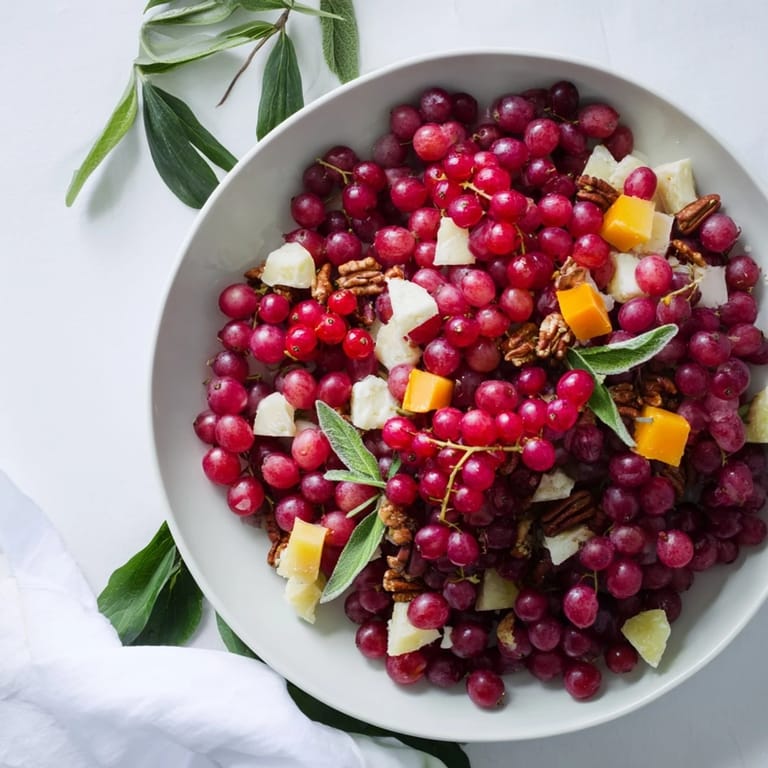
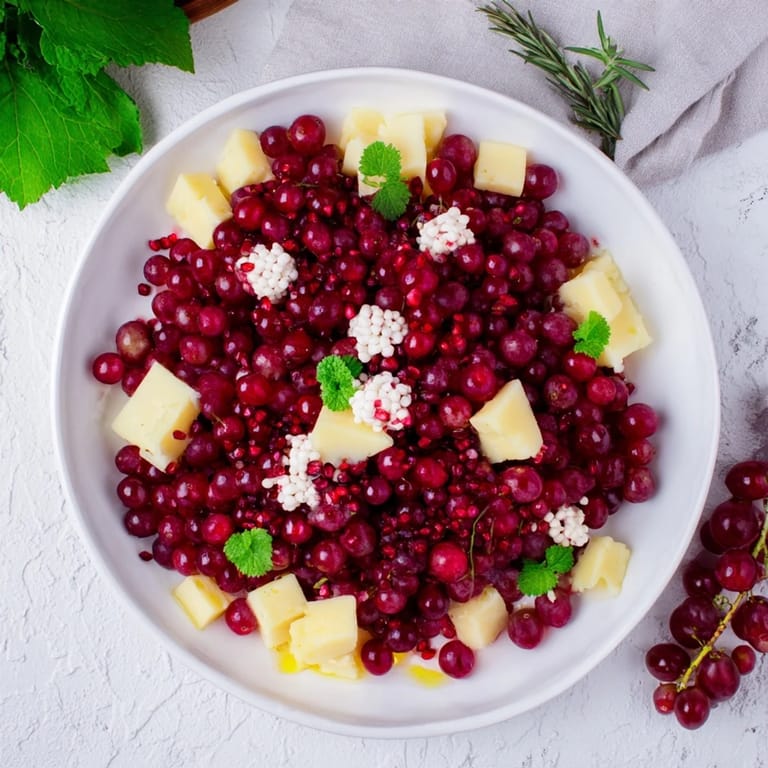
- Start by grouping your red currants into tight, organic clusters around the platter. Don't overthink this—nature is beautifully imperfect. Leave spaces between clusters, almost like little pockets where you'll nestle other treasures. The goal is to make them look like holly berries caught mid-cluster.
- Introduce the Cheese:
- Now position your goat cheese rounds and cheese cubes among the berry clusters. Let them nestle into the curves of the berries. This is when the platter starts feeling three-dimensional. Scatter the pomegranate arils throughout, letting some nestle near cheese, some near crackers, creating visual rhythm.
- Bring in the Greenery:
- Here's where it transforms into something magical. Tuck parsley sprigs around the berries like they're peeking out. Add mint strategically for moments of brightness. Weave rosemary throughout. You're not arranging—you're composing. Step back and look. Does it feel balanced? Add more herbs to any sparse areas.
- Fill the Gaps:
- Arrange your crackers and baguette rounds in any remaining spaces. Stand them at slight angles. Some people prefer to lean them against cheese or berries. This stage makes the platter feel generous and abundant.
- Add the Final Flourishes:
- Scatter toasted nuts across the platter in unexpected places. Then, with a light hand, drizzle honey over just the goat cheese rounds. Less is more here—you want people to see the gleam, not find puddles.
- Present with Pride:
- Step back and admire your work. This is genuinely restaurant-worthy. Serve immediately while everything is fresh and cool. Let guests pick and choose, creating their own little flavor combinations with each bite.
 Save
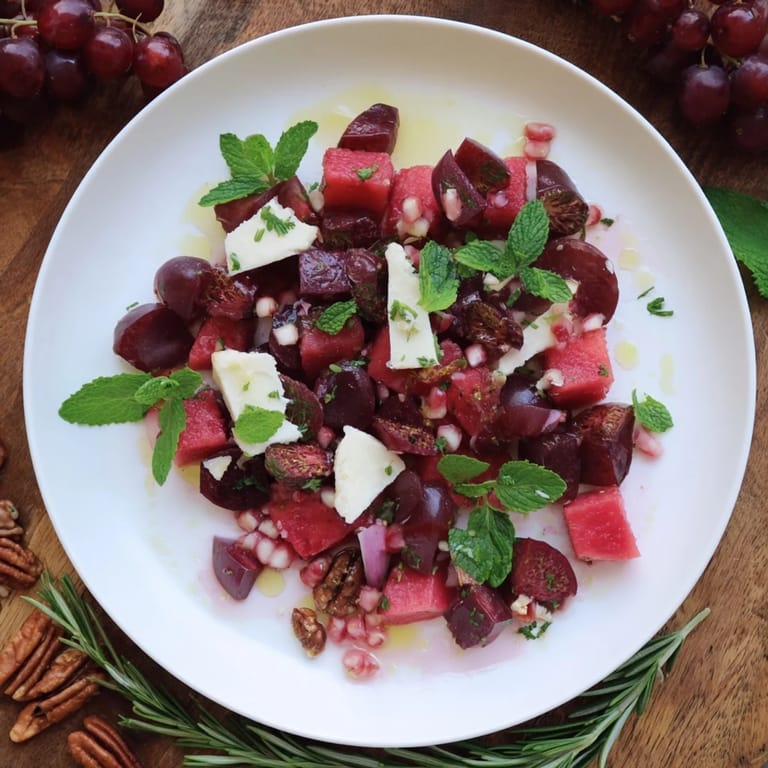
Save Years later, I served this platter at my sister's engagement party, and it became the backdrop for some of our favorite photographs from that day. It wasn't just food—it was an expression of care, a visual love letter to the people gathering around our table. That's when I truly understood why my grandmother guarded that recipe so carefully.
The Art of Color Theory on a Platter
The magic of this arrangement lies in understanding that reds, greens, and creams create a naturally harmonious palette. The warm red of the currants and pomegranate arils draw the eye, while the cool greens of the herbs frame and balance them. The pale creams of the cheeses act as resting places for the eye. This isn't random—it's the same color theory painters have used for centuries, just expressed through food. When you understand this, you can improvise with other berries or herbs and it will still feel absolutely right.
Making It Your Own
This recipe thrives on personalization. Some years I've added edible flowers—violas and pansies add both color and an unexpected delicate flavor. Other times, I've substituted white grapes for some of the red ones, or added candied ginger for texture and a warming spice note. The structure stays the same, but your signature emerges through these small choices. That's what transforms a recipe into a tradition.
Scaling and Serving Wisdom
The beauty of a platter is that it scales infinitely. For six people, this arrangement fits a standard dinner platter. For twenty, you'll simply work with a larger surface and add proportionally more of everything. The techniques remain identical, just expanded. And here's what I've learned through many gatherings: people eat with their eyes first, so a slightly underfull platter always looks more elegant than one crammed to the edges.
- For a smaller gathering, use a salad plate and everything becomes more intimate and easy to share
- For larger crowds, assemble multiple smaller platters rather than one enormous one—they're easier to refresh and it creates conversation stations around the room
- Always keep extra berries and herbs nearby to refresh the platter mid-party if needed
 Save
Save This platter is proof that the most sophisticated moments often come from the simplest gestures. There's something deeply generous about offering people beautiful, real ingredients arranged with care and intention.
Kitchen Help
- → How do I keep the berries fresh on the platter?
Wash and dry berries thoroughly before arranging to avoid moisture buildup. Serve immediately or refrigerate until serving.
- → Can I substitute different cheeses?
Yes, goat cheese, brie, and cheddar can be swapped with other soft or semi-hard cheeses based on preference.
- → What herbs best mimic holly leaves?
Flat-leaf parsley, fresh mint, and rosemary sprigs are ideal for creating the look and aroma of holly greenery.
- → Is it possible to make a vegan version?
Use plant-based cheeses and omit honey or replace it with a vegan-friendly drizzle.
- → What nuts complement the berry and cheese flavors?
Toasted pecans or walnuts add crunch and a subtle nuttiness that pairs well with the fruit and cheese.