 Save
Save The first time I made this, I wasn't trying to be fancy—I just had beautiful salmon fillets and a bunch of herbs that needed using before they wilted. I mixed them into a paste almost on impulse, slathered it on the fish, and pulled it from the oven to find something genuinely spectacular: flaky, herbaceous, and somehow elegant without any fuss. That meal taught me that the best dishes often come from happy accidents and listening to what your ingredients are telling you.
I made this for a friend who was going through a rough patch, and watching her face light up when she tasted that first bite reminded me why I love cooking. It wasn't complicated or showy, but it felt intentional, like I'd put care into something just for her. That's when I realized this salad had become my go-to recipe for moments when I want food to do more than just fill a plate.
Ingredients
- Salmon fillets: Look for wild-caught if you can—the flavor is brighter, and the color is naturally more vibrant. Make sure they're skinless so the herb paste makes direct contact with the fish.
- Fresh parsley, dill, and chives: Don't skip the fresh herbs or use dried—the whole magic of this recipe lives in that herbaceous crust. If you can only find two of the three, use more of those; the dish is forgiving.
- Dijon mustard: This acts as an emulsifier in both the herb paste and the vinaigrette, helping everything cling to the salmon and bind together smoothly.
- Mixed salad greens: A combination keeps things interesting—peppery arugula, earthy spinach, and crisp romaine give you texture and flavor variety in every bite.
- Cherry tomatoes and cucumber: These add freshness and a bit of crunch that plays beautifully against the warm salmon and tender greens.
- Walnuts or almonds: Toasting them yourself (or buying pre-toasted) brings out their natural oils and makes them taste nuttier and more substantial than raw.
- Feta cheese: Optional, but it adds a tangy saltiness that bridges the warm fish and cool salad in an unexpected way.
- Extra-virgin olive oil: Use the good stuff here—this isn't a place to cut corners. The quality of your oil will taste in every bite of the vinaigrette.
Tired of Takeout? 🥡
Get 10 meals you can make faster than delivery arrives. Seriously.
One email. No spam. Unsubscribe anytime.
Instructions
- Heat your oven and prep:
- Get your oven to 200°C (400°F) and line a baking sheet with parchment paper—this keeps the salmon from sticking and makes cleanup a dream. A couple of minutes while the oven preheats gives you time to gather everything else.
- Build the herb paste:
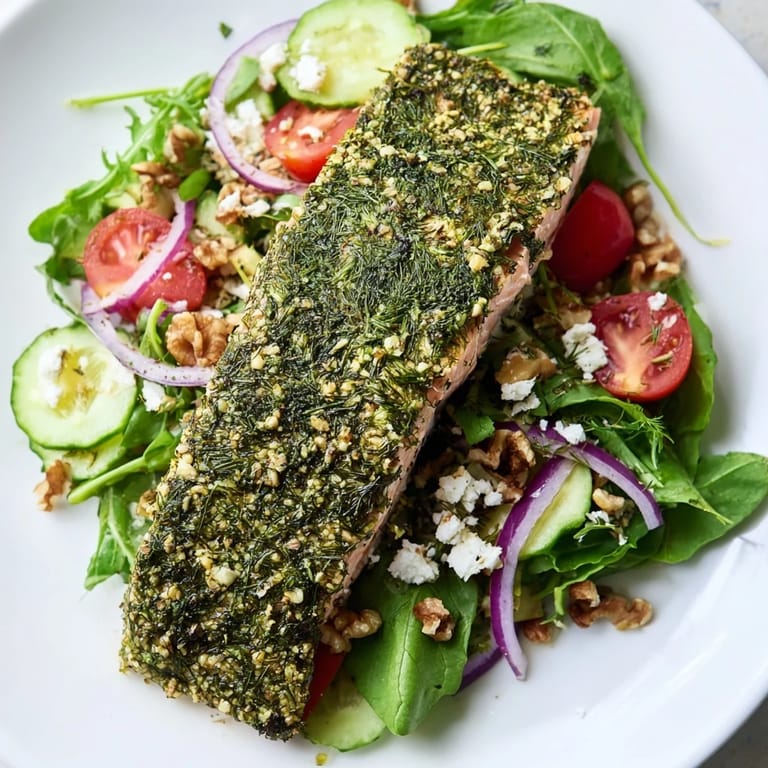
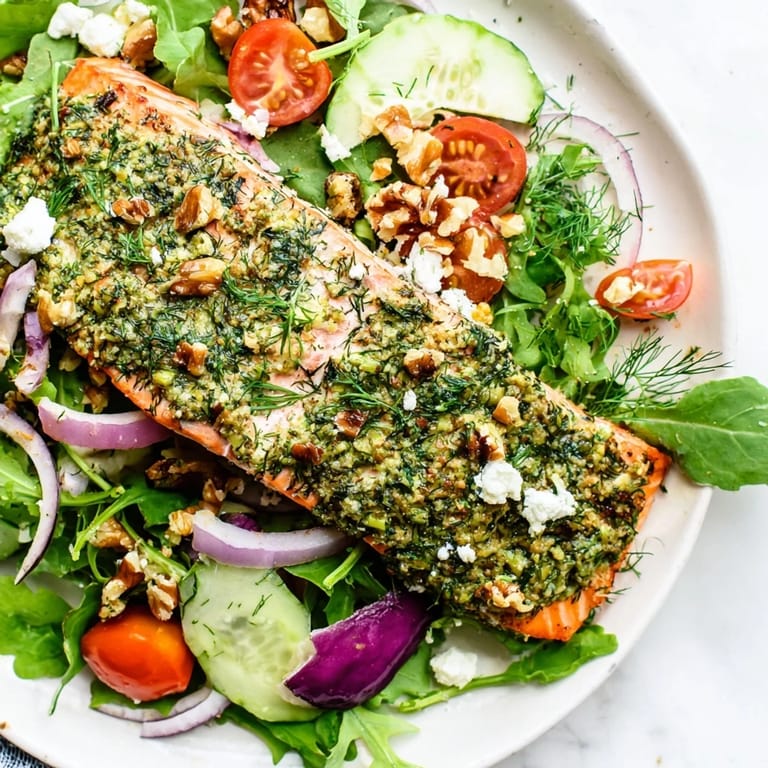
- In a small bowl, stir together the olive oil, Dijon mustard, lemon juice, and your chopped fresh herbs (parsley, dill, chives) with the garlic powder, salt, and pepper. You should end up with something that looks like a chunky, fragrant paste with visible flecks of green throughout.
- Coat the salmon:
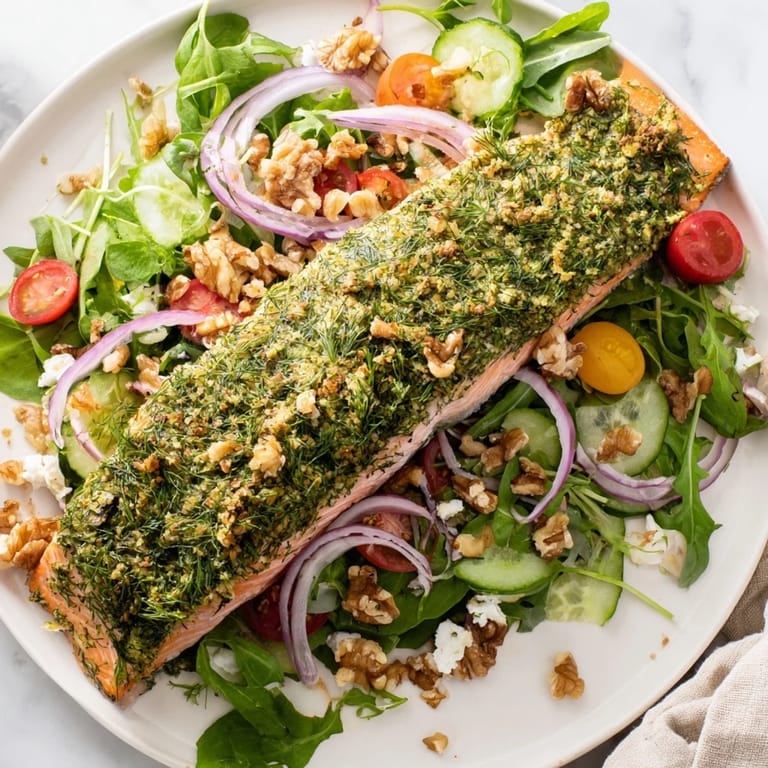
- Pat your salmon fillets dry with a paper towel, then lay them on the prepared baking sheet. Divide the herb paste among the four fillets and spread it generously across the top of each one, working it into an even layer.
- Bake until just done:
- Slide the sheet into the oven for 12 to 15 minutes—you're looking for that moment when the salmon is just cooked through and flakes easily with a fork, not dry or overdone. It should still feel slightly moist inside.
- Assemble the salad base:
- While the salmon bakes, toss your salad greens, halved cherry tomatoes, sliced cucumber, thin red onion slices, and the toasted nuts (and feta, if you're using it) into a large bowl. Don't dress it yet—you want to do that just before serving so nothing gets soggy.
- Make the vinaigrette:
- In a small bowl, whisk together the extra-virgin olive oil, white wine vinegar or lemon juice, honey, and Dijon mustard until it emulsifies slightly and tastes balanced. Season with salt and pepper, then taste and adjust—this is your chance to make it sing.
- Dress and plate:
- Drizzle the vinaigrette over the salad and toss gently with salad tongs until every leaf glistens. Divide the dressed greens among four plates, then top each mound with a warm herb-crusted salmon fillet and serve right away.
 Save
Save There was a moment last spring when I served this to someone I was trying to impress, and instead of watching their face or waiting for compliments, I just sat back and enjoyed watching the whole table relax into the meal. That's when I understood that the real gift of cooking isn't perfection—it's creating something that lets people slow down and be present together.
The Herb Crust Secret
The beauty of the herb paste is that it's forgiving and deeply personal. If you love basil more than dill, swap them around. If tarragon speaks to you, use it instead of chives. The paste protects the salmon from drying out while infusing it with flavor, so as long as you're using fresh herbs, you're golden. I've experimented with crushed hazelnuts mixed into the paste, added a touch of lemon zest, or thrown in fresh thyme—each version has been delicious in its own way.
Why Warm Salmon on Cold Greens Works
There's something almost shocking about that temperature contrast—the warmth of the just-baked salmon meeting cool, crisp lettuce. It's not fancy, but it's sophisticated in the way it wakes up your palate. The warm fish gently wilts the greens just enough to soften them without destroying their structure, and the heat brings out the mustard and dill flavors in ways that feel louder and more present than if everything were at the same temperature.
Make It Your Own
This recipe is a skeleton waiting for your personal touch. You can add avocado slices for creaminess, toss in some cooked quinoa or farro for more substance, or scatter pomegranate seeds for a pop of tartness and color. Some nights I make this with roasted beets instead of fresh tomatoes, or add crispy bacon because, well, bacon. The salmon and herb crust are the non-negotiables; everything else is just you adding your voice to the dish.
- Substitute the salmon with trout, halibut, or any firm white fish if that's what you have on hand.
- Make the vinaigrette earlier in the day and let the flavors meld—it actually gets better as it sits for a few hours.
- If you're feeding a crowd, you can prep all the salad components in advance and dress it just before your guests arrive.
 Save
Save Every time I make this, it reminds me that the best meals don't require complicated techniques or long ingredient lists—just good instincts, fresh components, and the willingness to feed someone (even if that someone is just you) with intention. That's the whole recipe right there.
Kitchen Help
- → What herbs are used in the crust?
Fresh parsley, dill, and chives are finely chopped and combined with garlic powder to create the herb crust.
- → Can I substitute the salmon with another fish?
Yes, trout or other firm fish make excellent alternatives for the herb crust and baking method.
- → How do I make the vinaigrette?
The vinaigrette is made by whisking together extra-virgin olive oil, white wine vinegar or lemon juice, honey, Dijon mustard, salt, and pepper.
- → Is it possible to add nuts or cheese to the salad?
Yes, toasted walnuts or almonds and crumbled feta cheese can be added for extra flavor and texture.
- → What side dishes pair well with this meal?
This dish pairs nicely with a crisp Sauvignon Blanc or sparkling water with lemon for a refreshing touch.