 Save
Save There's something about building your own bowl that feels like an act of small rebellion against the assembly line. I discovered my obsession with Chipotle bowls during a particularly chaotic week when takeout became my lifeline, and I found myself ordering the same thing so often that the cashier knew my order by heart. One rainy evening, I decided to replicate that magic at home, starting with the carnitas that make everything taste like you've been simmering in a kitchen for hours. What started as a simple experiment turned into a ritual—something I now make when I want to feel both nourished and indulged, all in one beautiful bowl.
I'll never forget the first time I served this to my sister, who works in food service and is notoriously hard to impress. She took one bite, raised her eyebrow, and asked if I'd somehow smuggled this from an actual restaurant. That moment—when someone who eats professionally stops to really taste what you've made—was when I knew this recipe belonged in my permanent rotation. Now whenever she visits, she requests "the bowls," and I love having something that makes her pause.
Ingredients
- Pork shoulder: Use the fattier cut—that intramuscular fat becomes silky when braised and keeps the meat from drying out during the long, slow cook.
- Olive oil: Just enough to develop a golden crust on the pork before braising; this flavor layer matters more than you'd think.
- Smoked paprika: This is your secret weapon for depth—it whispers rather than shouts, adding complexity that fresh spices alone can't achieve.
- Orange and lime juice: The citrus cuts through richness and tenderizes the pork simultaneously; don't skip either one.
- Long grain white rice: Rinsing it thoroughly prevents mushiness and keeps each grain separate and fluffy.
- Fresh cilantro: Add half to the rice while it's still steaming so it absorbs the flavor; the rest goes into salsa and guacamole for brightness.
- Black beans: Warming them with cumin transforms canned beans from serviceable to genuinely delicious.
- Monterey Jack and cheddar blend: Jack melts silky while cheddar adds sharpness; together they create queso that actually tastes homemade.
- Cornstarch slurry: This prevents the cheese sauce from breaking and keeps it creamy rather than grainy.
- Ripe avocados: Shop a day ahead and let them sit on your counter; they should yield slightly to thumb pressure but not be mushy.
Tired of Takeout? 🥡
Get 10 meals you can make faster than delivery arrives. Seriously.
One email. No spam. Unsubscribe anytime.
Instructions
- Season and sear the pork:
- Pat the pork dry with paper towels before seasoning—this helps it brown instead of steam. As the oil shimmers in your pot, you'll hear the satisfying sizzle that tells you the temperature is right; brown it in batches rather than crowding the pan, turning each piece until all sides have a deep golden crust.
- Build the braising liquid:
- After browning the pork, add garlic and onion to the pot and let them soften for a minute, releasing their fragrance. Pour in the citrus juices and broth, which will hiss and deglaze the bottom—scrape up every caramelized bit with a wooden spoon because that's where the flavor lives.
- Braise low and slow:
- Once covered and moved to low heat, you're essentially forgetting about this for two hours; resist the urge to peek constantly. When the pork shreds with a fork like it's been cooked for half a day, you'll know it's ready.
- Shred and finish the carnitas:
- Pull the meat apart with two forks right in the pot, then simmer uncovered for ten minutes so the liquid reduces into a glossy coating that clings to each strand. This step is crucial—it's the difference between pulled pork and true carnitas.
- Prepare the rice:
- Rinsing removes excess starch that would make rice gluey; when you add it to the boiling water, it'll settle with a gentle bubbling sound. The moment you cover it, resist opening the lid—steam is doing invisible work, and steam escapes if you interrupt.
- Brighten the rice with cilantro and lime:
- Stir in these finishing touches while the rice is still warm enough to open its pores to the flavors; you want the cilantro's fresh bite and lime's zing to become part of the grain, not just sit on top.
- Warm the beans with intention:
- Heating spiced beans gently rather than blasting them at high heat allows the cumin and garlic powder to slowly infuse rather than burn. Taste and adjust seasoning as you go—canned beans are often under-seasoned, and this is your moment to fix that.
- Create silky queso:
- Start with melted butter and cornstarch to create a roux, which prevents the cheese from becoming grainy when it heats; whisking in cold milk slowly prevents lumps, and once it thickens, the cheese melts into something genuinely creamy. If you're using jalapeño, add it now—the heat softens into a gentle warmth rather than a jolt.
- Mix fresh salsa:
- Combine everything in a bowl and taste before seasoning further; lime juice and salt are the two things that make salsa taste bright and alive rather than watery and dull.
- Mash your guacamole:
- Leave some avocado chunky rather than making it completely smooth—texture matters. Lime juice prevents browning while adding brightness, and cilantro at the end keeps it fresh-tasting rather than oxidized.
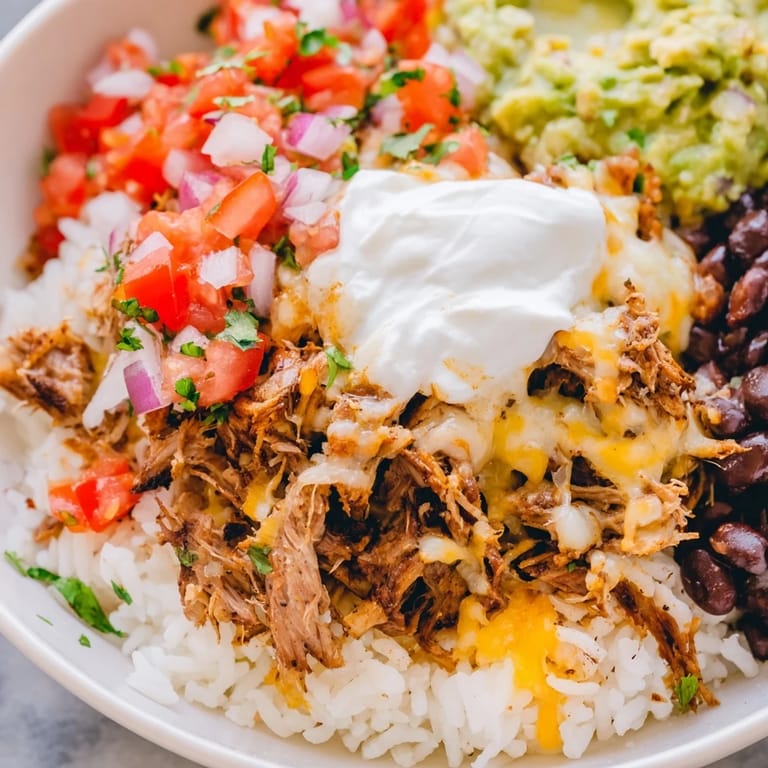
- Layer with purpose:
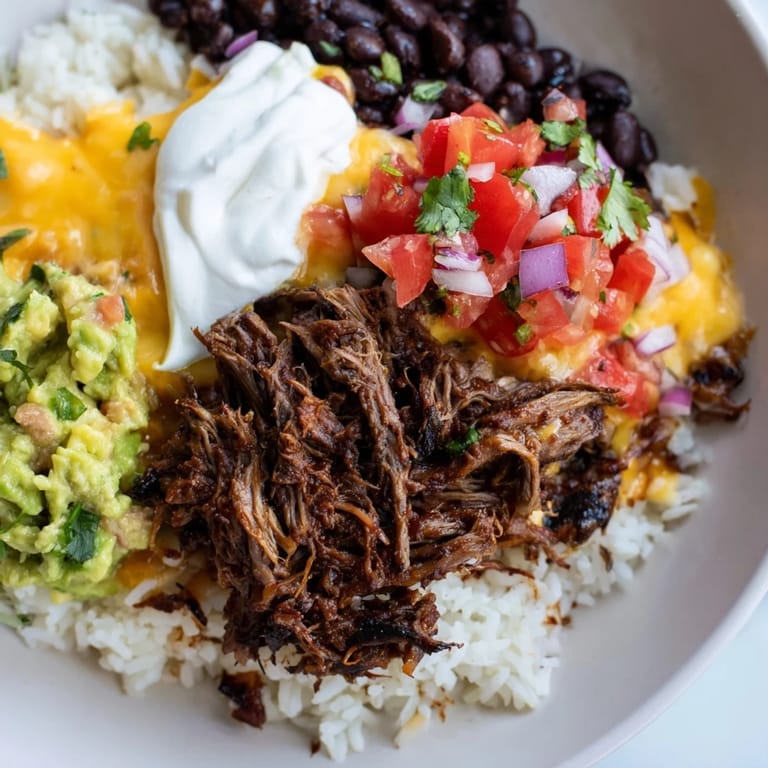
- Start with rice as your base (it keeps beans from settling), then beans, carnitas, and queso while everything is warm so flavors meld slightly. Top with cool salsa, sour cream, and guacamole just before serving so they maintain their individual characters.
 Save
Save What I love most about this bowl is that it transformed the way I think about cooking for people. It's not a dish that demands attention while you're eating—it quietly satisfies, every component supporting the others, every bite different depending on how much of each topping you grab. It feels generous without being fussy, and that's when food becomes something people remember.
Why Carnitas Matter
Carnitas are essentially pork that's been loved slowly into tenderness, and that process is actually what makes this entire dish work. The long, gentle braise with citrus and aromatics creates a depth of flavor that you simply cannot rush or fake with spice blends. I learned this the hard way when I once tried to shortcut the process with a pressure cooker, and while it saved time, the meat tasted flat and one-dimensional compared to the original. That two-hour investment is where the magic happens—where fat renders into richness, where acid tenderizes, where flavors deepen and marry. This is the component that makes people ask for your recipe, and it's worth protecting that time.
Building Your Bowl Strategy
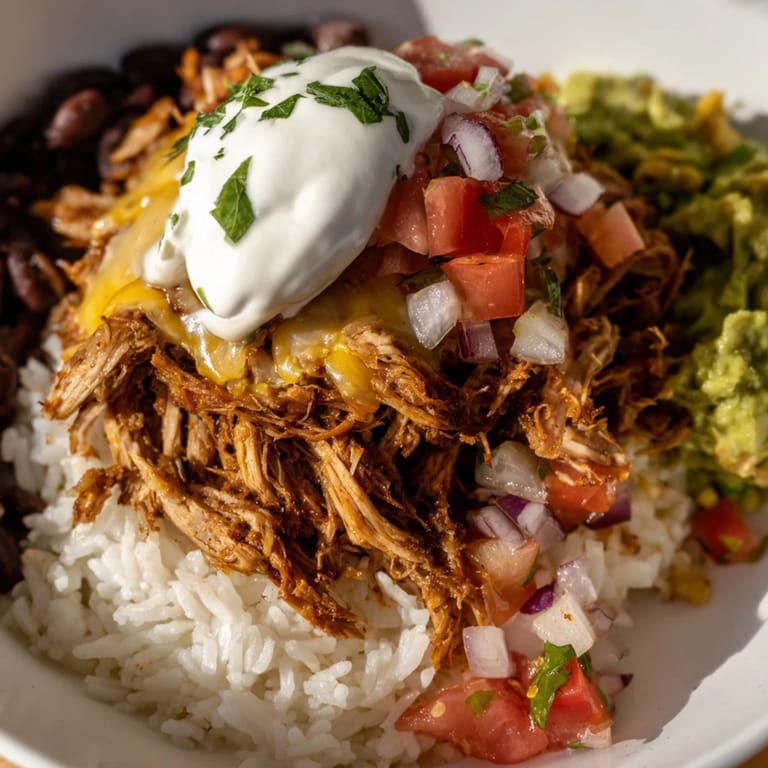
The order in which you layer your bowl might seem small, but it actually determines how flavors hit your palate and how textures interact. Warm components go down first because heat rises and will slightly warm the cooler toppings, creating a gentle melting effect rather than jarring temperature contrasts. I've found that starting with rice gives you a stable base that won't shift when you add beans and carnitas; the starches grip each other and create a foundation. The warm layers—rice, beans, carnitas, and queso—should all go in while still steaming, which is why timing is everything. You want to finish the salsa, guacamole, and sour cream just before serving, which keeps them bright and prevents them from getting warmed into blandness. This strategy turns a bowl of components into something cohesive that actually tastes better than the sum of its parts.
Timing and Make-Ahead Strategies
The beauty of this recipe is that it actually rewards advance preparation without sacrificing quality. The carnitas, in fact, taste better the next day once flavors have fully settled and integrated, so you can braise the pork the day before and simply reheat it gently when you're ready to assemble bowls. The queso can be made an hour ahead and kept warm in a double boiler, which prevents it from cooling and firming up before you need it. The salsa and guacamole really should be made fresh because they're where brightness lives, but if you absolutely must make them ahead, reserve guacamole's cilantro and lime juice for just before serving—add those at the last second so they taste vibrant rather than dull. The rice needs to be made fresh, but it takes only twenty minutes, so plan your timing to have it finishing just as you're shredding the final bits of carnitas.
- Carnitas actually improve when made a day or two ahead; store them in their braising liquid and reheat gently before serving.
- Queso keeps warm in a double boiler for at least an hour without breaking, which means you can make it early and forget about it.
- Rice is your last component to prepare, but it's also your fastest—use it as the timer that tells you everything else should be nearly ready.
 Save
Save This bowl has become my answer to the question "What should we eat?" when I want something that feels both special and comfortable. It's a recipe that reminds me why cooking for people matters—because a well-made bowl can turn an ordinary evening into something worth remembering.
Kitchen Help
- → How long does it take to cook the carnitas?
Cooking the carnitas takes about 2 hours on low heat until the pork is tender and easy to shred.
- → What type of rice works best for cilantro lime rice?
Long grain white rice is ideal for fluffy texture and absorbs the cilantro and lime flavors well.
- → Can I substitute black beans with another type?
Yes, pinto beans make a great alternative and offer a similar creamy texture and mild flavor.
- → How is the queso prepared for this bowl?
Queso is made by melting Monterey Jack and cheddar cheeses into a sauce thickened with cornstarch and finished with milk and jalapeño for a smooth, spicy finish.
- → What fresh ingredients enhance the guacamole flavor?
Fresh cilantro, lime juice, red onion, and diced tomato add brightness and depth to the creamy avocado base.
- → Is it possible to make the dish gluten-free?
Yes, this dish is naturally gluten-free if all packaged ingredients like broth and spices are verified gluten-free.