 Save
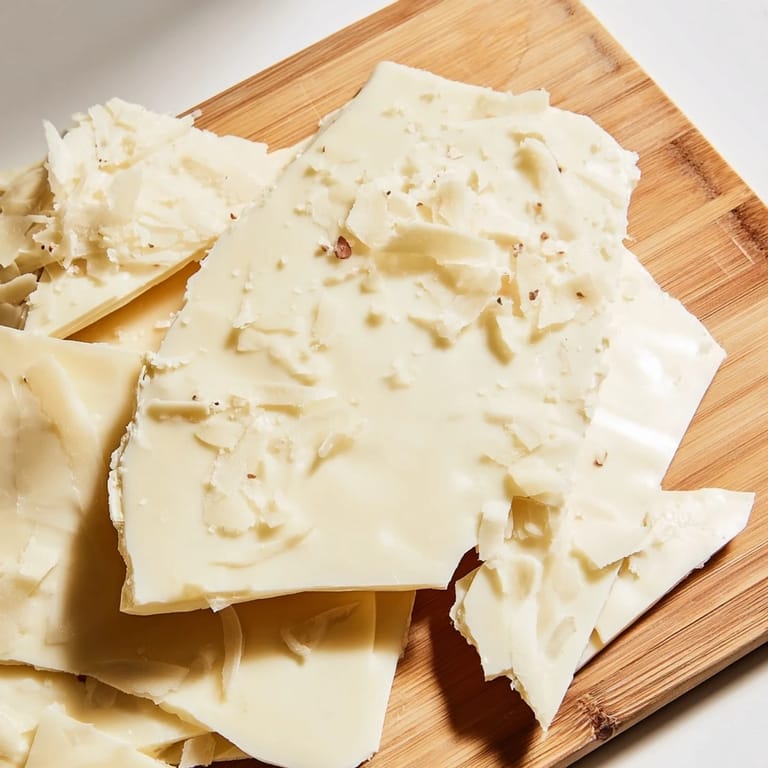
Save I discovered this dish by accident while organizing a gallery opening—a friend had ordered a sculptural dessert that was almost too beautiful to eat, with white chocolate shards catching the light like frozen water. The combination of sweet and savory seemed impossible until I tasted it, and suddenly everything clicked. That evening, I went home determined to recreate something that felt equally striking but entirely my own. The Arctic Tundra emerged from late-night sketches on kitchen paper, imagining minimalism and drama on a single wooden board.
I made this for a winter dinner party where everyone expected something warm and indulgent, and instead I unveiled this stark, chilled composition. One guest actually paused mid-conversation—she said it looked like the landscape from a film she loved. That moment, watching people experience something they didn't expect, made me realize that food doesn't always have to be rich or complex to feel luxurious.
Ingredients
- White chocolate, high-quality (250 g): Buy something you'd actually enjoy eating plain; the better the chocolate, the cleaner the flavor and the less waxy the finish will be on your ice sheets.
- Coconut oil (1 tsp, optional): This creates a subtle sheen and helps the chocolate flow more smoothly, but skip it if you prefer a matte finish.
- Parmigiano-Reggiano block (60 g): Never use pre-grated cheese—the texture matters here, and fresh shards have a delicate crunch that powder can't match.
- Flaky sea salt, to taste: This is your seasoning and your punctuation mark; use it sparingly but with intention.
- Light wood serving board or platter: The board is part of the presentation, so choose one that feels intentional to you.
Tired of Takeout? 🥡
Get 10 meals you can make faster than delivery arrives. Seriously.
One email. No spam. Unsubscribe anytime.
Instructions
- Melt the chocolate gently:
- Set up a double boiler or use a microwave in 30-second bursts, stirring between each round. The goal is smooth and pourable, never glossy or separated—chocolate seizes when it gets too hot, and there's no recovering from that.
- Spread into ice sheets:
- Pour the chocolate onto parchment and use an offset spatula to push it into a thin, even layer about 2 mm thick. Work quickly but without rushing; the chocolate should look casual, not laboriously perfect.
- Chill until set:
- Twenty minutes in the fridge transforms soft chocolate into something with real snap and structure. You want it firm enough to break cleanly, not so cold it becomes brittle.
- Shave the parmesan:
- Use a vegetable peeler to coax thin, irregular shards from the block—each one should catch light differently. If your peeler feels dull, rinse it under hot water for a second and try again.
- Break the chocolate into shards:
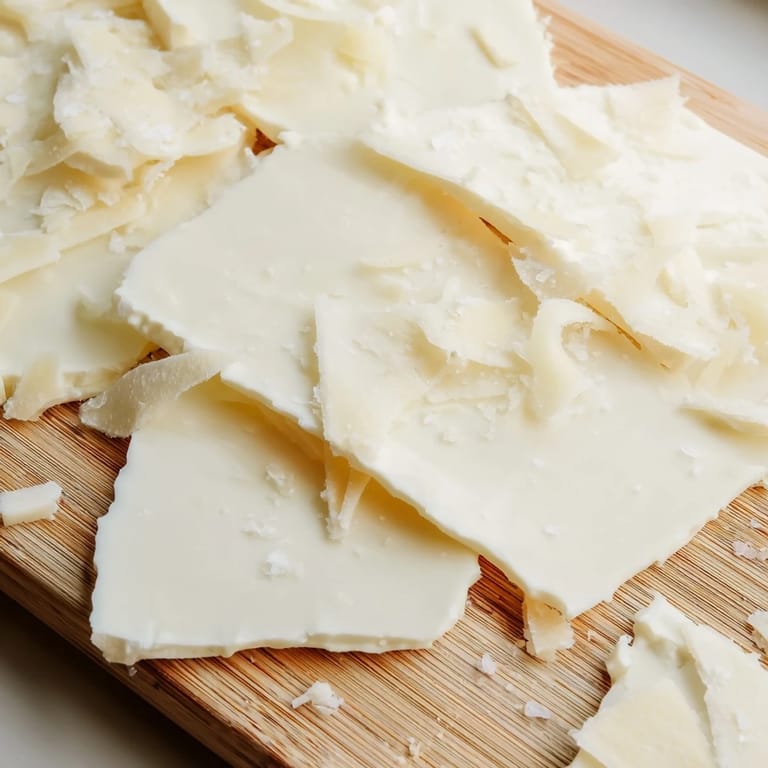
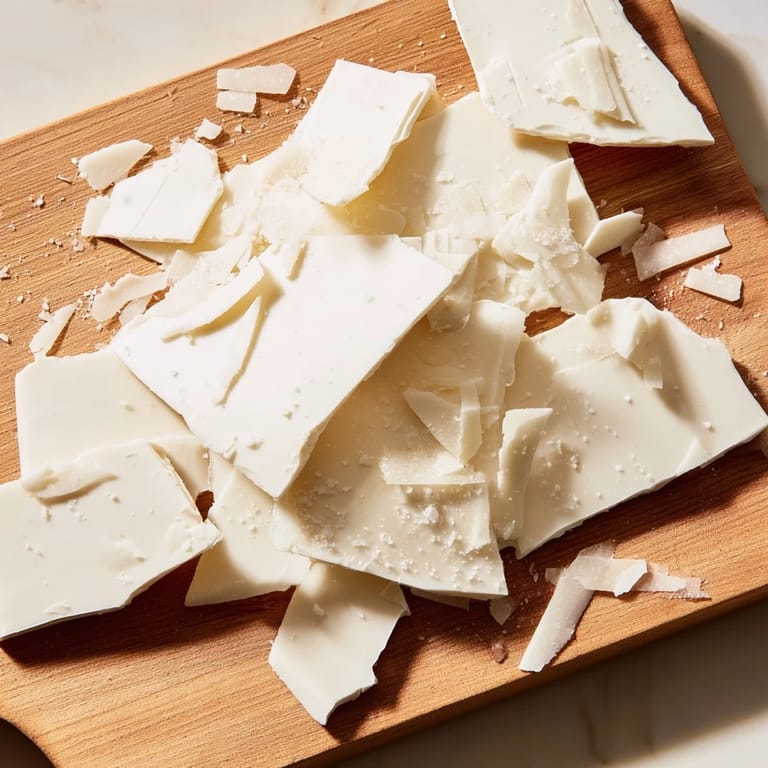
- Use your hands or a knife to create large, jagged pieces with varied sizes. This roughness is intentional; the asymmetry is what makes it look like a frozen landscape instead of a broken plate.
- Arrange and serve:
- Layer the chocolate shards on your board at different angles, scatter parmesan over and between them, then finish with a light dusting of flaky salt. Serve immediately so the chocolate stays crisp and the textures stay distinct.
 Save
Save This dessert stopped being just food the moment a guest told me it reminded them of the moment they decided to move north, to mountains they'd always wanted to see. That's when I understood that plating isn't about technique—it's about giving people permission to feel something beyond hunger.
The Texture Story
The entire appeal of this dish lives in the contrast between three textures meeting on your palate at once. The white chocolate should snap, the parmesan should crumble, and the salt should dissolve almost immediately, each one playing a different note. I've served versions where the chocolate was too soft or the parmesan was too finely shaved, and the dish fell flat—not because the ingredients were wrong, but because the textures blurred together into something less interesting.
Timing and Temperature
This is a dish where every degree matters, which sounds dramatic but is entirely true. Cold chocolate snaps; room-temperature chocolate bends. A board that's been in the freezer for ten minutes looks glossy and professional; one that hasn't feels casual and temporary. You're not fighting physics here—you're working with it, letting temperature do half the work for you.
Making It Your Own
The minimalism of this dessert is inviting precisely because it leaves room for you to add something personal. I've made versions where I've scattered edible flowers across the board, or added a light microgreen that caught the light, or even drizzled a touch of dark chocolate around the edges. The frame stays the same; the canvas is yours.
- Try dark chocolate instead of white for something with more intensity and visual contrast.
- Edible flowers or microgreens add color and a touch of visual theater without overwhelming the simplicity.
- Serve alongside a dry sparkling wine or a chilled dessert wine for an experience that feels complete.
 Save
Save This dessert is proof that elegant doesn't mean complicated, and that sometimes the most striking things are the ones that look effortless. Serve it, watch people pause, and know that you've created something worth savoring.
Kitchen Help
- → How do I achieve thin white chocolate sheets?
Melt white chocolate gently and spread it evenly about 2 mm thick on parchment paper, then chill completely.
- → What is the best method to create parmesan shards?
Use a sharp vegetable peeler or knife to shave thin slices from a Parmigiano-Reggiano block.
- → Can I substitute the white chocolate with another type?
Yes, dark chocolate can be used for a richer, more intense flavor variation.
- → Why serve the dessert on a chilled wooden board?
Chilling the board enhances the crisp texture of the chocolate sheets and adds to the dramatic, frozen landscape effect.
- → What pairs well with this dessert?
Dry sparkling wine or chilled dessert wine complements the sweet and savory flavors beautifully.