 Save
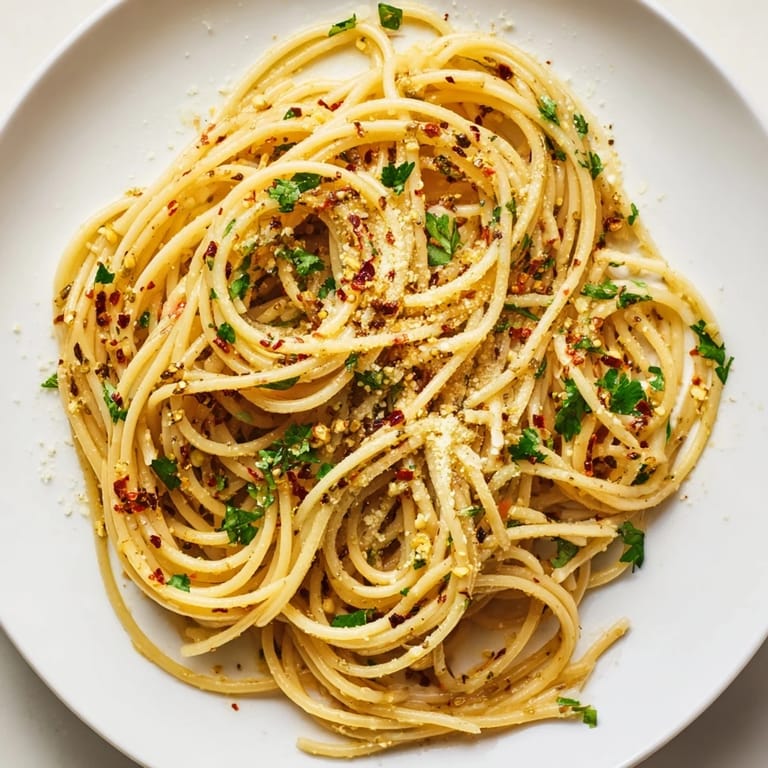
Save There's something about a nearly empty pantry that forces the best meals into existence. I was tired, the fridge was sparse, and all I had were the holy trinity of Italian cooking: garlic, olive oil, and dried pasta. Ten minutes later, I understood why this dish has survived centuries—it doesn't need to be complicated to be profound. Aglio e olio became my go-to reminder that sometimes the simplest ingredients, treated with respect, create something you'll crave for weeks.
I made this for my partner on a rainy Thursday when neither of us felt like leaving the apartment. We stood in the kitchen listening to the garlic sizzle in the pan, and by the time we sat down with our plates, the whole mood had shifted. Food does that sometimes—it's not just fuel, it's a small act of care folded into ten minutes.
Ingredients
- Dried spaghetti: 200 g (7 oz)—use quality pasta here since there's nowhere to hide; it becomes the main event.
- Extra-virgin olive oil: 4 tbsp—this is your sauce, so choose one you'd happily drink by the spoonful.
- Garlic cloves: 4 large, thinly sliced—the thickness matters; thin slices toast evenly and won't turn bitter.
- Red chili flakes: 1 tsp—adjust this to your own heat preference; I've learned some people appreciate a whisper, others a shout.
- Fresh parsley: 2 tbsp chopped—the brightness cuts through the richness like a window opening in a warm room.
- Freshly ground black pepper: to taste—grind it yourself if you can; the difference is real.
- Sea salt: to taste—for the pasta water and final seasoning.
- Parmesan cheese: 2 tbsp freshly grated (optional)—skip it entirely if you want the pure vegetable-oil-and-garlic experience.
Tired of Takeout? 🥡
Get 10 meals you can make faster than delivery arrives. Seriously.
One email. No spam. Unsubscribe anytime.
Instructions
- Get the pasta going:
- Bring a large pot of salted water to a rolling boil—and I mean real salt, enough to make it taste like the sea. Add your spaghetti and cook until it's al dente, tender but with a gentle resistance at the center, usually about 8 minutes depending on your pasta. Before draining, scoop out 1/2 cup of that starchy cooking water; it's liquid gold for tying everything together.
- Toast the garlic slowly:
- While the pasta cooks, pour your olive oil into a large skillet and set it over medium-low heat. Add your sliced garlic and let it sizzle gently for 1-2 minutes, stirring often, until it turns pale gold and fills the kitchen with that intoxicating smell. The key is patience here—burnt garlic tastes bitter and ruins the whole dish, so listen to it more than you watch it.
- Add the heat:
- Sprinkle your chili flakes into the garlic oil and stir for about 10 seconds. You'll feel the warmth rise up from the pan almost immediately.
- Bring it all together:
- Drain your pasta and pour it straight into the skillet with the garlic and chili oil. Toss everything together over the heat, adding splashes of that reserved pasta water as you go to loosen and bind the sauce. You're not looking for a wet dish; you want the oil and starch to create something silky that clings to each strand.
- Finish and serve:
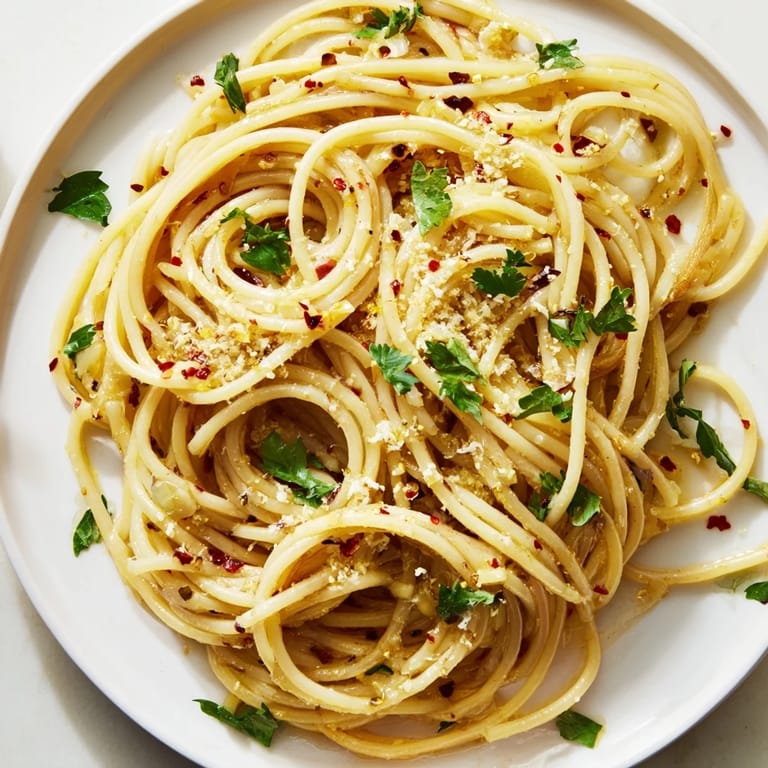
- Remove from heat, toss through the fresh parsley, and season to your taste with salt and pepper. Divide between plates and top with grated Parmesan if you like—serve immediately while it's still hot.
 Save
Save There was a moment during that rainy Thursday when my partner took the first bite and just closed their eyes. No fancy plating, no pretense, just someone genuinely satisfied. That's when I realized aglio e olio isn't just a backup plan—it's proof that restraint and quality ingredients can be more memorable than anything complicated.
The Magic of Simplicity
This dish taught me that cooking doesn't have to be a production to be worthwhile. There's a particular freedom in standing in front of three ingredients and knowing you can create something delicious. Every time I make it, I'm reminded that the best kitchen skills aren't about technique alone—they're about knowing when to stop fussing and let the ingredients speak for themselves.
Garlic Oil Variations
Once you understand the foundation of this recipe, you can drift in different directions. A squeeze of fresh lemon juice brightens everything and cuts through the richness beautifully. A pinch of dried oregano adds an herbaceous warmth that feels less Italian and more Mediterranean. I've even tossed in some anchovy paste on nights when I wanted something deeper and more savory, though that's definitely a personal preference.
Timing and Confidence
The beauty of aglio e olio is that ten minutes means you're never far from a hot meal. I've made this countless times now, and I've learned that confidence matters more than precision. If your garlic cooks a few seconds longer than the recipe says, it doesn't ruin anything. If your chili flakes are a different brand with slightly different heat, adjust it next time. This is a dish that rewards attention and forgives small variations.
- Keep your heat medium-low to prevent the garlic from turning dark brown or burnt.
- Use fresh ingredients whenever possible—old garlic and stale oil will taste like it.
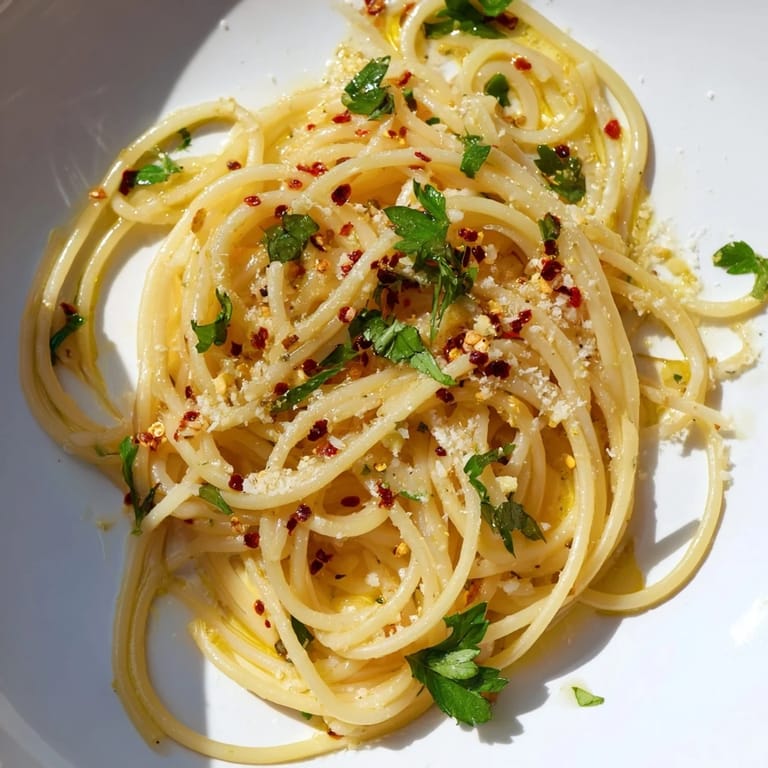
- Serve immediately; this dish is best enjoyed hot and straight from the pan.
 Save
Save Aglio e olio reminds me that the best meals don't always come from long lists of ingredients or complicated techniques. Sometimes they come from understanding what you have and respecting it enough to let it shine.
Kitchen Help
- → How do I prevent garlic from burning?
Cook garlic slowly over medium-low heat, stirring often until fragrant and just golden to avoid bitterness.
- → Can I adjust the level of heat in the dish?
Yes, adjust the amount of red chili flakes to suit your preferred spice level, from mild to spicy.
- → What type of pasta works best?
Traditional dried spaghetti is ideal for absorbing the garlic and olive oil flavors while maintaining a firm texture.
- → How can I keep the sauce smooth and not oily?
Reserve some pasta cooking water and add a splash when tossing the pasta to loosen and emulsify the sauce.
- → Is Parmesan necessary for the dish?
Parmesan adds richness but can be omitted or replaced with vegan cheese for dietary preferences.
- → Can fresh herbs be substituted?
Fresh parsley is traditional, but basil or oregano can also add aromatic touches to suit your taste.