 Save
Save There's something about the smell of butter hitting a hot pan that makes you stop what you're doing. I discovered this dish at a small izakaya in Tokyo where the chef moved with such confidence, tossing corn kernels in a cloud of garlic-infused butter like it was the simplest magic trick. When I tried it, I understood why—it's the kind of side that steals the show without trying, sweet corn transformed by something as basic as butter and soy sauce into something you can't stop eating.
I made this for a casual dinner party last summer when someone brought corn from the farmers market and joked that it was almost a shame to do anything with it at all. By the time the skillet was singing and that butter-garlic aroma filled the kitchen, everyone wandered over like moths to a flame. One guest watched me pour in the soy sauce and said, "Wait, that's it?" and I realized right then how the best dishes are often the simplest ones, built on paying attention to what you're doing.
Ingredients
- Fresh corn (4 ears) or frozen corn kernels (3 cups thawed): Fresh corn has a natural sweetness that shines here, but frozen works beautifully too—thaw it completely so it doesn't release excess water into the pan.
- Unsalted butter (2 tablespoons): You want real butter for its nutty depth; it's the foundation that carries everything else.
- Garlic (2 cloves, finely minced): Mince it small so it distributes evenly and doesn't overpower—you're building a whisper of flavor, not a shout.
- Soy sauce (1½ tablespoons): This is where the magic lives; it adds salt, umami, and a hint of caramel sweetness that elevates the corn.
- Black pepper (½ teaspoon, freshly ground): Fresh pepper matters more here than you'd think because you're tasting it directly.
- Sea salt (pinch, optional): Taste as you go; you might not need it depending on your soy sauce brand.
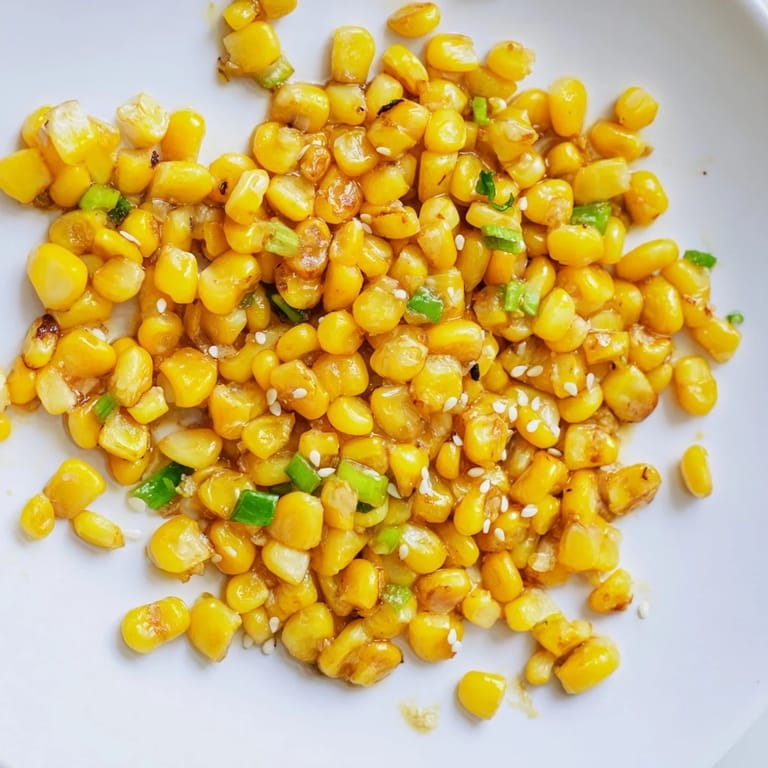
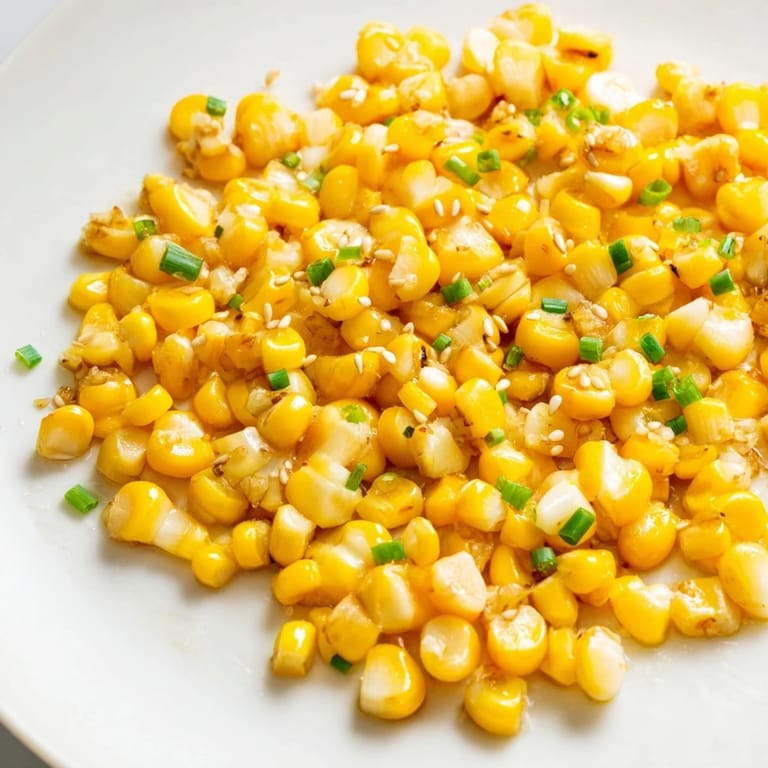
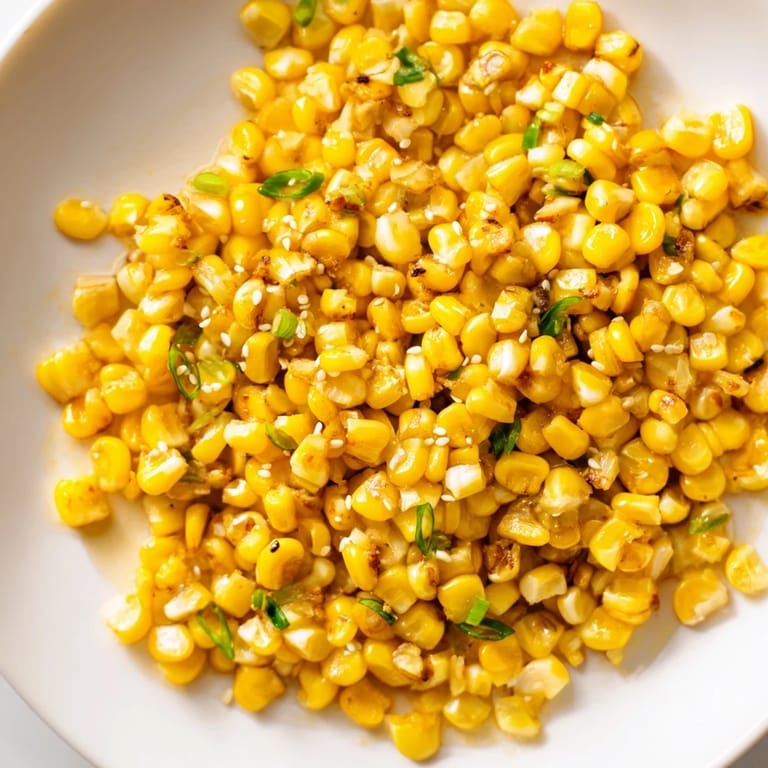
- Scallions (1 tablespoon chopped, optional) and sesame seeds (1 teaspoon toasted, optional): These are the finishing touches that add color, texture, and a whisper of nuttiness.
Tired of Takeout? 🥡
Get 10 meals you can make faster than delivery arrives. Seriously.
One email. No spam. Unsubscribe anytime.
Instructions
- Get your corn ready:
- If using fresh corn, hold each ear upright on a cutting board and use a sharp knife to slice the kernels away from the cob with steady downward strokes—you'll feel when you're hitting the right angle. If using frozen, just make sure it's fully thawed and patted dry.
- Melt the butter slowly:
- Heat your skillet over medium (not high) and add butter, watching it foam and turn golden. This is the moment to slow down and just listen to the pan.
- Wake up the garlic:
- Add your minced garlic and let it sit for about 30 seconds, stirring gently—you're looking for it to become fragrant and take on the slightest color, nothing more. The second it starts to smell rich, move on.
- Toast the corn:
- Add your corn kernels and stir frequently for 4–5 minutes, letting them warm through and develop little golden spots where they kiss the pan. This is where the sweetness concentrates.
- Add the soy sauce:
- Pour it in slowly while stirring, watching the kernels glisten as they absorb the salty-sweet liquid. Let it cook for another 1–2 minutes until most of the liquid has cooked away and the corn looks glossy, not wet.
- Season and taste:
- Crack in your pepper and add just a pinch of salt if needed, tasting as you go. Remember that soy sauce already carries salt, so go gently.
- Finish and serve:
- Transfer to a serving dish while still warm, top with scallions and sesame seeds if you're using them, and serve immediately while the corn is still steaming.
 Save
Save I'll never forget watching my grandmother taste this for the first time—she's from Kyoto and doesn't get impressed easily, but she went quiet, took another bite, and then asked where I learned to cook. It became this small ritual between us after that, making it together when she visited, her hands guiding mine on the knife to show me how to cut corn the way she did it. Food has a way of becoming a language all its own.
The Butter Matters More Than You Think
This dish lives or dies by the quality of your butter. I learned this the hard way when I tried to make it with a tablespoon of regular salted butter, thinking I'd just reduce the soy sauce a bit. The whole thing tasted flat and one-dimensional. Good unsalted butter has a subtle nutty richness that carries the garlic and makes the corn taste somehow buttery and fresh at the same time—it's the difference between a side dish and something memorable.
When Frozen Corn Is Actually Better
There's this assumption that fresh is always better, but frozen corn is often picked at peak ripeness and frozen immediately, so it can be sweeter and more tender than fresh corn that's traveled for days. Last winter when I couldn't find good corn, I grabbed a bag of frozen and made this dish for a dinner where someone had literally just come back from Japan. They looked at me like I'd somehow transported them, and honestly, I think the frozen corn deserved half the credit.
Ideas for Adapting This Around Your Kitchen
Once you understand what this dish is doing—butter and soy sauce awakening corn's natural sweetness—you can play with it. A teaspoon of mayonnaise stirred in at the end adds creaminess that feels luxurious. A splash of mirin brings subtle sweetness that rounds everything out. Even a tiny pinch of cayenne pepper could add intrigue without heat. The bones of the recipe are strong enough to support your instincts.
- A drizzle of toasted sesame oil at the very end adds a whisper of nuttiness that makes people ask what that flavor is.
- Fresh herbs like cilantro or mint can work if you want something brighter and more summery.
- Serve it over rice or as a topping for ramen to turn a side into something more substantial.
 Save
Save This recipe taught me that you don't need complicated techniques or a long ingredient list to create something that people linger over at dinner. Sometimes the best cooking is just butter, garlic, and attention.
Kitchen Help
- → Can I use frozen corn instead of fresh?
Absolutely. Frozen corn kernels can be thawed and sautéed the same way, offering convenience without sacrificing flavor.
- → What type of soy sauce works best?
A naturally brewed soy sauce adds depth, and for gluten-free options, ensure the soy sauce is certified gluten-free.
- → How can I adjust the dish for extra richness?
Stirring in a teaspoon of mayonnaise when adding soy sauce adds creaminess and depth to the buttered corn.
- → Is this dish suitable for vegetarians?
Yes, it's vegetarian-friendly, especially when using plant-based butter for a dairy-free adaptation.
- → What garnishes enhance the flavors?
Chopped scallions and toasted sesame seeds provide a fresh crunch and nutty aroma that complement the buttery corn.