 Save
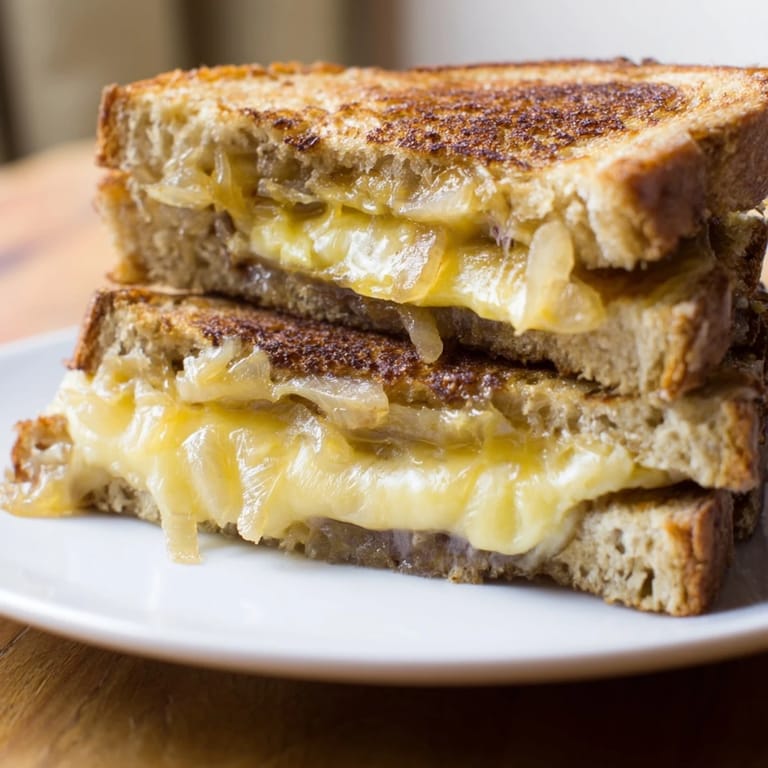
Save There's something about the moment when you first taste a grilled cheese that transcends childhood nostalgia—it's when you realize that three simple ingredients, treated with patience and intention, can become something genuinely sophisticated. I discovered this late one autumn evening while standing in a friend's kitchen, watching golden onions collapse into themselves on the stove, their sweetness deepening with every stir. That's when it clicked: this wasn't just bread and cheese, it was an entirely different conversation.
I made this for my roommate on a Tuesday when they'd had a particularly rough day, and watching their face when they bit into it—that split second before they said anything—told me everything. The bread was still warm, the cheese pooling slightly at the edges, and the caramelized onions gave it a savory sweetness that felt almost comforting in a way plain grilled cheese never quite managed.
Ingredients
- Yellow onions, thinly sliced: Medium thickness matters here—too thick and they won't caramelize evenly, too thin and they'll disappear into nothing. Two medium onions yield enough for two generous sandwiches.
- Unsalted butter (for onions): Medium-low heat is your friend; rushing this step by cranking up the temperature will scorch them instead of caramelize them.
- Kosher salt and freshly ground black pepper: These season the onions as they cook and help draw out their moisture, concentrating the sweetness.
- Sugar (optional): Just a half teaspoon can coax out extra caramel notes if your onions seem stubborn or if you prefer them noticeably sweeter.
- Balsamic vinegar (optional): A teaspoon adds depth and complexity, making the onions taste less one-dimensional and more like they've been building flavor for hours.
- Rustic sourdough or country bread: Sturdy enough to hold up to butter and cheese without falling apart, but with enough character to contribute to the final bite.
- Unsalted butter, softened (for spreading): Room temperature butter spreads without tearing the bread; cold butter will only frustrate you.
- Gruyère cheese, grated: About 5 ounces total—grating it yourself means it melts more evenly than pre-shredded, which often contains anti-caking agents that interfere with smooth melting.
Tired of Takeout? 🥡
Get 10 meals you can make faster than delivery arrives. Seriously.
One email. No spam. Unsubscribe anytime.
Instructions
- Start the onions low and trust the time:
- Melt the butter in a large skillet over medium-low heat, then add your sliced onions with a pinch of salt and pepper. This isn't a race—they need 25 to 30 minutes of occasional stirring to transform from raw and sharp to golden and almost sweet. You'll smell them changing, and that's when you know it's working.
- Deepen the flavor (optional but worth it):
- Once the onions have reached that deep golden stage, stir in the sugar and balsamic vinegar if you're using them. Let them cook for another 2 to 3 minutes so everything melds together, then set them aside.
- Butter the bread strategically:
- Lay out all four slices and spread softened butter on one side of each. Flip two slices butter-side down—these are your base layers where the cheese will sit directly on the buttered surface.
- Build the sandwich thoughtfully:
- On each buttered base slice, scatter half your Gruyère cheese, then spoon caramelized onions generously on top, then finish with another layer of Gruyère. It might seem like a lot of cheese, but it binds everything together and creates those delicious crispy-edged pockets when it melts.
- Seal and cook gently:
- Place the remaining bread slices on top, butter-side up. Heat your nonstick skillet or griddle to medium, then lay the sandwiches down and cook for about 3 to 4 minutes per side, pressing gently with your spatula so the cheese makes contact with the hot surface. If the bread is browning too fast, lower your heat slightly—you want the cheese melted before the crust burns.
- Serve immediately:
- The moment they come off the heat, while that cheese is still actively melting and the bread is at its crispiest, is when they shine brightest.
 Save
Save There was a quiet moment when my partner first tried this, sitting at the kitchen counter with late afternoon light coming through the window, and they just said, 'This doesn't taste like something I made at home.' That's the moment when you realize a grilled cheese can be so much more than convenient—it can be memorable.
Why Caramelization Changes Everything
Raw onions are sharp and biting; caramelized onions are the opposite. When you cook them slowly, their natural sugars concentrate and their sulfurous bite softens into something almost honeyed. It's the same ingredient, but after thirty minutes of gentle heat, it becomes an entirely different flavor. This is what takes a simple grilled cheese from weeknight quick-fix to something you'd actually want to make for guests.
The Cheese Makes the Sandwich
Gruyère is a cheese that was practically invented for this moment—it has a slight nuttiness and complexity that plain cheddar or American cheese simply can't match. When it melts, it doesn't turn into a plastic-textured pool; it becomes creamy and rich while still holding its own character. I've tried Emmental and Swiss as substitutes, and they work, but Gruyère has this particular way of melding with caramelized onions that feels intentional rather than accidental.
Timing and Temperature
The entire sandwich comes together in about 8 minutes of actual cooking, which feels impossibly fast given how composed it tastes. The key is matching your pan temperature to your bread—you want the exterior to turn golden and crispy while the inside reaches actual melted bliss, not a lukewarm cheese situation. If you find yourself watching the bread brown before the cheese melts, your heat is just slightly too high; dial it back and your next sandwich will be perfect.
- Medium heat is genuinely the sweet spot; resist any urge to accelerate the process.
- Pressing gently with your spatula helps the cheese make contact with the hot surface and melt more evenly.
- Serve immediately while everything is still at its peak temperature and texture.
 Save
Save This sandwich sits in that perfect space between weeknight dinner and something special enough to offer a friend when they need picking up. Once you've made it once, you'll find reasons to make it again.
Kitchen Help
- → How long should onions be caramelized?
Onions should be cooked on medium-low heat for 25–30 minutes until golden and deeply caramelized, developing a rich sweetness.
- → Can other cheeses be used instead of Gruyère?
Yes, Emmental or Swiss cheese are great substitutes and melt similarly to Gruyère for a nutty flavor.
- → What type of bread is best for this sandwich?
Rustic sourdough or country bread works well, providing a sturdy, flavorful base that crisps nicely when grilled.
- → Is it necessary to use butter in the preparation?
Butter is essential both for caramelizing onions and spreading on bread to achieve a rich flavor and crisp golden crust.
- → How can the sandwich be customized for added flavor?
Adding fresh thyme to onions or including thin slices of ham can enhance the flavor profile for a heartier experience.
- → What is the best way to prevent bread from burning before cheese melts?
Cook on medium heat and reduce heat if bread browns too quickly to allow cheese to melt fully without burning.